
Table of Contents
- What Makes Balanced Acidity in Pour-Over Coffee
- Best Coffee Beans for Pour-Over: Quick Comparison
- 1. Yirgacheffe Ethiopia | Medium: Floral Brightness with Silky Body
- 2. Guji Ethiopia | Medium Roast: Juicy Citrus and Black Tea Finish
- 3. Peru Cajamarca FTO | Medium-Dark: Stone Fruits with Clean Clarity
- 4. Betulia Colombia | Medium-Dark: Sugar Cane Sweetness and Lime Brightness
- 5. Huila Colombia | Medium-Dark: Toasted Almond with Cherry Brightness
- Coffee Beans with Low Acidity: Understanding Roast Level and Its Role
- Frequently Asked Questions
Last Updated: October 13, 2026
What Makes Balanced Acidity in Pour-Over Coffee
Balanced acidity in pour-over coffee is the pleasant brightness and complexity that highlights a bean's origin characteristics without tasting sharp or sour. It's the clean, crisp sensation that brings out fruit, floral, or tea-like notes rather than a pucker-inducing sourness.
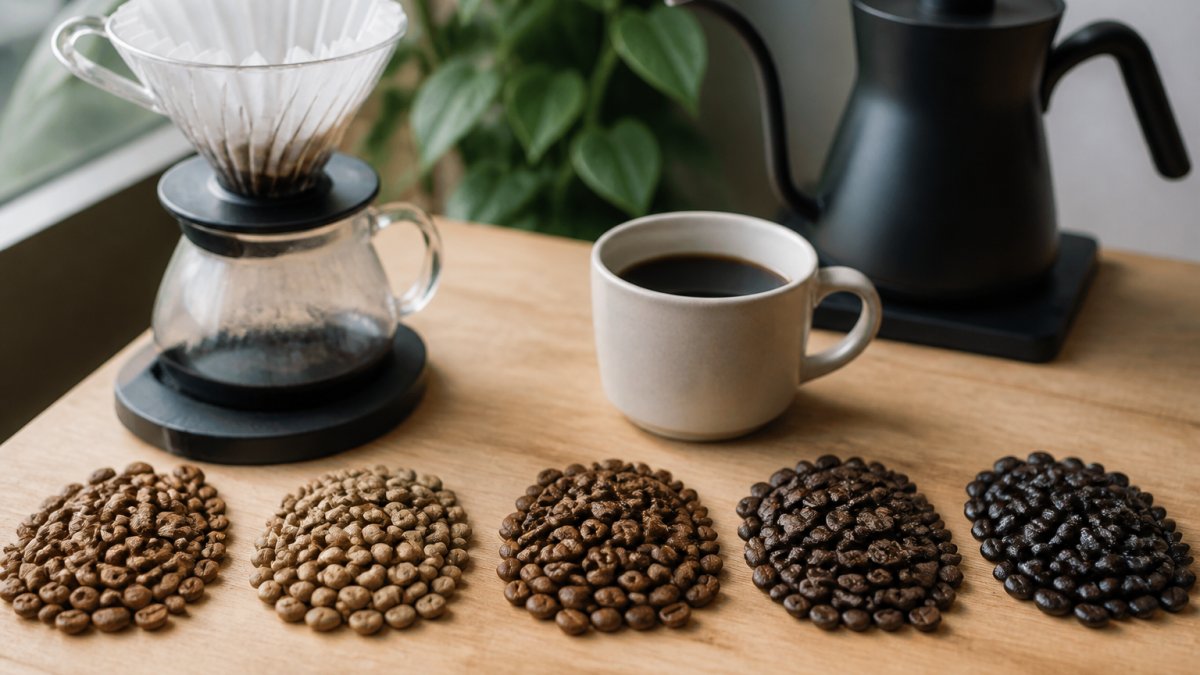
The 5 best coffee beans for balanced acidity in pour over depend on three factors working together: the bean's origin, how it was processed, and the roast level.
The confusion most people have is thinking acidity equals sourness. Acidity creates brightness and flavor complexity; sourness is what happens when extraction goes wrong during brewing or when the bean itself is under-developed.
How Origin and Processing Shape Acidity
Different coffee origins have different natural acidity levels. Ethiopian beans tend toward higher acidity with floral, fruity notes. Colombian beans offer moderate acidity with chocolate and nutty undertones. Peruvian and Sumatran beans sit lower, offering fuller body and earthier profiles.
Processing method amplifies or softens this natural acidity. Washed process coffees, where the fruit is removed before drying, preserve brightness and clarity, which is why single-origin pour-over enthusiasts prefer them. Natural process coffees, where the bean dries inside the fruit, add sweetness and body that can balance higher acidity.
Bright Acidity Versus Perceived Sourness
Bright acidity tastes clean and pleasant: the citrus note in an Ethiopian Yirgacheffe, the blackcurrant in a Kenyan AA, the orange zest in a well-roasted Colombian. These flavors make the coffee feel alive on your palate.
Perceived sourness is different: sharp, unpleasant, and often a sign of extraction problems. Under-extracted coffee tastes sour because the water didn't pull enough soluble compounds from the grounds; over-extracted coffee can taste bitter or astringent; stale beans taste sour because their oils have oxidized. The solution isn't to avoid acidity, it's to choose the right bean, grind it properly, and brew it correctly.
Best Coffee Beans for Pour-Over: Quick Comparison
"Balanced acidity" is not the same as "low acidity"; it's brightness that stays clean and pleasant instead of turning sharp or sour. When you taste a pour-over, ask three questions:
- Does the brightness lift the cup or dominate it? Balanced acidity feels like a citrus or berry note that sits alongside sweetness, not a pucker that lingers.
- Is there sweetness to meet the acidity? A balanced cup has both, brightness plus a honey, sugar-cane, or fruit sweetness underneath.
- Does the finish stay clean? A balanced cup finishes crisp and clean; a sour or stale cup leaves a drying, unpleasant edge.
How Origin and Processing Predict Perceived Acidity
Use this matrix to anticipate how a bean will read in the cup before you buy it:
| Origin / Processing | Typical Perceived Acidity | What It Tastes Like |
|---|---|---|
| East African, washed | High, bright | Floral, citrus, tea-like clarity |
| East African, natural | High, rounded | Berry, stone fruit, sweeter body |
| Central/South American, washed | Moderate | Chocolate, caramel, gentle citrus lift |
| South American, natural | Moderate, soft | Dried fruit, cocoa, fuller body |
| Indonesian / low-grown | Low | Earthy, herbal, heavy body |
The Five Beans at a Glance
| Bean | Acidity Profile | Tasting Notes | Best For |
|---|---|---|---|
| Yirgacheffe Ethiopia | Bright, floral | Jasmine, orange zest, berry | Clarity seekers |
| Guji Ethiopia | Juicy, complex | Peach, citrus, black tea | Fruit-forward drinkers |
| Peru Cajamarca FTO | Clean, balanced | Stone fruits, honey, raisin | Balanced cup preference |
| Betulia Colombia | Moderate brightness | Sugar cane, lime, chocolate | Sweetness with lift |
| Huila Colombia | Subtle brightness | Toasted almond, cherry | Full-bodied smoothness |
Matching a Bean to Your Taste
- You want maximum clarity and floral lift: start with the Yirgacheffe Ethiopia.
- You want brightness with more body and fruit sweetness: the Guji Ethiopia is the pick.
- You want balance without intensity: the Peru Cajamarca FTO or Betulia Colombia.
- You want subtle brightness and a fuller cup: the Huila Colombia.
1. Yirgacheffe Ethiopia | Medium: Floral Brightness with Silky Body
The Yirgacheffe Ethiopia from Gilded Grind is our top pick among the 5 best coffee beans for balanced acidity in pour over. This medium roast delivers bright, floral notes with a silky body that feels refined without being thin, the clarity pour-over enthusiasts crave, without any sharp edges.

The flavor profile centers on delicate jasmine and rose-like florals, bright orange zest acidity, and natural berry sweetness. The medium roast preserves the bean's complexity while keeping acidity in the pleasant range.
For pour-over specifically, this bean shines because the paper filter removes oils, letting the floral and citrus notes come through cleanly.
2. Guji Ethiopia | Medium Roast: Juicy Citrus and Black Tea Finish
If you prefer your balanced acidity with more body and fruit-forward character, the Guji Ethiopia from Gilded Grind is the answer. This medium roast sits slightly heavier than Yirgacheffe but keeps that bright, juicy quality.
The tasting notes include peach and citrus up front, followed by a silky body and black tea finish with delicate floral aromatics. The acidity here is juicy rather than sharp; it's brightness that feels ripe and vibrant.
Brew Guji at 200°F (93°C) with a 1:16 ratio, and let the pour-over process extract those fruit notes fully. The clarity you get really showcases why medium roast Ethiopian beans are prized by specialty coffee enthusiasts.
3. Peru Cajamarca FTO | Medium-Dark: Stone Fruits with Clean Clarity
The Peru Cajamarca FTO from Gilded Grind represents a different approach to balanced acidity, using roast level and processing to create balance rather than relying on origin alone.

The flavor profile features stone fruits, honey, and raisin notes with a clean, slightly fruity finish. The acidity is balanced and refined, not bright or sharp, ideal for anyone who wants specialty coffee complexity without high acidity.
Betulia Colombia | Medium-Dark →
What makes this bean stand out is the Fair Trade and organic certification, a solid choice if ethical sourcing matters to you. Brew it at 200°F (93°C) with a 1:16 ratio for a clean, sweet cup that highlights the bean's balance.
4. Betulia Colombia | Medium-Dark: Sugar Cane Sweetness and Lime Brightness
The Betulia Colombia from Gilded Grind brings Colombian coffee's signature sweetness while maintaining enough acidity to feel lively and complex. This medium-dark roast from the highlands of Betulia, Antioquia, is a washed-process coffee that balances brightness and body.

The tasting notes include sugar cane sweetness, lime brightness, and chocolate undertones. The acidity is moderate, not as bright as Ethiopian beans, but present enough to make the cup feel sophisticated.
For pour-over brewing, this bean performs beautifully because the washed process preserves the origin's clean character. Brew at 200°F (93°C) with a 1:16 ratio, and the sugar cane sweetness comes through clearly, lifted by that lime brightness.
5. Huila Colombia | Medium-Dark: Toasted Almond with Cherry Brightness
The Huila Colombia from Gilded Grind is our pick for balanced acidity that leans toward full-bodied smoothness.
The flavor profile centers on toasted almond richness with subtle cherry brightness and a smooth finish. The acidity is present but subtle, enough to keep the cup from tasting flat, but never dominant.
Brew this bean at 200°F (93°C) with a 1:16 ratio, and the pour-over method will highlight the clean sweetness and almond richness. The volcanic soil character comes through as a subtle earthiness that adds complexity without sharpness.
Coffee Beans with Low Acidity: Understanding Roast Level and Its Role
If your goal is a cup that reads as balanced rather than sharp, the biggest lever you control at home is how you brew it and what you brew it with. The bean sets the ceiling on brightness; your recipe, water, and freshness determine how much of that brightness lands in the cup.
A Repeatable Baseline Recipe for Balanced Acidity
Start here, then adjust one variable at a time. This is the recipe most pour-over practitioners converge on for a balanced cup:
- Dose: 20 g coffee to 320 ml water (1:16). For a smaller cup, 15 g to 240 ml.
- Water temperature: 200°F (93°C). A range of 195-205°F (90-96°C) is workable; stay in the middle until you have a reason to move.
- Grind: medium-fine, roughly the texture of table salt. On a typical hand grinder, this sits a few clicks coarser than espresso.
- Total brew time: 3:00-4:00 minutes from first pour to drawdown.
- Pour structure: 40-60 g bloom, wait 30-45 seconds, then pour in two or three steady pulses, keeping the bed level.
Troubleshooting: Sour vs. Flat vs. Bitter
Use taste as your instrument. Each symptom points to a specific adjustment:
- Too sour / sharp: the cup is under-extracted. Grind finer in small steps, raise water temperature by 2-3°F (1-2°C), or slow your pour so water contacts the grounds longer. Check that your bloom is fully saturating the bed.
- Too flat / hollow: often a freshness or water problem, not a grind problem. Confirm the roast date and check your water (below) before changing the recipe.
- Too bitter / drying: over-extracted. Grind coarser, drop water temperature slightly, or shorten total brew time by pouring faster.
- Inconsistent cup to cup: usually a grind-distribution or pour-agitation issue. Level the bed before brewing and keep your pour height and speed steady.
Water Chemistry: The Overlooked Variable
This is the single most common reason a bean that tasted bright at a café tastes muted at home. Coffee extracts differently depending on the mineral content of your water:
- Too soft (near-zero minerals): the cup tastes flat and hollow, and pleasant acidity reads as absent rather than balanced.
- Too hard (high mineral content): extraction stalls, and you get muddy, chalky, or dull flavors that mask brightness.
- A practical middle ground: aim for water with moderate mineral content, the kind of profile specialty cafés target. If your tap water is very soft or very hard, a simple filtered or remineralized water is the fastest fix.
A quick test: brew the same bean with your tap water and with a bottled or filtered water you trust. If the cup changes dramatically, water is your bottleneck, not the bean.
Freshness and Storage
Oxidized oils create a sharp, stale edge that mimics sourness and throws off your perception of balance. To protect the cup:
- Buy beans with a visible roast date and use them within 3-4 weeks.
- Store in an airtight container, away from light, heat, and moisture. The freezer works well for longer storage if the container is truly sealed.
- Grind immediately before brewing. Pre-ground coffee loses aromatic compounds within hours.
Frequently Asked Questions
Which coffee origins are known for balanced acidity in pour-over?
Ethiopian coffees like Yirgacheffe and Guji naturally offer bright acidity with smooth body, while Peruvian and Colombian single-origin beans deliver clarity without sharpness. The washed process used in these regions enhances clean, balanced flavor profiles. Medium roasts preserve the complexity that makes acidity taste pleasant rather than sour.
How does pour-over coffee grind size affect perceived acidity?
Grind size directly controls extraction time. Medium-fine grounds (similar to sea salt) work well for pour-over, allowing water to extract bright notes without over-extracting bitter compounds that amplify sourness. If your coffee tastes too sharp, try slightly coarser grounds to reduce contact time. Consistency matters; uneven grind sizes lead to uneven extraction and unpredictable acidity.
Can I make pour-over coffee less sour by changing my brewing method?
Yes. Water temperature around 195-205°F (90-96°C) extracts balanced acidity; hotter water over-extracts and increases perceived sourness. Use fresh, filtered water; mineral content affects how acidity tastes on your palate. A consistent brew ratio (typically 1:16 coffee to water by weight) prevents under- or over-extraction. Slower pour speeds give grounds more contact time for even flavor development.
What makes coffee beans with low acidity different from balanced acidity beans?
Low-acidity beans are typically from lower elevations or naturally processed, producing muted, earthy profiles. Balanced-acidity beans come from high-elevation origins with washed processing, delivering bright, complex flavor notes—citrus, berries, florals—that taste clean rather than sour. For pour-over, balanced acidity is preferable because it showcases the clarity and aroma that the brewing method highlights.


