
Table of Contents
- Single Origin Beans vs Blends: What Actually Changes in Your Cup
- Flavor Profile, Traceability, and What You Pay For
- The Benefits of Fair Trade Sumatra Coffee in a Daily Routine
- How to Brew Single Origin Coffee at Home
- Storage and Freshness for Daily Drinking
- Budget-Conscious Ways to Drink Single Origin Every Day
- Frequently Asked Questions
Last Updated: September 16, 2026
Single Origin Beans vs Blends: What Actually Changes in Your Cup
Single origin beans are coffee beans sourced from one specific region, farm, or cooperative, while blends combine beans from multiple origins. That distinction shapes everything from flavor clarity to traceability. This guide from Gilded Grind breaks down whether single origin coffee earns its place in a daily routine, and where it makes more sense to keep a blend on the shelf.
The short answer: yes, for most daily drinkers, with one caveat. Single origin beans reward you with a flavor profile you can actually name, a farm you can trace, and a cup that changes with the season. What they don't offer is the predictability a blend delivers batch after batch.
The Daily Cost Question
Cost is the first objection, and it's a fair one. Single origin beans typically cost more per bag than commodity blends because specialty-grade lots are smaller, hand-picked, and traceable to a specific harvest.
At Gilded Grind, whole bean single origins run from $16.50 to $22.00 per bag. That's the real number to weigh against grocery-store blends, not a vague "premium" label.
Here's the practical math. A 300g bag brewed at roughly 18g per cup yields about 16 cups.
| Option | Price per Bag | Cups per Bag | Cost per Cup |
|---|---|---|---|
| Gilded Grind Limu Ethiopia | $18.00 | ~16 | ~$1.13 |
| Gilded Grind Sumatra G1 | $22.00 | ~16 | ~$1.38 |
| Gilded Grind Huila Colombia Ground | $16.50 | ~16 | ~$1.03 |
| Café espresso | N/A | 1 | $3.50+ |
Flavor Profile, Traceability, and What You Pay For
What you're paying for with single origin beans is specificity. A washed Ethiopian coffee tastes like jasmine and citrus because of where it grew, not because someone blended around a target flavor.
Consistency vs. Complexity
Blends win on consistency. A roaster builds a blend to taste the same in January and July, adjusting components as crops shift. That reliability is genuinely valuable if you want the same cup every morning without thinking about it.
The Benefits of Fair Trade Sumatra Coffee in a Daily Routine
Fair Trade Sumatra coffee brings two things to a daily routine that blends rarely match: verified ethical sourcing and a flavor profile built for milk and morning familiarity.
How to Brew Single Origin Coffee at Home
Brewing single origin coffee at home comes down to matching the bean to the method. Get that pairing right and you'll taste the difference immediately. Get it wrong and even a great bean tastes flat.
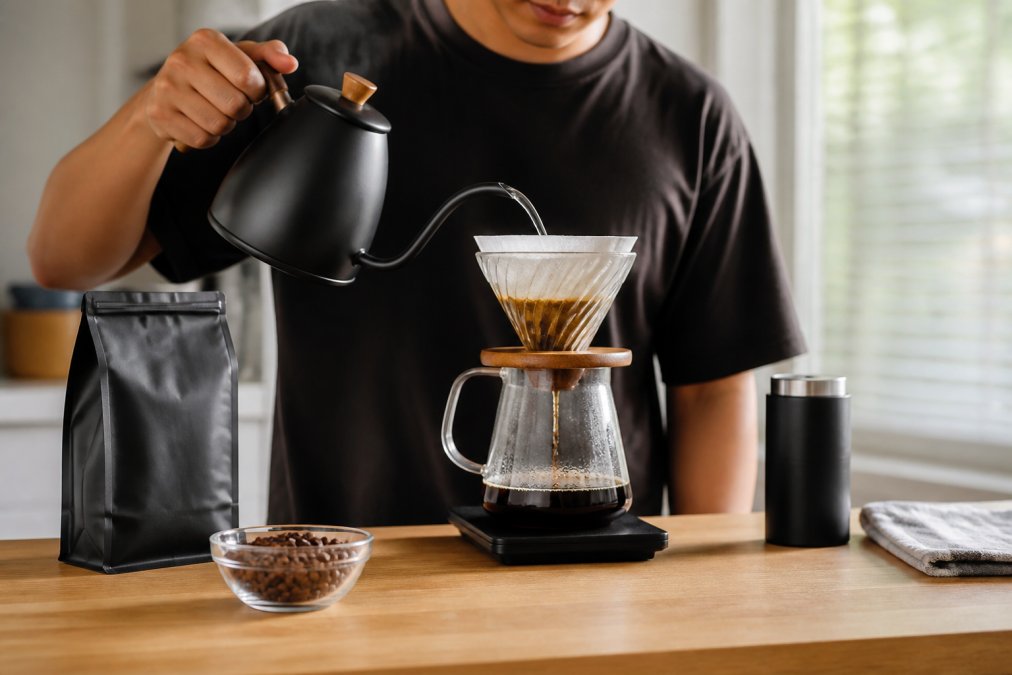
Which Brewing Methods Actually Show Off Single Origin Nuance
Not every method rewards a single origin equally. Some amplify the delicate, origin-specific notes you're paying for. Others bury them under body, pressure, or dilution. Here's the honest breakdown.
Methods that highlight single origin character:
- Pour-over (V60, Chemex, Kalita): The cleanest window into a bean's acidity, florality, and top notes. A washed Ethiopian will taste unmistakably different from a Colombian here. This is the method most likely to justify the single origin premium.
- Aeropress: Fast, forgiving, and surprisingly good at preserving clarity when you use a shorter steep and a finer grind. A solid middle ground if you want nuance without a 4-minute ritual.
- Siphon / vacuum: Rare in home setups, but delivers exceptional clarity. Worth it only if you already own one.
Methods that partially mask single origin nuance:
- French press: Full immersion and a metal filter let oils and fines through, which builds body but softens the delicate top notes that distinguish one origin from another. A Sumatra or a natural-process Brazil holds up well here; a delicate washed Yirgacheffe gets muddied.
- Drip machine: Convenient and consistent, but batch brewing and a paper filter strip some aromatics. A medium or medium-dark single origin with a sturdy body survives better than a light, floral one.
- Moka pot: High pressure and heat push toward bitterness and body. Works for chocolatey, nutty origins; flattens bright, fruity ones.
Methods that mostly waste the premium:
- Cold brew: The long, cold extraction produces a smooth, low-acid concentrate, but it also flattens the acidity and aromatics that make a single origin distinctive. A blend or a cheaper single origin will taste nearly identical. Save the expensive lot for a hot method.
- Espresso (for most home setups): Espresso concentrates flavor and amplifies any inconsistency. A single origin can be spectacular as espresso, but only with a capable grinder and dialed-in recipe. Without those, you'll get sour or bitter shots that hide what you paid for. A blend is more forgiving.
Matching Beans to Your Brewing Method
Here's how to pair origins with methods without overthinking it.
| Brewing Method | Best Match | Why It Works |
|---|---|---|
| Pour-over | Yirgacheffe Ethiopia Medium | Floral and citrus notes shine with clean extraction |
| French press | Sumatra G1 Dark | Full body and smoky depth suit immersion brewing |
| Espresso | Betulia Colombia Medium-Dark | Balanced brightness and body hold up under pressure |
| Drip | Huila Colombia Ground Dark | Medium grind and rich body tolerate batch brewing |
| Any method | Guji Ethiopia Medium | Silky body and stone fruit work across methods |
Storage and Freshness for Daily Drinking
Freshness is the single biggest factor separating a great daily cup from a disappointing one, and it's the thing most home brewers get wrong.
Budget-Conscious Ways to Drink Single Origin Every Day
Drinking single origin beans daily without overspending comes down to three habits: buy bundles, brew at home, and skip the café markup. But the mechanics matter more than the habits. Here's how to actually make it work week after week.
The Cost-Per-Cup Reality Check
A 300g bag brewed at roughly 18g per cup yields about 16 cups. At $18.00, that's close to $1.12 per cup. Compare that to a café espresso at $3.50 or more, and the daily cost argument mostly dissolves.
| Option | Price per Bag | Cups per Bag | Cost per Cup |
|---|---|---|---|
| Gilded Grind Limu Ethiopia | $18.00 | ~16 | ~$1.13 |
| Gilded Grind Sumatra G1 | $22.00 | ~16 | ~$1.38 |
| Gilded Grind Huila Colombia Ground | $16.50 | ~16 | ~$1.03 |
| Café espresso | N/A | 1 | $3.50+ |
Sourcing Strategies That Keep the Price Down
Buy bundles, not single bags. The per-bag price on a six-bag bundle is lower than buying the same bags individually, and you get variety without committing to a full-size reorder of something you might not love.

Storage That Protects Your Investment
Buying in bulk only saves money if the coffee stays fresh. Store whole beans in an airtight container away from light, heat, and moisture. Skip the freezer for daily-use beans; the repeated temperature swings from opening the bag do more damage than they prevent.
The Bottom Line for Daily Drinkers
For most daily drinkers, the answer to whether single origin beans are worth it comes down to this: at roughly a dollar a cup, you're paying a small premium over grocery blends for traceability, flavor clarity, and a cup that actually tastes like where it grew. The premium is real, but it's smaller than most people assume, and it shrinks further with bundles, home brewing, and smart storage.
Frequently Asked Questions
Are single origin coffees objectively better than blends?
Not objectively better, but different. Single origin beans highlight one region's terroir, so you taste the specific character of that crop, from bright citrus to deep chocolate. Blends combine origins for balance and consistency. For daily use, the choice comes down to whether you want a cup that changes with the harvest or one that tastes the same every morning.
Is single origin coffee more expensive than standard blends?
Usually yes, because traceability, smaller harvests, and higher cupping scores add cost. At Gilded Grind, single origin whole beans range from $16.50 to $22.00 per bag, and the Global Coffee Collection bundle offers six origins for $99.00. Compared with grocery-store blends, you are paying for bean quality, freshness, and knowing exactly where the coffee came from.
How does terroir influence the flavor profile of single origin beans?
Terroir covers altitude, soil, climate, and processing method, and it shapes everything in the cup. A washed Peruvian coffee grown between 1,000 and 2,050 meters tends to taste clean and sweet with stone fruit notes, while a wet-hulled Sumatran bean brings syrupy dark chocolate and a smoky finish. That variation is the point of drinking single origin.
How can I keep single origin beans fresh for daily brewing?
Buy whole bean and grind right before brewing, since ground coffee loses its aromatics within days. Store beans in an airtight container away from light, heat, and moisture, and avoid the fridge. A 300g bag lasts most daily drinkers roughly two to three weeks, which lines up well with reordering before the flavor fades.
How often would I need to reorder single origin beans for daily use?
If you brew one or two cups a day, a 300g bag typically lasts two to three weeks. That pace makes single origin workable as a daily habit without committing to a subscription. You can order one-time purchases as you go, or pick up a bundle like the Global Coffee Collection to rotate origins and stretch the cost per cup.
Building a daily coffee ritual around single origin beans means choosing quality you can taste and sourcing you can verify. Gilded Grind offers a curated range of 100% Arabica single origins, from the floral brightness of Yirgacheffe Ethiopia to the earthy depth of Sumatra G1, plus convenient bundles that make it easy to explore before you commit. Get started with Gilded Grind and turn your morning cup into a moment worth savoring.


