
Table of Contents
- How Specialty Coffee Subscriptions Work
- Cost Savings and Per-Cup Pricing
- Freshness and Roast Dates: Why Timing Matters
- Variety and Single-Origin Exploration
- Flexibility: Pausing, Skipping, and Canceling
- How Coffee Subscription Frequency Works
- How to Choose a Coffee Subscription
- Frequently Asked Questions
Last Updated: September 12, 2026
How Specialty Coffee Subscriptions Work
Specialty coffee subscriptions are recurring delivery services that send high-grade beans to your door on a schedule you control. This guide from Gilded Grind breaks down what you actually gain from them, where the real value sits, and how to avoid the traps that make people cancel after two months.
The core idea is simple: instead of buying whatever sits on a grocery shelf for an unknown number of weeks, you get a curated selection shipped on a recurring schedule. The appeal isn't novelty. It's the combination of freshness, variety, and the removal of guesswork from your morning routine.
A common mistake is treating a subscription as a discount program. It isn't. You're paying for timing, selection, and consistency, and that's a different value equation.
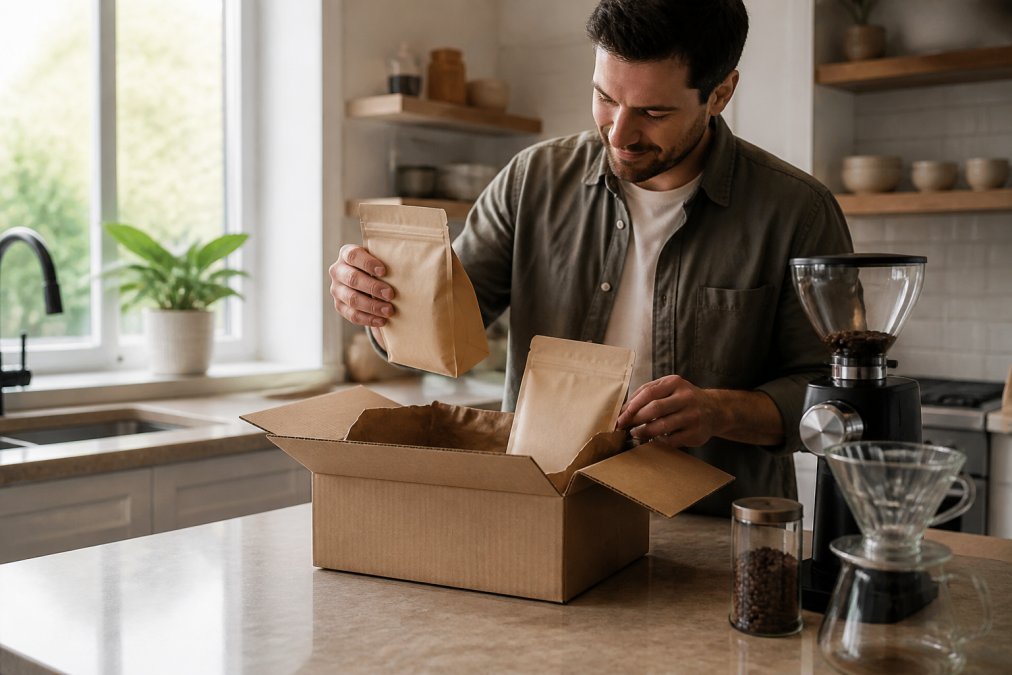
Cost Savings and Per-Cup Pricing
Per-cup pricing is where subscriptions usually beat café habits and often beat premium grocery bags. A 300g bag brewed at roughly 18g per cup yields about 16 cups, so a $34 two-bag tasting pack works out to around $1 per cup (peer-reviewed research).
Compare that to a daily café latte and the gap is obvious. Compare it to a mid-tier grocery bag and the math is closer, but the grocery bag has usually been sitting for weeks before you open it.
Where subscriptions genuinely save money:
- Bundles spread cost across multiple origins at a lower per-bag rate
- Fewer wasted bags because you're not overbuying to hit free shipping
- Less trial-and-error spending on beans you end up disliking
The honest limitation: if you drink one cup a day, a six-bag bundle will outpace your consumption. Match the bundle size to your actual intake before chasing the lower per-bag price.
Freshness and Roast Dates: Why Timing Matters
Freshness is the single biggest argument for a subscription, and it's the one most grocery shoppers never get to evaluate. Coffee peaks roughly 4 to 21 days after its processing date, depending on the roast level and brewing method (peer-reviewed research).
That window is why processing dates matter more than best-before dates. A best-before stamp tells you almost nothing about when the beans were actually processed, and by the time a bag reaches a shelf, the peak has often passed.
What most guides miss is that freshness isn't a single moment. Light roasts need longer to settle and taste flat if brewed too soon. Darker roasts release their aromatics earlier and fade faster. A subscription that ships close to the processing date lets you hit that window on purpose rather than by luck.
Variety and Single-Origin Exploration
Variety is the benefit people underestimate before subscribing and value most after. A curated selection lets you move through single-origin coffees and roast profiles without committing to a full bag of something you might not enjoy.
This is where tasting notes earn their place. A washed Ethiopia Yirgacheffe reads floral and citrus-forward; a Sumatra reads earthy and full-bodied. Those aren't marketing flourishes, they're a shorthand for what the cup will actually taste like.
The practical approach is to rotate deliberately rather than randomly:
- Start with a medium roast as your baseline
- Add one light and one dark in the same order
- Note which origin you return to
- Build your next order around that preference
For anyone unsure where to start, a smaller tasting pack is a lower-risk way to map your own taste than buying six full bags blind.
Flexibility: Pausing, Skipping, and Canceling
Flexibility is the feature that separates a subscription you keep from one you resent. The ability to pause, skip a delivery, or cancel outright matters more than most buyers expect when they sign up, and the details of how those controls work are where plans quietly differ.
Subscription fatigue is real. A plan that keeps arriving while you're traveling, or while your cupboard is already full, turns a pleasure into clutter and waste. The beans don't spoil overnight, but a backlog of four unopened bags is money sitting on a shelf losing its peak window week by week.
The three controls, and what to check on each
Skip a single delivery. This is the most useful control and the one most often buried. The key detail is the cutoff: most services lock changes 48 to 72 hours before the order is packed, and once it ships you're committed. Find that cutoff before you need it, not the morning you're leaving for a trip.
Pause the plan. Pausing differs from skipping because it suspends the schedule indefinitely rather than removing one shipment. Some plans cap a pause at one to three months before it auto-resumes; others let it run open-ended. Know which one you're on, because an auto-resume you forgot about is the most common source of an unwanted delivery.
Cancel outright. A clear, self-serve cancellation, a button in your account, not an email to support, is the strongest signal that a service trusts its own product. Watch for the pattern where 'pause' is offered prominently but cancellation requires a phone call or a retention chat. That friction is a design choice, and it tells you what the company expects its churn to look like.
Managing the backlog before it happens
The real skill isn't canceling well, it's never needing to. Two habits prevent almost all subscription waste:
- Audit your cupboard before each delivery ships. If you still have two unopened bags when the next order is due, skip it. That single check is the difference between a subscription that saves money and one that quietly costs more than the café.
- Adjust the cadence, not the bundle. If you consistently have surplus, the fix is a longer interval, not a smaller order. Stretching a monthly plan to every six weeks keeps the per-bag value while matching your actual intake.
A plan that's easy to leave is usually easier to stay with. The corollary is just as true: a plan you never have to pause is one you've already set up correctly.
How Coffee Subscription Frequency Works
Coffee subscription frequency is how often your order ships, and it should be set by your consumption rate, not by the discount on offer. Weekly, biweekly, and monthly are the common options, with some plans allowing custom intervals.
Delivery frequency is a consumption math problem. Weigh how much coffee you brew per day, multiply by the days between deliveries, then add a small buffer. If you go through roughly 18g per cup and brew two cups daily, that's about 1kg per month, or roughly three 300g bags.
Under-ordering leaves you scrambling at the grocery store, which defeats the purpose. Over-ordering means stale beans and wasted money. Automated replenishment works well when the interval matches reality, and badly when it's set to whatever the default was.
| Your Daily Intake | Cups Per Month | Coffee Needed | Suggested Frequency |
|---|---|---|---|
| 1 cup | ~30 | ~540g | Every 3 weeks |
| 2 cups | ~60 | ~1.1kg | Every 4 weeks |
| 3+ cups | ~90+ | ~1.6kg+ | Every 2-3 weeks |
The storage problem nobody warns you about
Here's the part most frequency guides skip: a delivery that matches your monthly intake still means you're holding several weeks of beans at once. Peak flavor sits roughly 4 to 21 days after the processing date, so a bag you open on day 30 is already past its best window, even though it arrived fresh.
The fix is to treat your delivery as two batches, not one:
- Keep one bag in the cupboard in an airtight, opaque container away from heat and light. This is your working supply.
- Freeze the rest in the original valve bag or a sealed container, and move a bag to the cupboard as you finish the previous one. Whole bean coffee holds up far better frozen than on a shelf, and you can grind straight from frozen without harming the brew.
This is why a slightly longer interval often beats a slightly larger bundle. Fewer, fresher deliveries mean less time in storage and more cups inside the peak window.
Matching cadence to how you actually drink
Consumption isn't flat. Most households drink more on weekends, more in winter, and less during travel. A frequency that ignores those swings will feel wrong half the year.
A practical approach is to set your interval for your average week, then use skips to absorb the busy stretches and a one-off top-up order to cover the heavy ones. That keeps the subscription as your baseline rather than your only source, which is how most long-term subscribers actually run it.
How to Choose a Coffee Subscription
Choose a coffee subscription by matching four variables to your habits: freshness, variety, flexibility, and cost per cup. Get those right and the plan runs itself.
Use this checklist before you commit:
- Does the supplier publish processing dates on every bag?
- Can you pause or skip without penalty?
- Is the cancellation policy clear and self-serve?
- Do the bundle sizes match your monthly intake?
- Are grind size and whole bean both offered?
- Are the origins and sourcing standards stated plainly?
For most households, the best starting point is a mid-sized bundle that covers a few weeks and lets you test both a light and a dark profile side by side. Gilded Grind's Global Coffee Collection covers six origins in one order, which is a practical way to find your baseline before settling into a recurring rhythm. If you already know your preference, the Light Roast Coffee Bundle and Dark Roast Coffee Bundle narrow the field to one direction.


The real challenge with any subscription isn't finding good beans. It's building a rhythm that matches how you actually drink coffee, so nothing goes stale and nothing runs out. Gilded Grind offers a curated selection of premium, nature-inspired beans with roast profiles from light to dark, plus convenient bundles built for exactly that kind of planning. Start with a bundle, dial in your frequency, and let the ritual take care of itself. Shop the full collection and find your baseline.
Frequently Asked Questions
Is a coffee subscription worth it for home brewers?
For home brewers who drink coffee daily, a specialty coffee subscription often costs less per cup than café purchases while delivering fresher beans. A 300g bag brewed at roughly 15g per cup yields about 20 cups, so a $75 four-bag bundle works out to under $1 per cup. The main value is consistent access to freshly roasted, single-origin beans without repeated trips to a store.
How does a coffee subscription ensure consistent quality at home?
Consistency comes from two things: fixed sourcing standards and predictable delivery timing. Specialty suppliers publish tasting notes and cupping scores so you know what to expect, and recurring orders arrive before your current bag runs out. Storing beans in an airtight container away from light and heat keeps flavor stable between deliveries, so every cup tastes the way the supplier intended.
Can a coffee subscription help me discover new flavor profiles?
Yes. Curated selections rotate through origins and roast levels, letting you compare tasting notes side by side. A bundle like the Global Coffee Collection covers six origins in one shipment, which is a practical way to learn whether you prefer bright, fruity light roasts or deeper, chocolatey dark roasts without committing to a full bag of each.
What should I look for in a high-quality coffee subscription service?
Check four things: whether processing dates are printed on the bag, how often deliveries arrive, whether you can pause or skip without penalties, and what sourcing information the supplier publishes. Transparent tasting notes, certifications, and origin details signal a supplier that stands behind its bean quality. Flexible frequency matters too, since your consumption changes with travel and seasons.


