
Table of Contents
- Why Bean Choice Matters More Than You Think for Automatic Machines
- Oily vs Dry Coffee Beans for Super-Automatics: What You Need to Know
- Best Roast Level for Espresso Machines: Blonde, Medium, and Dark Compared
-
The Best Coffee Beans for Automatic Machines: Our Top Picks
- 1. Huila Colombia Medium-Dark, Best All-Rounder for Super-Automatics
- 2. Betulia Colombia Medium-Dark, Best for Clean, Sweet Espresso
- 3. Sumatra G1 Dark, Best for Bold, Full-Bodied Shots
- 4. Peru Cajamarca FTO Medium-Dark, Best Ethical and Organic Pick
- 5. Yirgacheffe Ethiopia Medium, Best for Bright, Floral Profiles
- Arabica vs Robusta Blends: Which Works Better in Automatic Machines?
- Grinder Calibration, Water Hardness, and Troubleshooting Clogged Brew Units
- How to Clean Your Automatic Coffee Machine Grinder to Protect Bean Quality
- Conclusion
Last Updated: August 15, 2026
Choosing the best coffee beans for automatic machines is one of the most consequential decisions you'll make for your morning ritual. The wrong bean can clog your brew unit, damage ceramic burrs, and produce flat, lifeless shots. This guide breaks down everything that matters: oil content, roast profiles, grind behavior, and our top single-origin picks for 2026.
Quick Picks:
- Best All-Rounder: Huila Colombia Medium-Dark, ideal body and low-enough oil content for daily use
- Best for Clean Espresso: Betulia Colombia Medium-Dark, washed process, sweet clarity
- Best Bold Shot: Sumatra G1 Dark, full-bodied, USDA organic certified
- Best Ethical Pick: Peru Cajamarca FTO Medium-Dark, Fair Trade, organic, stone fruit notes
- Best Floral Profile: Yirgacheffe Ethiopia Medium, jasmine, orange zest, berry brightness
Why Bean Choice Matters More Than You Think for Automatic Machines
Super-automatic espresso machines are precision instruments. Unlike manual setups where you control tamping pressure and extraction time, these machines handle everything internally, meaning bean properties have an outsized effect on the outcome.

How Oil Content Affects Your Grinder and Brew Unit
Coffee oil content is the single most critical variable when selecting beans for a super-automatic. Darker roasts release oils to the surface, which coat grinder burrs and accumulate in the brew unit over time, eventually causing grinding inconsistency, channeling during extraction, and in serious cases, a fully clogged brew unit.
The practical rule: oily beans are high-risk in super-automatics. Medium and medium-dark roasts offer developed flavor without the surface slick of a very dark roast. If you can see a sheen on the bean before it hits the hopper, it's too oily for regular use.
Bean Freshness, Degassing, and Shot Quality
Freshly roasted beans off-gas carbon dioxide for several days after roasting. Beans that haven't fully degassed produce excessive crema that collapses quickly and tastes acidic and hollow. Beans beyond four to six weeks post-roast have lost the volatile compounds that create complexity.
The ideal window for brewing is roughly seven to twenty-one days post-roast. Beans from Gilded Grind are freshly roasted before shipping, so you're working within that optimal window.
Specialty Coffee Association's guide to coffee freshness and degassing
Oily vs Dry Coffee Beans for Super-Automatics: What You Need to Know
Dry beans, typically light to medium roasts, flow through grinder burrs without leaving residue. They're the safe default for any super-automatic. Oily beans create a coating on burr surfaces that progressively narrows the grind channel, producing finer output until the machine chokes or pulls inconsistent shots.
Dark roasts aren't off-limits if processed to minimize surface oil migration. The Sumatra G1 Dark uses wet-hulling, a traditional Indonesian process that produces a denser, less oily bean than conventional drum-roasted darks, even at the same roast level.

| Bean Type | Oil Level | Grinder Risk | Recommended Use Frequency |
|---|---|---|---|
| Light Roast (washed) | Very Low | Minimal | Daily, any super-automatic |
| Medium Roast (washed) | Low | Minimal | Daily, any super-automatic |
| Medium-Dark Roast | Moderate | Low-Medium | Daily with weekly cleaning |
| Dark Roast (wet-hulled) | Moderate | Medium | Daily with weekly cleaning |
| Very Dark / French Roast | High | High | Occasional use only |
Best Roast Level for Espresso Machines: Blonde, Medium, and Dark Compared
The best roast level depends on what you want in the cup, but the machine's mechanics narrow the field considerably.
Blonde roast beans are dense and low in surface oil, excellent for grinder longevity. They produce a lighter-bodied shot with high acidity and delicate flavor notes. The challenge: these hard beans require more grinding force, and the higher acidity can taste sharp if the machine's default pressure and dosage aren't calibrated for lighter roasts.
Medium and medium-dark roasts are the consensus choice for super-automatics. The beans grind consistently at standard settings, produce a balanced shot with good body and mouthfeel, and carry enough natural sweetness to complement the espresso's inherent bitterness. According to the Specialty Coffee Association's roast classification standards, medium-dark roasts fall in the 210-225°C development range, exactly where espresso extraction performs most predictably in automated systems.
Dark roasts deliver bold, full-bodied experience with lower acidity and deep chocolate or smoky flavor notes. The tradeoff is oil content and the need for more attentive maintenance. For machines with ceramic burrs, dark roasts are harder on the grinding surface over time.
The Best Coffee Beans for Automatic Machines: Our Top Picks
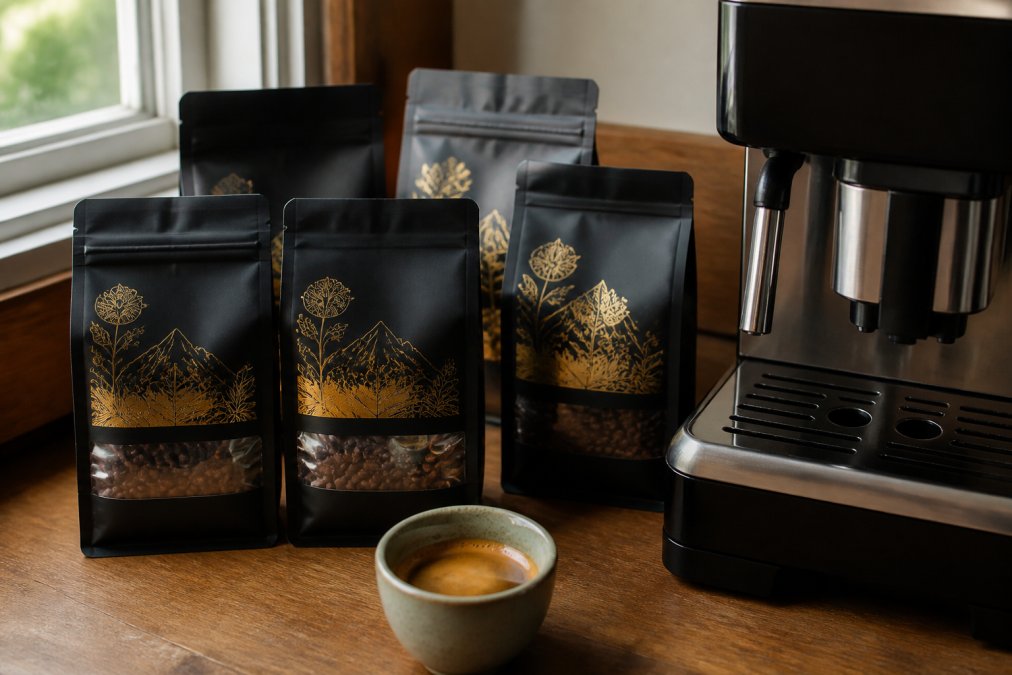
After testing across roast profiles, processing methods, and grinder behavior, these beans genuinely perform in super-automatic machines. Each is available from Gilded Grind, freshly roasted and shipped whole bean.
1. Huila Colombia Medium-Dark, Best All-Rounder for Super-Automatics
The Huila Colombia Medium-Dark ($18.00) is the clearest answer to "what should I put in my machine every day." Grown in nutrient-rich volcanic soil in the highlands of Huila, this 100% Arabica bean delivers toasted almond richness, subtle cherry brightness, and a smooth finish, without the surface oil that makes darker roasts problematic. The washed processing method keeps the bean surface clean and dry, translating directly to consistent grind output and a brew unit that stays cleaner between cycles.
Flavor notes: Toasted almond, cherry, rich body Best for: Daily use, any super-automatic, espresso and drip
Pros:
- Low oil content, grinder-friendly
- Balanced acidity and body
- Sustainably sourced, specialty grade
Cons:
- Won't satisfy drinkers who want extreme boldness
2. Betulia Colombia Medium-Dark, Best for Clean, Sweet Espresso
The Betulia Colombia Medium-Dark ($18.00) takes the washed-process Colombian profile in a slightly brighter direction. From the highlands of Antioquia, these beans carry tasting notes of sugar cane, lime, and chocolate. The washed process strips the mucilage from the bean before drying, producing a drier surface and more consistent grind.

Flavor notes: Sugar cane, lime, chocolate Best for: Drinkers who want brightness and sweetness without sourness
Pros:
- Exceptional clarity in the cup
- Washed process means minimal grinder residue
- Complex without being demanding
Cons:
- The lime acidity may not suit those who prefer low-acid profiles
3. Sumatra G1 Dark, Best for Bold, Full-Bodied Shots
The Sumatra G1 Dark ($22.00) is the one dark roast in this list, earning its place because of how it's processed. Wet-hulling produces a bean with lower surface oil than conventional dark roasts at the same temperature, making it more manageable in a super-automatic than its roast level suggests. USDA organic certified, this single-origin Arabica delivers syrupy dark chocolate, earthy depth, and a smoky finish. Run a cleaning cycle every week when using this bean regularly.
Flavor notes: Dark chocolate, earth, smoky finish Best for: Those who want bold, full-bodied espresso and are committed to regular maintenance
Pros:
- USDA organic certified
- Wet-hulled for lower surface oil than typical dark roasts
- Exceptional body and mouthfeel
Cons:
- Requires more frequent grinder and brew unit cleaning than medium roasts
4. Peru Cajamarca FTO Medium-Dark, Best Ethical and Organic Pick
The Peru Cajamarca FTO Medium-Dark ($22.00) carries both organic and Fair Trade certifications. Grown at 1,000-2,050 metres in the Cajamarca highlands, these washed-process beans reveal stone fruit, honey, and raisin notes. Fair Trade certification through Fairtrade Canada's certification standards provides transparency about sourcing and farmer treatment. The washed process keeps oil content low, making this a genuinely grinder-friendly option.
Flavor notes: Stone fruit, honey, raisin Best for: Ethically minded buyers who want certification alongside quality
Pros:
- Certified organic and Fair Trade
- Washed process, low oil content
- Elegant, refined flavor profile
Cons:
- Slightly higher price point than the Colombian options
5. Yirgacheffe Ethiopia Medium, Best for Bright, Floral Profiles
The Yirgacheffe Ethiopia Medium ($19.00) offers a different espresso experience. Where the Colombian and Peruvian options lean into body and sweetness, this bean leads with delicate jasmine and rose-like floral notes, bright orange zest acidity, and natural berry sweetness. At medium roast, the bean surface is dry and clean, excellent for grinder longevity. The higher acidity means extraction pressure and dosage settings matter more; dial in the grind size one step finer than your default.
Flavor notes: Jasmine, rose, orange zest, berry Best for: Drinkers who want a floral, tea-like espresso profile
Pros:
- Very low oil content at medium roast
- Exceptional aromatic complexity
- Organic certified
Cons:
- Higher acidity requires grinder calibration; not forgiving of under-extraction
Arabica vs Robusta Blends: Which Works Better in Automatic Machines?
Pure Arabica beans dominate specialty coffee for good reason: they offer greater aromatic complexity, more nuanced acidity, and a cleaner flavor profile. Every bean in the Gilded Grind collection is 100% Arabica.
Robusta produces thicker crema, carries roughly twice the caffeine of Arabica, and costs significantly less. The tradeoff is a harsher, more bitter flavor profile and a rubbery or grain-like aftertaste. For super-automatic machines, Arabica's lower density and more consistent grind behavior makes it the better choice. Robusta beans are harder and denser, increasing wear on ceramic burrs and causing inconsistent dosage in volumetric grinding systems.
Grinder Calibration, Water Hardness, and Troubleshooting Clogged Brew Units
Getting the right bean is step one; calibrating your machine to that bean is what separates a mediocre shot from a great one.
Grinder calibration for bean density: Lighter, denser beans require a finer grind setting to achieve the same extraction pressure as a softer medium-dark. When switching from a medium-dark Colombian to an Ethiopian medium, move one step finer.
Water hardness and extraction: Hard water contains elevated calcium and magnesium levels that interact with coffee acids during extraction. Use filtered water with a target hardness of 50-175 mg/L for best extraction results, as outlined in the Specialty Coffee Association's water quality standards.
Troubleshooting a clogged brew unit: A clogged brew unit typically presents as slow flow or error codes related to pressure. The most common cause is accumulated coffee oil and fine grounds compacted inside the unit. Remove the brew unit, rinse under warm water without soap, use a soft brush to clear the filter screen and piston face, then reinstall and run two rinse cycles before brewing. If the clog persists, the piston seal may need replacement; consult your machine's service documentation.
How to Clean Your Automatic Coffee Machine Grinder to Protect Bean Quality
Grinder maintenance is the unglamorous side of great espresso, and the most neglected. A dirty grinder doesn't just affect flavor; it changes grind size distribution, which throws off dosage and extraction pressure for every shot you pull afterward.
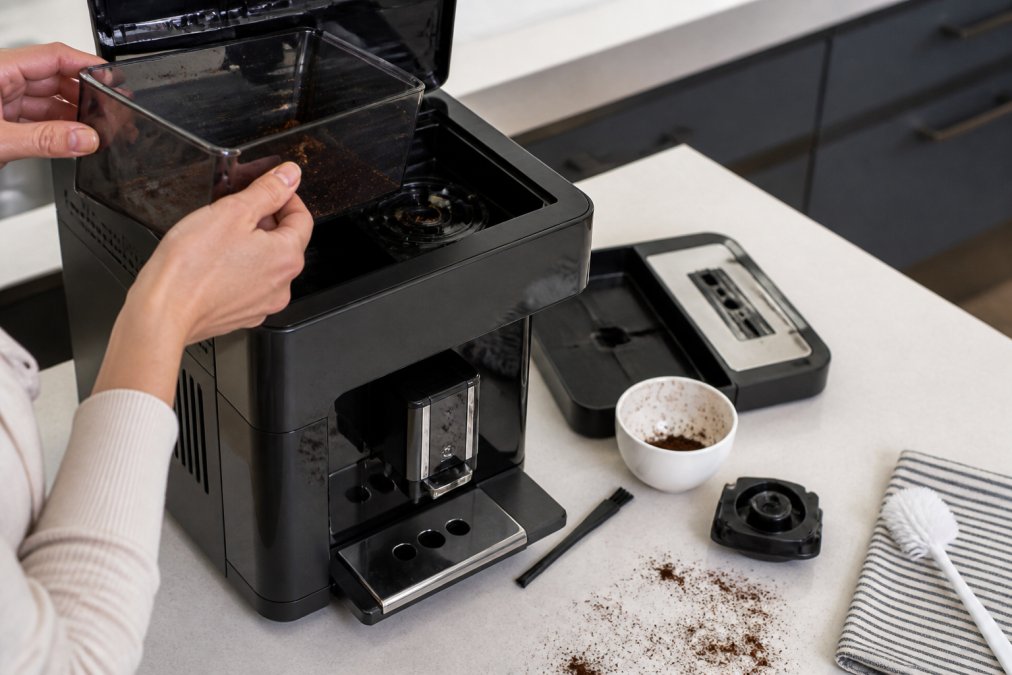
The cleaning frequency depends on what you're brewing. Medium roasts with low oil content can go two weeks between grinder cleans with daily use. Dark roasts like the Sumatra G1 should trigger a clean every seven days. Here's the process:
Weekly grinder cleaning routine:
- Empty the bean hopper completely
- Use a dry brush to sweep loose grounds and chaff from the burr chamber
- Wipe the hopper interior with a dry cloth; moisture causes grounds to clump
- Run a grinder cleaning tablet through the burrs if your machine supports it
- Purge with a small handful of your regular beans after using cleaning tablets
- Wipe the exterior grinder vent with a dry cloth
Monthly deep clean:
- Remove burrs if your machine allows user access (check your manual)
- Brush burr surfaces gently with a stiff-bristle cleaning brush
- Inspect for coffee oil buildup, a yellowish or brownish coating on steel burrs
- Run a full machine cleaning cycle including the brew unit, steam wand, and drip tray
A common mistake is using flavored or oily cleaning beans as a "natural" grinder cleaner. These introduce additional oils rather than removing them. Stick to purpose-made grinder cleaning tablets or a small quantity of your driest, lowest-oil beans.
| Roast Type | Cleaning Frequency | Key Risk if Neglected |
|---|---|---|
| Light / Medium | Every 2 weeks | Stale grounds, flavor contamination |
| Medium-Dark | Every 10 days | Mild oil buildup, grind drift |
| Dark (wet-hulled) | Every 7 days | Oil accumulation, brew unit clogging |
| Very Dark / Oily | Every 3-5 days | Rapid clogging, burr damage |
Super-automatic machines reward the right bean choice more than almost any other brewing variable. Gilded Grind's collection is built around this exact problem: freshly roasted, single-origin beans across roast profiles that genuinely work in automatic machines, from the low-oil Huila Colombia Medium-Dark to the USDA-certified Sumatra G1 Dark. Explore the full range and find the profile that fits your machine and your palate. SHOP ALL COLLECTION at gildedgrind.com.
Frequently Asked Questions
Why should you avoid oily coffee beans in automatic machines?
Oily beans leave a sticky residue on ceramic and steel burrs inside super-automatic grinders. Over time, that residue builds up, causes clumping, and can jam the brew unit or block the dosage chute. Dark roasts with visible surface oil are the most common culprits. Choosing a medium or medium-dark roast with a drier surface, like the Huila Colombia or Betulia Colombia, gives you rich flavor without the maintenance headaches that come with heavily oily beans.
What roast level is best for super-automatic espresso machines?
Medium-dark roasts are the safest and most consistent choice for super-automatic espresso machines. They produce good crema, a full body, and manageable acidity, while staying dry enough to grind cleanly without clogging. Blonde or light roasts can work but often require grind size adjustments because they are denser. Very dark roasts produce excellent flavor but risk grinder buildup if the beans are heavily oily. A medium-dark Arabica is the practical sweet spot for most automatic setups.
Do I need to buy specific 'espresso' beans for my automatic machine?
No. 'Espresso beans' is a marketing label, not a botanical category. Any quality whole bean coffee can be used in an automatic machine, what matters is roast level, oil content, and freshness. Specialty-grade, 100% Arabica beans roasted to a medium or medium-dark profile perform well across most super-automatic grinder settings. Single-origin options like Yirgacheffe Ethiopia or Huila Colombia deliver distinct flavor notes without needing a dedicated 'espresso' label on the bag.
Is 100% Arabica better than a blend for automatic espresso machines?
For flavor clarity and grinder-friendliness, 100% Arabica is generally the better choice in super-automatic machines. Arabica beans are less dense than Robusta, produce lower acidity at medium-dark roast levels, and tend to have less surface oil. Robusta adds crema thickness and caffeine content, which some prefer, but it can be harsher on taste and harder on burrs over time. If you want a balanced shot with complex flavor notes and easier maintenance, a quality 100% Arabica is the more reliable option.
How do I prevent my automatic coffee machine grinder from jamming?
The most effective prevention is choosing non-oily beans, medium or medium-dark roasts with a dry surface. Beyond bean selection, run a grinder cleaning tablet through your machine every two to four weeks, and brush out the bean hopper monthly. Avoid storing beans in the hopper for more than a few days, as oils oxidize and become stickier over time. If your machine has an adjustable grind setting, calibrate it slightly coarser when switching to a denser light roast to reduce pressure on the burrs.
This article was written using GrandRanker


