
Last Updated: October 24, 2026
Quick Summary
The best pour-over coffee maker depends on your household size and preferences: cone drippers suit single-cup brewing, flat-bottom drippers work well for two people, and larger glass or ceramic brewers with carafes serve families. Heat retention, filter type, and durability matter more than price alone when choosing a setup you'll use daily.
- Ceramic cone drippers offer the best heat retention and longevity, lasting 10+ years with minimal maintenance
- A flat-bottom dripper brewing into a small carafe is ideal for two people brewing two to four cups daily
- Over three years, a stainless mesh dripper costs $28-$65 total, while ceramic cone drippers cost $157-$324 including filters
- Gooseneck kettles enable precise water control for even extraction across the coffee bed
- Brew time typically falls between three and four minutes, with water temperature around 90-96°C
Table of Contents
- What Makes the Best Pour Over Coffee Maker for Your Home
- Comparison Table: Key Features and Pricing
- Pour Over Coffee Maker for Beginners: Start Simple
- Single-Cup Pour Over Coffee Maker Options
- Pour Over Coffee Ratio and Grind Size: Getting Extraction Right
- Best Gooseneck Kettle for Pour Over Coffee Brewing
- Choosing Your Pour Over Setup Based on Household Needs
- Frequently Asked Questions
What Makes the Best Pour Over Coffee Maker for Your Home
A pour-over coffee maker is a manual brewing device that uses gravity and precision to extract flavor from ground coffee, delivering a cup that reflects the true character of your beans.
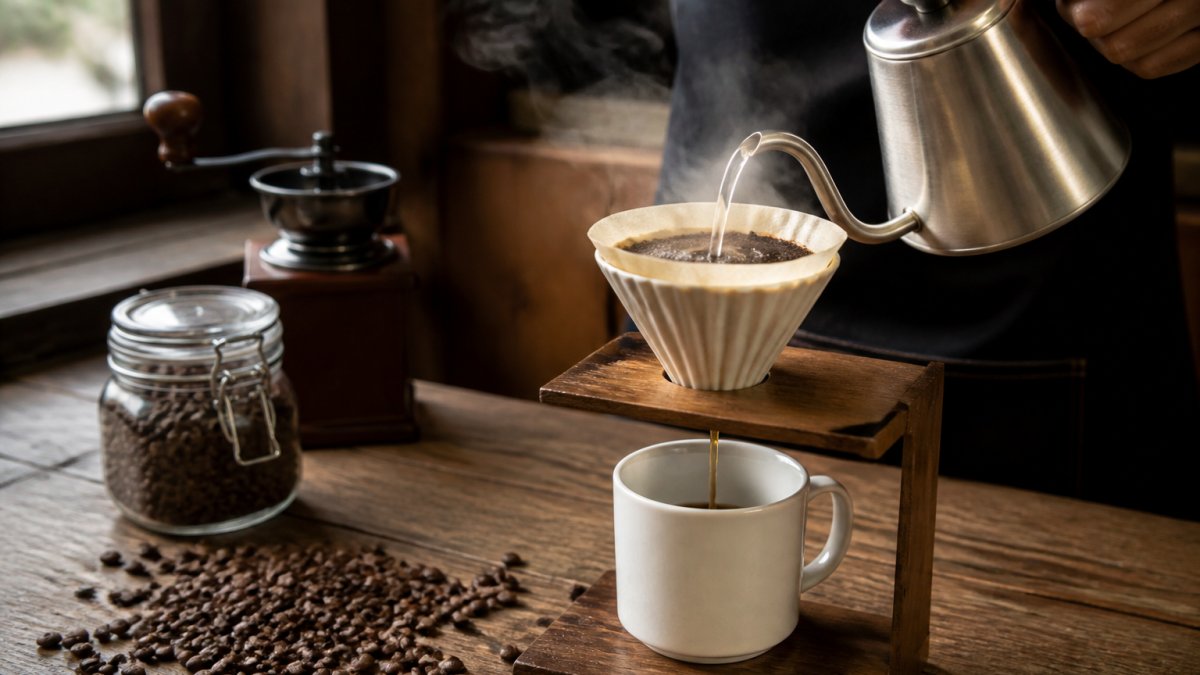
Below, we cover the key factors that separate a mediocre pour-over setup from one that consistently delivers excellent coffee.
Cone versus flat-bottom drippers, filter material, heat retention, household size, counter space, and brewing time all matter. Whether you're a beginner or refining an existing practice, this guide covers what actually moves the needle.
Comparison Table: Key Features and Pricing
Use this table as a starting filter, not a final answer.
| Brewer Type | Best For | Typical Capacity | Filter Type | Heat Retention | Typical Price (CAD) |
|---|---|---|---|---|---|
| Plastic cone dripper | Beginners, tight budgets, travel | 1-2 cups (300-500 ml) | #2 paper cone | Low | $12-$25 |
| Ceramic cone dripper | Single cups, heat stability | 1-2 cups (300-500 ml) | #2 paper cone | High | $25-$60 |
| Glass cone dripper | Visual brewing, easy cleaning | 1-2 cups (300-500 ml) | #2 paper cone | Medium | $20-$50 |
| Flat-bottom dripper | Consistent batches, couples | 2-4 cups (500-800 ml) | Flat-bottom paper | Medium | $25-$55 |
| Stainless steel dripper | Durability, camping, office | 1-2 cups (300-500 ml) | Reusable mesh or paper | Medium | $18-$45 |
| Large glass/ceramic brewer with carafe | Families, entertaining | 6-8 cups (900-1,200 ml) | #4 paper or flat-bottom | High | $45-$120 |
What the Table Does Not Tell You
Filter cost adds up.
Capacity figures assume a full brew. A "2-cup" cone is usually 300-500 ml, one large mug, not two standard cups. If two people each want a 300 ml mug, a flat-bottom dripper or a small carafe setup is the realistic minimum.
Heat retention changes extraction. Ceramic and double-wall glass hold temperature through a three-to-four-minute brew; thin plastic and single-wall glass lose heat fastest, which can flatten the cup. This matters more in a cool kitchen than most buyers expect.
Durability and replacement parts. Ceramic chips if dropped but lasts indefinitely otherwise; glass can crack with thermal shock; plastic is drop-resistant but scratches and retains odors; stainless steel has little to break, though mesh filters can clog.
How We Evaluated These Categories
Our assessment draws on how evenly each design distributes water across the coffee bed, how stable the brewer holds temperature during a three-to-four-minute brew, how easy it is to clean, and how available the matching filters are in Canadian retail. We also weighed footprint, stability on common mug and carafe sizes, and performance after repeated daily use. Where a category has a clear trade-off, mesh versus paper, plastic versus ceramic, we state it rather than ranking one as universally better.
Pour Over Coffee Maker for Beginners: Start Simple
Starting with pour-over coffee doesn't require expensive equipment or advanced technique: hot water, ground coffee, and gravity do the work. A basic cone-shaped dripper, a simple kettle, and a mug get you 95% of the way to excellent coffee.
Pour-over brewing is forgiving once you understand the core principles. Water temperature matters (around 90-96°C), grind size influences extraction, and brew time typically falls between three and four minutes, guidelines, not rigid rules.
Simple Home Brewing Guide For Beginners(page:2) offers detailed step-by-step instructions for getting started. Once you've mastered the basics, you can experiment with grind size adjustments and water temperature to refine your results.
The Gilded Grind Dark Roast | Single-Serve Pour Over Coffee ($2.80 per packet) eliminates setup complexity entirely.

Single-Cup Pour Over Coffee Maker Options
Single-cup brewing suits people who drink one or two cups daily and value convenience without sacrificing quality. With a smaller volume, water temperature stability and pour consistency become more critical to avoid under or over-extraction.
For those who want even more convenience, pre-packaged single-serve pour-over packets offer an alternative. These are especially useful for travel, the office, or when you want consistency without thinking about grind size and ratios. Dark Roast Single Serve Pour Over Coffee(page:3) provides premium beans in a grab-and-go format.
If you value simplicity and consistency, single-cup options are where pour-over brewing truly shines: no large carafe to manage, no coffee cooling between cups, and every brew is fresh.
Pour Over Coffee Ratio and Grind Size: Getting Extraction Right
Extraction is the process of dissolving the soluble compounds in coffee grounds that create flavor, aroma, and body.
The coffee-to-water ratio is your primary control lever.
Grind size directly affects how quickly water passes through the coffee bed. Finer grinds slow water flow and increase extraction time, suiting lighter roasts that need more time to release bright, acidic notes.
Pour Over Coffee Box | Med-Dark →
How To Improve Pour Over Coffee Extraction(page:1) provides detailed guidance on adjusting both variables to dial in your specific beans and taste preferences. The key is understanding that ratio and grind size work together.
Whole beans ground fresh at home give you far more control and better flavor.
Best Gooseneck Kettle for Pour Over Coffee Brewing
A gooseneck kettle transforms pour-over brewing from functional to precise. The thin, curved spout lets you control water flow with remarkable accuracy, which is essential for even extraction.
When water hits the coffee grounds unevenly, some particles extract faster than others. A gooseneck kettle lets you pour slowly and deliberately so every part of the coffee bed saturates at the same rate, which is why serious enthusiasts invest in one.
Pair it with whole beans from Gilded Grind, such as our Huila Colombia | Medium-Dark ($18.00), and you have the foundation for excellent coffee at home.

Choosing Your Pour Over Setup Based on Household Needs
Household size is the obvious filter, but the decisions that matter over a year of daily brewing are total cost of ownership, physical accessibility, and durability. This section covers all three, the angles most buying guides skip.
Match the Setup to Your Household
One person, one to two cups daily. A cone-shaped dripper on a single mug is the efficient choice: minimal equipment, quick cleanup, and you can change beans without waste. A plastic or glass cone plus a box of #2 filters costs roughly $20-$40 CAD to start, with filters running about $44-$88 CAD a year at two cups daily. A reusable mesh filter ($15-$30 CAD) cuts that recurring cost to near zero if you don't mind a fuller-bodied cup.
Two people, two to four cups daily. A flat-bottom dripper brewing into a small carafe (500-800 ml) keeps both mugs hot and distributes water more evenly across a larger coffee bed. Expect $25-$55 CAD for the dripper and $8-$15 CAD per box of flat-bottom filters. The carafe breaks most often, check that a replacement is sold separately.
Family or frequent entertaining. A larger glass or ceramic brewer with a 900-1,200 ml carafe handles six to eight cups, holds temperature better than plastic through a longer brew, and keeps the batch warm while you serve. Budget $45-$120 CAD for the brewer, plus #4 or flat-bottom filters at roughly 10-15 cents each. Larger brewers demand more attention to pour technique to extract evenly across the wider bed.
Limited counter space. A compact cone dripper stores in a drawer and occupies almost no footprint. Collapsible silicone drippers pack flat but trade some heat retention and stability. Measure your tallest mug before buying, some drippers sit low and won't clear a travel mug.
Travel or office. Single-serve pour-over packets or a stainless mesh dripper with a travel mug solve the problem with no cleanup and no glass to break. Mesh filters need rinsing and occasional deep cleaning to avoid clogging.
Total Cost of Ownership Over Three Years
The purchase price is the smallest part of the story. Here is a realistic three-year view in CAD for a two-cup-a-day household:
| Cost Item | Plastic Cone + Paper | Ceramic Cone + Paper | Stainless Mesh Dripper |
|---|---|---|---|
| Brewer | $12-$25 | $25-$60 | $18-$45 |
| Filters (3 years) | $132-$264 | $132-$264 | $0 |
| Replacement parts | Rarely available | Rarely needed | Mesh may need replacing ($10-$20) |
| Expected lifespan | 2-5 years | 10+ years | 5-10 years |
| 3-year total | $144-$289 | $157-$324 | $28-$65 |
The mesh dripper wins on raw cost, but paper filters deliver a cleaner cup and are more forgiving of grind inconsistency. The ceramic cone costs more upfront but is the most likely to still be in use a decade from now. The plastic cone is the cheapest entry point but the least durable and hardest to repair.
Accessibility and Ease of Use
Pour-over brewing involves lifting a kettle, holding it steady, and watching water levels, factors that matter for anyone with limited grip strength, arthritis, or mobility challenges.
- Grip and pouring effort. A full 1-litre gooseneck kettle weighs about 1 kg; a 1.7-litre kettle closer to 1.7 kg. A lighter kettle or smaller batches reduce strain, and electric gooseneck kettles with a balanced handle and hold-temperature setting remove the need to lift a heavy stovetop kettle repeatedly.
- Visibility of water levels. Glass drippers and carafes let you see the water level without tilting. Opaque ceramic and stainless brewers require you to judge by weight or sound, which is harder for some users.
- Stability. A dripper that sits securely on a wide-mouth mug is safer than one balanced on a narrow rim. Flat-bottom drippers with a wide base are the most stable.
- Cleanup. Rinsing a cone takes seconds; a mesh filter needs a thorough rinse and periodic deep clean. A carafe with a narrow neck is the hardest item to clean, look for a wide-mouth design.
- Learning curve. Flat-bottom drippers are generally more forgiving of uneven pours than cone drippers, making them a better fit for anyone who wants consistency without close attention to technique.
Durability and Repairability
Ceramic is the most durable in daily use but chips if dropped, and chipped edges can tear filters. Glass is easy to clean but vulnerable to thermal shock; preheat gradually rather than pouring boiling water into a cold carafe. Plastic is drop-resistant but scratches and retains odors; it is rarely repairable. Stainless steel has the fewest failure points, and mesh filters can be replaced individually. Across all types, the parts most likely to need replacement are carafe lids, mesh filters, and silicone gaskets; check that these are sold separately before you commit.
Available Coffee Types(page:4) lets you browse the full collection to match your household needs. Whether you're brewing for one or several, the beans you choose will pair with the setup that fits your routine.
Frequently Asked Questions
What is the difference between a pour-over dripper and a drip coffee maker?
A pour-over coffee maker is manual: you control the water flow, temperature, and brew time by hand. A drip coffee maker is automatic: you load grounds and water, then it brews without intervention. Pour-over methods typically offer more control over extraction and flavor consistency, while drip machines prioritize convenience. Both produce excellent coffee when done correctly, but pour-over suits people who enjoy the ritual and precision, while drip machines work better for busy mornings.
Which pour-over coffee maker is easiest for beginners?
Single-serve pour-over bags, like Gilded Grind's Dark Roast at $2.80 per cup, eliminate guesswork entirely; the grounds and filter are pre-measured, so you just add hot water. These bags are ideal if you're learning without committing to equipment.
Do pour-over coffee makers need paper filters?
Your choice depends on your preferred flavor profile and environmental priorities. Paper filters offer a cleaner cup and are more forgiving of grind inconsistency, while reusable mesh filters reduce waste and recurring costs but can allow more sediment into the brew.
How do you choose the right size pour-over coffee maker?
Match capacity to your daily routine. Consider your counter space and storage too. If you travel or work remotely, a compact single-cup option offers flexibility. Gilded Grind's whole-bean coffees like Yirgacheffe Ethiopia at $19.00 work beautifully in any size dripper; quality beans matter more than equipment size.


