
Table of Contents
- What Makes a Specialty Coffee Subscription Worth It
- How We Evaluated These Coffee Subscriptions
- Comparison: Top Specialty Coffee Subscriptions in Canada
- Best Coffee Subscription for Variety: Bundles That Deliver
- Coffee Subscription Frequency: Finding Your Ideal Cadence
- Pricing and Cost-Per-Cup Breakdown
- Shipping, Packaging, and Sustainability
- Frequently Asked Questions
Last Updated: September 26, 2026
What Makes a Specialty Coffee Subscription Worth It
The best specialty coffee subscriptions Canada review comes down to one question: does the coffee arrive fresh enough to justify the price? A subscription is worth it when beans reach your door within days of being packed, when the origin and tasting notes are stated plainly, and when you can pause without a penalty. It stops being worth it the moment you're paying a premium for coffee that sat in a warehouse.
- Freshness:
- Traceability: single-origin lots name the farm, region, and elevation
- Grading: specialty lots are cupped and scored before sale
How We Evaluated These Coffee Subscriptions
We judged each option on bean quality, freshness signals, variety, and how much control you get over your own deliveries. Price alone tells you very little.
Bean Quality and Freshness
Freshness is the hardest thing to fake and the easiest thing to get wrong. Whole bean coffee holds its character far longer than pre-ground, which is why every bundle we stock ships as whole bean. A bag with no stated origin, no elevation, and no tasting notes is a warning sign.
Variety and Customization
Variety is where subscriptions either earn loyalty or lose it. A good program lets you move between roast levels and origins without cancelling and restarting. Our Light Roast Coffee Bundle gathers four 300g bags of light roast coffee, while the Dark Roast Coffee Bundle includes four 300g bags of dark roast coffee.
Comparison: Top Specialty Coffee Subscriptions in Canada
Most "best of" lists rank subscriptions by sticker price and call it a day. That tells you almost nothing about whether a program fits how you actually drink coffee. The table below compares the site's own bundles on the criteria that decide whether a subscription survives past month two: bag size, cost per cup, roast range, and how much control you get over your own deliveries.
| Bundle | Bags | Price | Roast Level | Cost Per Cup | Best For |
|---|---|---|---|---|---|
| Global Coffee Collection | 6 | $99.00 | Mixed | ~$0.66 | Exploring six origins side by side |
| Medium Roast Bundle | 6 | $99.00 | Medium | ~$0.66 | Balanced daily brewing |
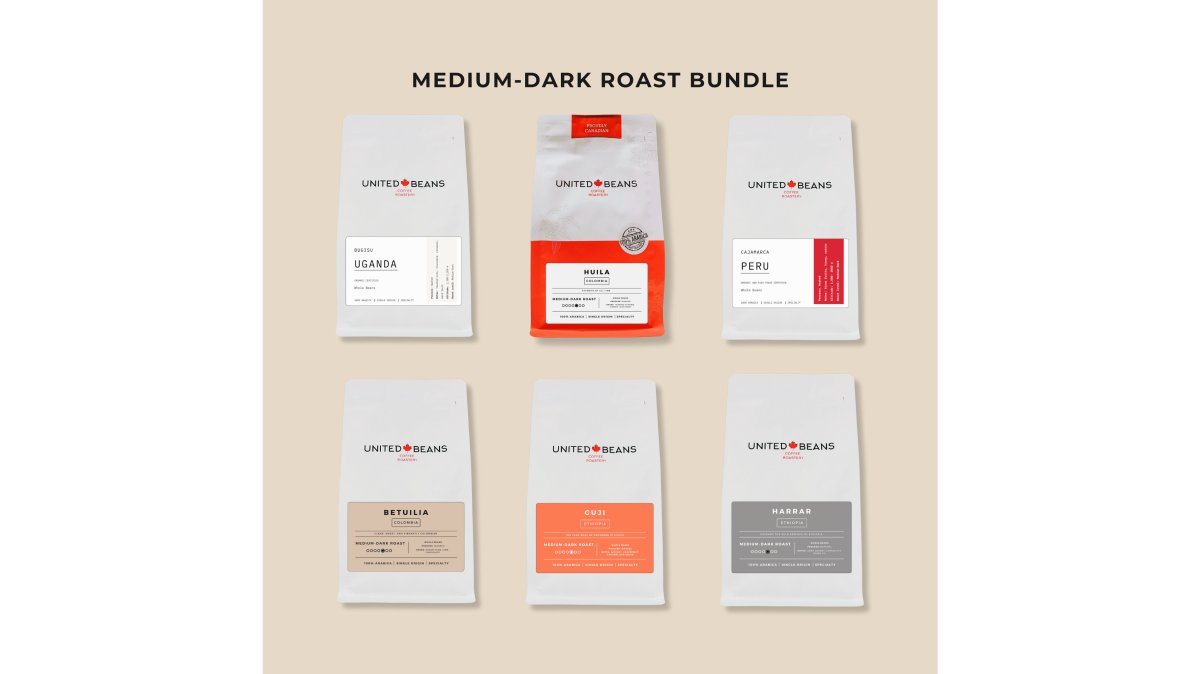
| Medium-Dark Roast Bundle | 6 | $99.00 | Medium-Dark | ~$0.66 | Chocolate and stone fruit cups |
| Light Roast Bundle | 4 | $75.00 | Light | ~$0.75 | Bright, floral cups |
| Dark Roast Bundle | 4 | $75.00 | Dark | ~$0.75 | Espresso and French press |
| Huila Colombia Duo | 2 | $34.00 | Medium and Dark | ~$0.68 | Tasting before committing |
How to Read This Table
Three things matter more than the headline price:


- Bag size, not bag count. A six-bag bundle at 300g each is 1.8kg of coffee. A four-bag bundle at the same size is 1.2kg. Compare weight, not the number of bags on the box.
- Roast range. A mixed-roast bundle is the right first order if you do not yet know whether you prefer bright or syrupy cups. A single-roast bundle is the right second order once you do.
- Entry point. The Duo exists so you can test a roast level before buying six bags of it. Two 300g bags is roughly six weeks of solo drinking at one cup a day.
The Canadian Buying Questions Nobody Else Asks
When you compare subscriptions, four questions separate a program that works from one that becomes a chore:
- Where does it ship from? A subscription fulfilled from within the country avoids cross-border transit time, customs handling, and currency conversion on every renewal. A subscription shipped from outside the country adds all three to every order.
- What is the delivery window? National couriers typically deliver within a few business days to major urban centres and longer to rural and remote postal codes. Ask for a realistic window to your province, not a generic "3-5 days."
- Can you pause or skip from your account page? If the only way to change a delivery is to email someone, the subscription will outlast your interest in it.
- Is the price in Canadian dollars? A subscription priced in another currency moves every time the exchange rate does. A price in Canadian dollars does not.
What This Table Does Not Cover
This comparison is limited to the bundles on this site. If you want to compare against regional roasters that ship nationally, look for the same four signals: bag weight, cost per cup, stated delivery window to your province, and whether you can pause from your account. A roaster that publishes all four is usually a roaster that has thought about the subscription experience rather than just the sale.
Best Coffee Subscription for Variety: Bundles That Deliver
For anyone who already knows they prefer darker cups, the Medium-Dark Roast Bundle covers six origins at the same roast level, which makes comparison fairer.
Coffee Subscription Frequency: Finding Your Ideal Cadence
Coffee subscription frequency should match how fast you actually drink, not how fast a retailer wants to ship. A 300g bag makes roughly 20 to 25 cups at a standard 12g dose. Two people drinking one cup each per day will finish about three bags a month.
Work backward from that:
- One cup a day, solo: one bag every three weeks
- Two cups a day, solo: one bag every ten days
- Two people, one cup each: three bags a month
- Four cups a day, household of two: six bags a month
Pricing and Cost-Per-Cup Breakdown
Cost per cup separates a good deal from a bad one far better than the sticker price. At a 12g dose, a 300g bag yields about 25 cups.
- Light or Dark Roast Bundle ($75.00, 4 bags): roughly $0.75 per cup
- Global or Medium Roast Bundle ($99.00, 6 bags): roughly $0.66 per cup
- Sumatra G1 USDA ($22.00, single bag): roughly $0.88 per cup
- Limu Ethiopia ($18.00, single bag): roughly $0.72 per cup
Shipping, Packaging, and Sustainability
Shipping logistics decide whether a subscription works in practice, and in this market they are more complicated than most guides admit. Whole bean coffee is light and compact, which keeps parcel costs low, but the distance between the fulfillment point and your kitchen still shapes how fresh the coffee tastes on arrival.

What Actually Affects Arrival Freshness
Three variables matter more than the shipping method itself:
- Distance from the fulfillment point. A bag shipped from within the same province typically arrives faster than one crossing a provincial or national border.
- Time in the sorting network. Parcels that move through multiple sorting facilities sit longer than parcels that move point-to-point. Larger, less frequent shipments reduce the number of times your beans sit in a facility.
- Seasonal volume. Late November through December is the slowest period for every national courier. If you subscribe during that window, expect delivery windows to stretch by several days.
A common pattern among subscribers is to order in larger, less frequent shipments for exactly this reason: fewer parcels, less handling, and a more predictable arrival date.
Cross-Border Versus Domestic Fulfillment
This is the single biggest gap in most subscription guides, which are written for a global audience and ignore how fulfillment location changes the experience.
- Domestic fulfillment means no customs handling, no brokerage fees, no currency conversion on renewal, and a delivery window measured in days rather than weeks. It also means the price you see is the price you pay.
- Cross-border fulfillment adds customs processing, possible brokerage charges, and an exchange rate that moves between renewals. It also adds transit time, which is the one thing coffee cannot get back.
Packaging: What to Look For and What to Do With It
Packaging is the other half of the equation, and it is where most subscriptions quietly fall short.
- Resealable bags with a one-way degassing valve hold aroma far longer than a rolled-down paper sack. The valve lets gas escape without letting air in.
- Light-blocking material matters more than most people realize. Clear packaging lets light degrade the contents over weeks.
- Compostable versus recyclable. Compostable bags require an industrial composting stream, which most municipal programs in this country do not accept at the curb. Recyclable bags are only recyclable if your municipality accepts that material type. Neither is automatically the better choice; the honest answer depends on what your local program actually takes.
- Bag size versus frequency. A larger bag shipped less often produces less packaging waste per cup than a small bag shipped monthly. If packaging waste is your concern, buy bigger and brew slower.
Verifying Sourcing Claims
On the sourcing side, look for named certifications rather than vague claims. Our Sumatra G1 carries USDA organic certification, and the Peru Cajamarca FTO is certified organic and Fair Trade, which means the ethical sourcing claim is documented rather than implied.
The practical test for any subscription is simple: can you find out where it ships from, how long delivery takes to your postal code, and what the bag is made of, before you pay? If any of those three is missing, the program is asking you to guess.
Frequently Asked Questions
Which coffee subscription box is the best in Canada?
The best coffee subscription box in Canada depends on your priorities. For variety, Gilded Grind's Global Coffee Collection offers six origins for $99. If you prefer a specific roast level, their Light Roast or Dark Roast bundles provide four bags for $75. Consider factors like bean quality, delivery frequency, and cost per cup when choosing.
Is a coffee subscription worth it for casual drinkers?
Yes, if you value convenience and freshness. Subscriptions deliver freshly roasted beans directly to your door, often within days of roasting. For casual drinkers, a monthly or bi-monthly cadence prevents stale beans. Gilded Grind's bundles start at $18 for a single bag, making it easy to try without a long commitment.
How do I choose the right coffee subscription for my palate?
Start by identifying your preferred roast level: light for bright, floral notes; medium for balanced flavors; dark for bold, smoky profiles. Gilded Grind offers bundles across all roast levels, plus single-origin options like Ethiopia Limu (light) and Sumatra G1 (dark). Many subscriptions include tasting notes to guide your selection.
What should I look for in a premium coffee subscription service?
Look for freshness (roasting date on the bag), ethical sourcing (Fair Trade or organic certifications), and flexible delivery frequency. Gilded Grind provides 100% Arabica beans, with options like Peru Cajamarca FTO certified organic and Fair Trade. Packaging should protect beans from light and air to maintain flavor.
Can I pause or skip a coffee subscription if I travel?
Most premium subscriptions, including Gilded Grind, allow you to pause, skip, or adjust your delivery frequency. This flexibility is essential for travelers or those who consume coffee irregularly. Check the cancellation policy before subscribing to ensure it aligns with your needs.
Choosing well comes down to matching a bundle to how you actually brew, then confirming the freshness and sourcing claims are documented rather than assumed. That is the standard Gilded Grind holds itself to: 100% Arabica whole bean coffee, a full range of roast profiles from light to dark, and bundles built for people who treat the morning cup as a ritual rather than a refill. Explore the collection, start with a smaller bundle, and let your own palate set the cadence.


