
Table of Contents
- Understanding Roast Intensity and Direct Trade Coffee
- Light Roast: Brightness and Origin Character
- Medium Roast: Balance and Versatility
- Dark Roast: Boldness and Depth
- Coffee Intensity Levels and Personal Preference
- Coffee Flavor Profiles Across Roast Levels
- Coffee Bean Selection for Brewing Methods
- Direct Trade Sourcing and Roast Selection
- Frequently Asked Questions
Last Updated: October 10, 2026
Understanding Roast Intensity and Direct Trade Coffee
At Gilded Grind, we've curated collections across multiple roast levels because direct trade sourcing means you're buying beans with distinct origin character worth exploring at various intensities.
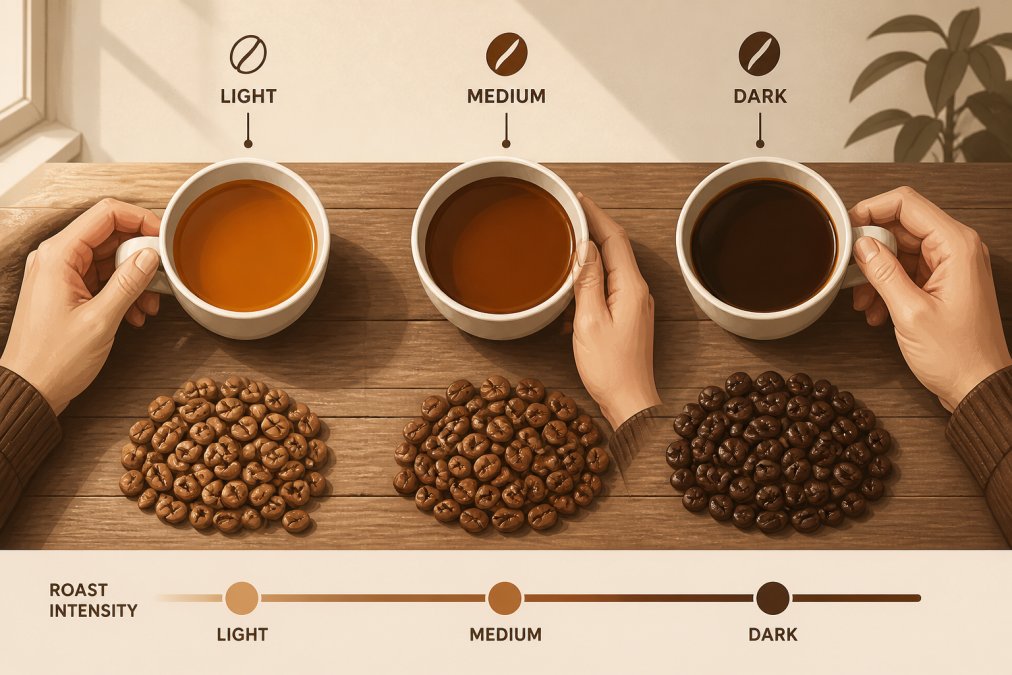
Direct trade coffee is sourced directly from farmers, ensuring traceability and unique characteristics, acidity, sweetness, body, that change dramatically depending on roast intensity. A light roast from Ethiopia tastes entirely different from a dark roast of the same bean.

Light Roast: Brightness and Origin Character
A light roast from Costa Rica Finca Lum or Ethiopia Yirgacheffe will taste distinctly different because their natural profiles are preserved.
Flavor Profile and Acidity
Light roasts deliver bright acidity and pronounced origin flavors. You'll notice fruity notes, floral qualities, and complexity that darker roasts mute. The body is lighter, less full-mouthed, because less time in heat means less caramelization of sugars. Sweetness in light roasts comes from origin character rather than caramelized development.
Acidity in specialty coffee means brightness, complexity, and liveliness, a feature, not a flaw, especially in high-altitude origins.
When to Choose Light Roast
Choose light roast to taste origin character and complexity. Light roasts perform exceptionally well with pour-over methods, where water contact time allows full flavor extraction. The Light Roast Coffee Bundle | 4 bags includes Ethiopia Yirgacheffe, Costa Rica Finca Lum, Guatemala Antigua, and Ethiopia Limu.
Medium Roast: Balance and Versatility
Medium roasts balance origin character and caramelized sweetness, capturing both the bean's natural qualities. This is why medium roast remains the most popular choice globally, it works across brewing methods and appeals to the widest range of palates.
Body, Sweetness, and Nuance
Medium roasts offer fuller body with caramelized sweetness, chocolate, caramel, and nutty notes alongside origin character. Acidity is softer, less sharp. The Medium Roast Bundle | 6 Bags appeals to both beginners and experienced drinkers, offering complexity without the brightness that challenges some palates.
Brewing Flexibility
Medium roasts perform well across automatic machines, pour-overs, French press, and espresso, making them ideal if you brew multiple ways.
Dark Roast: Boldness and Depth
Origin character is muted beneath bold, smoky, caramelized notes. Dark roasts deliver the fullest body and lowest acidity.
Smoky and Caramelized Notes
Dark roasts taste of burnt sugar, dark chocolate, leather, and smoke, the intended flavor profile. The Dark Roast Coffee Bundle | 4 bags features Sumatra Dark Roast, El Salvador Dark Roast, Colombia Huila Dark Roast, and Ethiopian Harrar Dark Roast.

Body and Mouthfeel
Dark roasts coat your mouth with heaviness and fullness.
Coffee Intensity Levels and Personal Preference
The most effective way to discover your preference is a structured side-by-side tasting of the same origin at different roast levels.
A Practical Tasting Method
Brew three cups of the same coffee at light, medium, and dark roast intensities using identical brewing parameters: the same water temperature (around 90-96°C), the same grind size, and the same brew time. This removes variables so roast intensity becomes the only difference. Pour each into white cups so you can observe color progression clearly.
Taste in order from light to dark. Note what you notice:
- Aroma: Does the light roast smell fruity or floral? Does the dark roast smell smoky or earthy?
- First sip: Which feels most pleasant on your tongue, bright and sharp, balanced, or smooth and full?
- Aftertaste: Does one linger longer? Does any taste bitter or astringent?
- Body: Which feels heaviest in your mouth? Which feels lightest?
- Overall impression: Which would you want to drink again?
Many drinkers discover they prefer medium roast for everyday drinking but light roast for weekend mornings when they have time to savor complexity. Others find dark roast's boldness more satisfying across all contexts. There is no "correct" preference, only what tastes best to you.
Context Matters
Your preference may shift depending on time of day, mood, or what you're doing while drinking, and roast intensities direct trade sourcing means you can match your choice to the moment. You might prefer light roast's complexity when you're focused on tasting, but dark roast's straightforward boldness when you're rushing out the door. Direct trade sourcing means you're buying beans worth exploring at different intensities, so building a small collection across roast levels lets you match your choice to the moment rather than forcing one preference year-round.
Documenting Your Discoveries
Keep brief notes after each tasting: the origin, roast level, brewing method, and a one-sentence impression. Over time, patterns emerge. You might notice you consistently prefer light roasts from high-altitude origins but dark roasts from lower-altitude beans. You might discover that pour-over brewing brings out nuances you enjoy in light roasts, while automatic machines work better with medium roasts. These patterns become your personal roasting map, guiding future purchases without guesswork.
Coffee Flavor Profiles Across Roast Levels
Each roast intensity unlocks different flavor compounds. Light roasts emphasize fruity, floral, and acidic notes. Medium roasts balance origin character with caramel, chocolate, and nutty sweetness. Dark roasts showcase smoky, bold, and deep caramelized flavors. Understanding these profiles helps you predict what you'll taste before brewing.
| Roast Level | Acidity | Body | Sweetness | Dominant Flavors |
|---|---|---|---|---|
| Light | Bright, complex | Light | Origin-driven | Fruit, floral, tea-like |
| Medium | Balanced | Medium | Caramel, chocolate | Balanced, nuanced |
| Dark | Soft, muted | Full | Burnt sugar | Smoky, bold, deep |
Coffee Bean Selection for Brewing Methods
Your brewing method influences which roast intensity performs best, and each roast level requires slightly different brewing adjustments to extract its best flavors. Understanding these dynamics helps you choose beans that will shine with your equipment and dial in your technique for consistent results.
Automatic Drip Machines
Automatic drip machines work well with medium and dark roasts because their extraction is less precise and forgiving.
Best roast choice: Medium to dark roast
Grind size: Medium (similar to sea salt)
Water temperature: Most machines heat to 90-96°C; you cannot adjust this
Extraction time: Fixed by machine design; aim for 4-5 minutes total brew time
Light Roast Coffee Bundle | 4 bags →
Medium roasts offer the best balance in automatic machines, they won't taste over-extracted or bitter the way some light roasts can when water contacts grounds for too long, and they'll taste more complex than dark roasts.
Pour-Over and Manual Brewing (Chemex, V60, Kalita Wave)
Pour-over methods reward light to medium roasts because you control every variable: water temperature, pour speed, contact time, and saturation. This precision lets you coax out the nuance and complexity that light roasts offer.
Best roast choice: Light to medium roast
Grind size: Medium-fine (slightly finer than automatic drip)
Water temperature: 90-96°C; start at 93°C for light roasts to avoid over-extraction
Extraction time: 2.5-4 minutes depending on grind size and pour technique
For light roasts, pour slowly and deliberately to extend contact time and fully extract origin character. For medium roasts, a slightly faster pour works well.
French Press
French press immersion brewing works well with medium and dark roasts because the extended contact time (4 minutes) and full-immersion method extract bold flavors effectively.
Best roast choice: Medium to dark roast
Grind size: Coarse (similar to breadcrumbs)
Water temperature: 90-96°C
Extraction time: 4 minutes (time from water contact to plunging)
Light roasts in a French press often taste thin or under-extracted because the coarse grind and immersion method don't extract delicate origin flavors as effectively. If you prefer light roast, use a slightly finer grind (medium-coarse) and extend brew time to 5 minutes, though results may still feel less vibrant than pour-over.
Espresso Machines
Espresso's high-pressure extraction (9 bars) works best with dark and medium-dark roasts because their oils and caramelized sugars flow smoothly through the group head and create the body and crema espresso drinkers expect.
Best roast choice: Medium-dark to dark roast
Grind size: Fine (powder-like, but not flour)
Water temperature: 90-94°C (check your machine's specifications)
Extraction time: 25-30 seconds from water contact to finished shot
Light roasts in espresso often taste sour or thin because their acidity and delicate flavors don't translate well to high-pressure extraction.
Matching Roast to Your Equipment
If you own only one brewing device, choose a roast level that performs well with it: automatic machine owners should stock medium to dark roasts; pour-over enthusiasts can explore the full spectrum but will enjoy light roasts most; French press users benefit from medium to dark roasts. If you brew multiple ways, a collection spanning light, medium, and dark roasts lets you match the roast to the method and explore how the same origin tastes across different brewing techniques.
Direct Trade Sourcing and Roast Selection
Direct trade coffee arrives with documentation about the farmer, altitude, processing method, and harvest date. This transparency matters when choosing roast intensity because it tells you what potential the bean carries.
Gilded Grind's direct trade sourcing means each bean in our collection comes with context about where it grew and how it was handled. This traceability lets you make informed choices about which roast intensity will best express each origin's strengths.
Finding your ideal roast intensity means experimenting across light, medium, and dark options to discover what resonates with your palate. The Medium-Dark Roast Coffee Bundle | 6 bags and our other curated collections let you sample different roast levels without committing to single-origin purchases.

Frequently Asked Questions
What is the difference between light, medium, and dark roast intensities?
Light roast develops fewer flavor compounds and preserves origin character with bright acidity. Medium roast balances acidity and body while introducing caramel sweetness. Dark roast emphasizes bold, smoky flavors and reduced acidity with a fuller body. The roast intensity determines how much heat the beans receive, affecting flavor complexity, caffeine content, and how well they suit different brewing methods and personal taste preferences.
How do coffee intensity levels affect the taste of direct trade beans?
Coffee intensity levels reveal different dimensions of origin character. Light roasts showcase the bean's natural fruity, floral, and nuanced notes, essential for single-origin direct trade coffees where transparency and terroir matter. Medium roasts balance origin flavor with roasted sweetness, ideal for versatile brewing. Dark roasts emphasize boldness and caramelized notes, sometimes masking subtle origin profiles. Direct trade sourcing pairs best with roasts that highlight the farmer's specific growing practices and environmental conditions.
Which coffee flavor profiles work best with automatic coffee machines?
Medium and medium-dark roasts perform well in automatic machines because they extract predictably and develop balanced flavor profiles without requiring precise timing. Their fuller body compensates for the machine's fixed extraction method. Light roasts can work if you adjust grind size finer, but dark roasts may taste bitter in automatic brewers due to over-extraction. The best coffee beans for automatic machines balance acidity and body so the machine's standard brew cycle produces a smooth, flavorful cup without adjustment.
How should I choose a roast intensity for my brewing method?
Pour-over and manual brewing methods suit all roast intensities because you control extraction time and water temperature. Light roasts shine in pour-overs, revealing delicate flavors. Automatic machines work better with medium to medium-dark roasts for consistent results. French press brewing pairs well with dark roasts due to the immersion method's longer contact time. Match coffee bean selection for brewing methods by considering your equipment's extraction style: precise control allows lighter roasts, while automatic or immersion methods benefit from medium to dark roasts.
Does roast intensity affect caffeine content in coffee?
Roast intensity has minimal impact on caffeine content. Light, medium, and dark roasts contain roughly equal caffeine by weight. The perception of strength comes from flavor intensity and body, not caffeine. Dark roasts taste bolder and may feel stronger, but a light roast contains similar caffeine. If you prefer a stronger-tasting cup, focus on roast intensity and flavor profile rather than expecting caffeine differences between roast levels.
How does origin affect which roast intensity I should choose?
Origin and processing method shape which roast intensity best showcases the beans. Ethiopian and Kenyan coffees often highlight fruity and floral notes in light roasts. Colombian and Central American beans balance well at medium roast, showing both origin character and caramel sweetness. Indonesian coffees develop earthy, full-bodied profiles at medium-dark and dark roasts. Direct trade sourcing emphasizes origin transparency, so lighter roasts typically reveal more about the farmer's specific terroir and growing practices, while darker roasts emphasize roasted flavor over origin distinction.
What is the difference between roast color and roast intensity?
Roast color refers to the visual appearance of the beans, while roast intensity describes the depth of flavor development and the extent of the roasting process. Two beans can appear similar in color but have different intensity levels depending on how long they were roasted and at what temperature. Roast intensity is the more accurate measure of flavor profile, body, and acidity.


