
Table of Contents
- The Four Enemies of Coffee Beans Fresh from the Roaster
- How Long Do Coffee Beans Stay Fresh: A Roast-by-Roast Breakdown
- Best Coffee Storage Containers for Keeping Beans at Peak Flavor
- Freezing Coffee Beans for Freshness: When It Helps and When It Hurts
- Step-by-Step: How to Keep Coffee Beans Fresh Longer at Home
- Buying Habits That Protect Freshness Before Beans Reach Your Home
- Conclusion
Last Updated: August 14, 2026
The Four Enemies of Coffee Beans Fresh from the Roaster
Coffee freshness depends on controlling four forces: oxygen, light, heat, and moisture. Each triggers chemical reactions that degrade volatile compounds responsible for aroma, brightness, and depth of flavor. The good news is that each one is controllable with the right habits.
Oxidation and the Role of Carbon Dioxide Degassing
Oxidation is the primary threat to coffee freshness. When roasted beans are exposed to oxygen, oils on their surface break down and aromatic compounds dissipate through oil degradation, an irreversible process.
Freshly roasted beans produce carbon dioxide as a byprosting byproduct. This CO2 off-gassing, called degassing, acts as a natural oxygen barrier in the first days after roast. Most specialty roasters recommend waiting 24-72 hours before brewing, as CO2 is still too active and can interfere with extraction.
Once CO2 production slows, oxygen rushes in. Whole beans degas more slowly than pre-ground coffee, giving them longer natural defense. Ground coffee, with dramatically increased surface area, exhausts its CO2 quickly and oxidizes much faster. Grinding only what you need immediately before brewing is the single most impactful freshness habit you can build.
According to SCA's research on coffee freshness and degassing, the rate of CO2 loss accelerates sharply once beans are ground, making grind-on-demand the most effective preservation strategy available to home brewers.
Moisture, Humidity, and Why Climate Matters
High humidity accelerates the breakdown of volatile compounds and encourages mold growth on bean surfaces. Even moderate humidity, common in many Canadian kitchens, can dull a bean's flavor profile within a week.
Altitude also matters. At higher elevations, lower air pressure means beans in loosely sealed containers experience more frequent air exchange as pressure fluctuates. The practical fix is the same regardless of altitude: an airtight seal.
The worst storage mistake is keeping beans near the sink, dishwasher, or stove, all high-humidity, high-temperature zones. A cool, dry location away from steam sources is non-negotiable.
How Long Do Coffee Beans Stay Fresh: A Roast-by-Roast Breakdown
Properly stored whole beans in an airtight container remain at peak flavor for two to four weeks after the roast date. Pre-ground coffee loses peak freshness within 15-30 minutes of grinding if left exposed; stored sealed, it holds acceptable flavor for about a week.
Light Roasts vs. Dark Roasts: Different Shelf Lives
Light roasts are denser and degas more slowly. Their higher acidity and complex volatile compound structure means they hold peak flavor slightly longer than dark roasts, often up to four weeks when stored well. They're more sensitive to temperature fluctuations, which can accelerate flavor loss even inside a sealed container.
Dark roasts are more porous due to extended roasting, which opens the bean's cellular structure. They degas faster, oxidize more quickly, and have a shorter peak freshness window of one to two weeks after roast. The oils that give dark roasts their characteristic richness are more vulnerable to rancidity when exposed to air and heat.
| Roast Level | Peak Freshness Window | Degassing Rate | Key Risk |
|---|---|---|---|
| Light Roast | Up to 4 weeks post-roast | Slow | Temperature fluctuations |
| Medium Roast | 2-3 weeks post-roast | Moderate | Moisture exposure |
| Dark Roast | 1-2 weeks post-roast | Fast | Oxidation and rancidity |
Best Coffee Storage Containers for Keeping Beans at Peak Flavor
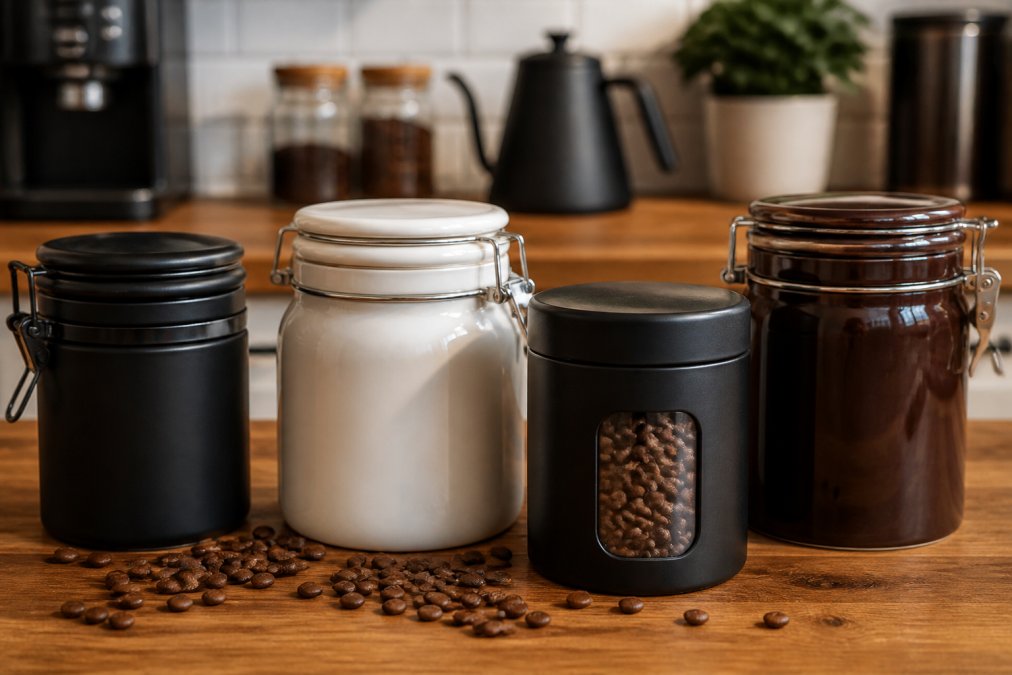
The best coffee storage containers are airtight, opaque, and made from non-reactive materials. Ceramic and opaque matte-finish stainless steel are top choices, both block light completely, don't impart flavors or odors, and maintain a stable internal environment. Clear glass jars fail on light-blocking unless stored in a completely dark cabinet.
Avoid plastic containers. Even food-grade plastic is slightly porous and can absorb and transfer odors over time, subtly altering flavor.
One-Way Degassing Valves: What They Do and Why They Matter
A one-way degassing valve allows CO2 to escape from freshly roasted beans without letting oxygen in. This pressure-release mechanism is built into specialty coffee bags and some storage canisters. If you're buying beans in a bag with a degassing valve, keep them in that bag until ready to transfer, the valve is doing real work.
DIY Storage Hacks vs. Vacuum-Sealed Canisters
DIY approaches like pressing air out of zip-lock bags or using mason jars reduce oxygen exposure but don't eliminate it. Vacuum-sealed canisters actively remove trapped air through hand pumps before sealing. For serious home brewers, the investment extends the peak flavor window noticeably, particularly for light roasts. According to Home Barista's guide to coffee storage equipment, vacuum canisters meaningfully extend freshness compared to standard airtight containers.
Freezing Coffee Beans for Freshness: When It Helps and When It Hurts
Freezing works, but only if done correctly. Freezing slows oxidation and halts degassing, effectively pausing the aging process. The critical rule: beans must never be thawed and refrozen. Each freeze-thaw cycle causes condensation, introducing moisture that accelerates flavor loss far more than air exposure.
The right approach involves dividing a larger batch into individual weekly portions before freezing. Seal each in a vacuum-sealed bag or small airtight container, freeze, and thaw only one portion at a time. Once thawed, store at room temperature and use within the week. Never return thawed beans to the freezer.
As documented in Coffee Research Institute's analysis of freezing and bean integrity, single-serve freezing is the only method that consistently preserves bean integrity.
Step-by-Step: How to Keep Coffee Beans Fresh Longer at Home
- Check the roast date, not the "best before" date. Look for beans roasted within the last two weeks.
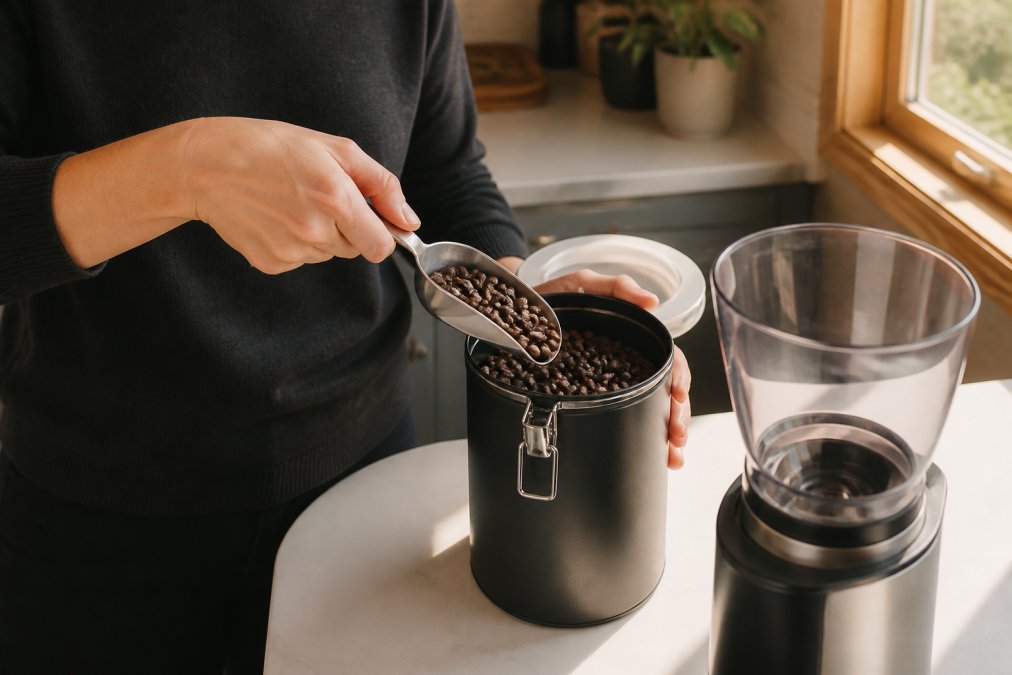
- Transfer beans to an opaque, airtight container immediately. If the original bag has a one-way degassing valve and resealable top, keep beans in the bag; otherwise, transfer to ceramic or stainless steel.
- Store in a cool, dark cupboard. Away from the stove, kettle, and heat sources. Room temperature between 15-20°C is ideal.
- Grind only what you need, immediately before brewing. This single habit does more for flavor retention than any container upgrade.
- Buy in quantities you'll consume within two to three weeks. Freshness is perishable; buying in bulk defeats the purpose of premium beans.
- If freezing, portion first. Divide into weekly servings before freezing. Never refreeze thawed beans.
Whole Beans vs. Pre-Ground: Adjusting Your Storage Approach
Whole beans and pre-ground coffee require different storage strategies because their surface areas differ dramatically. Whole beans have relatively small exposed surface, slowing oxidation and moisture absorption. Pre-ground coffee has exponentially larger surface area, a single gram can have surface area hundreds of times greater than the same gram in whole bean form.
For pre-ground coffee, the freshness window is measured in hours, not weeks. If you must buy pre-ground, use it within a week in the smallest airtight container possible, away from moisture. The practical recommendation is clear: buy whole beans and grind at home. Even a basic burr grinder produces more consistent results and fresher flavor than pre-ground coffee stored for any length of time.
Signs Your Beans Have Gone Stale
- No aroma when you open the bag or container. Fresh beans release rich, complex scent immediately. Stale beans smell flat, papery, or faintly rancid.
- Dull or oily surface without fragrance. Dark roast beans naturally have surface oils, but those oils should smell rich, not musty.
- Flat, thin, or sour cup. Staleness often presents as unexpected sourness or hollow, thin body in the brewed cup.
- No bloom during pour-over brewing. Little to no bloom indicates CO2 has been exhausted and beans are past their prime.
Buying Habits That Protect Freshness Before Beans Reach Your Home
Buy from roasters who publish roast dates on their packaging. A bag without a roast date offers no transparency about freshness.
Buy smaller quantities more frequently. A 250g bag consumed over two weeks will consistently taste better than a 1kg bag stretched over two months. More frequent purchases mean you're always working within the peak freshness window.
Prioritize roasters who ship quickly after roasting. The shorter the time between roast and your door, the more of that freshness window you have to enjoy.
The Gilded Grind collection is built around this philosophy. From the bright, citrus-forward notes of the Yirgacheffe Ethiopia to the deep, earthy richness of the USDA-certified Sumatra G1, each bean is selected for the quality that only careful sourcing and timely delivery can protect. Buying premium beans and storing them poorly is a waste. Buying thoughtfully and storing correctly is how you get the cup those beans were always capable of producing.
Keeping premium coffee beans at their best is a discipline, not a one-time decision. Every choice, from the container you use to the quantity you buy, compounds over time into either a vibrant, nuanced cup or a flat, disappointing one. Gilded Grind offers a curated selection of freshly sourced, nature-inspired beans across many roast profiles, paired with the kind of sourcing transparency that makes freshness protection worth the effort. Explore the full range and build a ritual worth savoring. SHOP ALL COLLECTION.
Frequently Asked Questions
How long do coffee beans stay fresh after opening?
Whole beans stored in an airtight, opaque container in a cool, dark pantry generally stay at peak flavor for two to four weeks after opening. The roast date matters more than the best-before date, beans are most vibrant within the first two weeks post-roast. Pre-ground coffee loses its volatile compounds much faster, often going noticeably stale within a week of opening. Buying smaller quantities more frequently is the most reliable way to keep coffee beans fresh and flavorful.
Does freezing coffee beans keep them fresh longer?
Freezing coffee beans for freshness works well under specific conditions. Divide beans into single-use portions, seal them in airtight, vacuum-sealed bags, and freeze only once. Each time you thaw a portion, condensation forms on the beans as they warm up, and that moisture accelerates oxidation and oil degradation. Never refreeze thawed beans. For beans you plan to use within a month, a cool dark pantry in an airtight container is simpler and equally effective.
Will a Ziploc bag keep coffee beans fresh?
A standard zip-lock bag offers only minimal protection. It does not create a true oxygen barrier, and most bags allow air to seep back in over time, speeding up oxidation and flavor loss. If a proper airtight container is not available, pressing all the air out before sealing and using the bag within a few days is a workable short-term fix. For anything longer, an opaque, vacuum-sealed canister with a one-way degassing valve gives significantly better shelf life.
Should you store coffee beans in the fridge?
The fridge is generally a poor choice for coffee beans. The cold environment introduces moisture through condensation every time the container is opened, and beans readily absorb nearby food odors, which alters their flavor profile. A cool, dark pantry away from heat sources and sunlight exposure is the better option for everyday storage. Reserve the freezer, not the fridge, for long-term storage of portioned, vacuum-sealed beans you do not plan to open for several weeks.
This article was written using GrandRanker


