
Table of Contents
- What Organic Single Origin Coffee Actually Means
- Organic Coffee Certification Standards: What the Label Guarantees
- Single Origin vs Blend Coffee Taste: Which Suits Your Palate
- The Benefits of Fair Trade Sumatra Coffee and Traceable Sourcing
- Does Organic Single Origin Coffee Taste Better?
- Is Organic Single Origin Coffee Worth the Price?
- How to Choose and Brew It Well
- Frequently Asked Questions
Last Updated: September 30, 2026
What Organic Single Origin Coffee Actually Means
Is organic single origin coffee worth it? For most home brewers who care about flavor and sourcing, yes, if you understand what the labels actually promise. Organic single origin coffee is grown without synthetic pesticides and traceable to one specific farm, cooperative, or region rather than blended from multiple countries. This guide breaks down what those labels guarantee, where they fall short, and when your money is better spent elsewhere.
The two terms get used interchangeably, but they answer different questions. "Organic" speaks to how the coffee was grown and verified. "Single origin" speaks to where it came from and how traceable that supply chain is. A coffee can be one without the other.
The Two Labels, Decoded
Organic certification is a verification that the coffee was grown under defined environmental and input standards, inspected by an accredited certifying body.
Single origin means the beans come from one defined place, whether that's a single farm, a cooperative of smallholders, or a specific micro-lot within a region. It is a sourcing claim, not a quality grade.
Organic Coffee Certification Standards: What the Label Guarantees
In Canada, "organic" is a regulated term. Any product sold as organic must be certified under the Canada Organic Regime, administered by the Canadian Food Inspection Agency (CFIA) and enforced through accredited certification bodies. A bag carrying the Canada Organic logo has been verified against a defined standard, it is not a self-declared claim.
Canadian Food Inspection Agency organic products guidance
What the Certification Actually Verifies
Certification guarantees that a farm met defined standards for soil management, pest control, and record-keeping, verified through third-party inspection rather than self-declaration. An accredited body audited the operation, checked the inputs used, and confirmed a documented chain from farm to exporter.
The specifics vary by program, but the core requirements are consistent. Certified organic coffee must be:
- Grown without prohibited synthetic fertilizers and pesticides
- Handled separately from conventional crops during storage and transport, to prevent commingling
- Documented at each stage, farm, processor, exporter, importer, so the claim can be traced rather than assumed
- Re-inspected on a recurring cycle, not certified once and forgotten
For a Canadian buyer, look for a label backed by a CFIA-accredited certifier. Imports must carry an organic certificate and be verified at the border before being sold as organic domestically.
What Certification Does Not Cover
Certification says nothing about cup quality, freshness, or taste. A certified organic bean can still be mediocre, stale, or poorly handled after harvest. It also does not guarantee a fair price reached the farmer, that is handled by fair trade and direct-trade arrangements.
The 'Organic' Myth: Certified vs. Naturally Grown
A persistent assumption is that uncertified coffee is automatically non-organic. It isn't.
Many smallholder farms, particularly in Ethiopia, Sumatra, and parts of Central America, grow coffee using traditional methods that would meet organic standards in practice: no synthetic inputs, shade-grown under native canopy, composted soil.
What This Means for Your Buying Decision
If you want a verifiable environmental claim, buy certified organic and look for the Canada Organic logo or an equivalent accredited certification. If you want the best coffee from a specific place and trust a brand's sourcing relationships, an uncertified naturally grown single origin is legitimate, provided the brand can tell you who grew it and how.
Single Origin vs Blend Coffee Taste: Which Suits Your Palate
Single origin coffee tastes like one place. Blends taste like a deliberate recipe. That difference explains why the two suit different drinkers.
| Factor | Single Origin | Blend |
|---|---|---|
| Flavor character | Distinct, region-specific | Balanced, recipe-driven |
| Consistency | Varies by harvest | Stable year-round |
| Best for | Exploring flavor profiles | Everyday reliability |
| Traceability | High, often to farm level | Low to moderate |
The Benefits of Fair Trade Sumatra Coffee and Traceable Sourcing
The benefits of Fair Trade Sumatra coffee come down to two things: a price floor for smallholder farmers and a paper trail you can follow. Fair Trade certification sets minimum pricing and requires cooperative structures, giving growers in regions like Sumatra more stability than open-market selling.
Does Organic Single Origin Coffee Taste Better?
Not automatically. Organic farming affects how coffee is grown, not how it tastes, and a well-farmed conventional bean can outperform a poorly handled organic one. What single origin delivers is flavor clarity: because the beans come from one place, the cup shows that region's characteristics without being averaged out by blending.
Is Organic Single Origin Coffee Worth the Price?
For drinkers who want traceable sourcing and distinct regional flavor, yes. For anyone buying purely on caffeine and habit, the premium is hard to justify. The honest answer depends on what you're paying for, and whether the specific bag delivers it.
Where the Money Actually Goes
The higher price covers several real costs. Understanding them helps you judge whether a bag is priced fairly or just marked up.
How to Tell If a Specific Bag Is Worth It
Before paying the premium, check for these signals:
- A named origin beyond the country. "Ethiopia" covers millions of farms. "Limu, Ethiopia" or a named cooperative tells you something specific.
- A harvest date or freshness window. Coffee is perishable. A roast date within the last few weeks matters more than any label.
- A stated certification or relationship. A recognized organic certification, or a roaster who can describe the farm and the arrangement.
- A roast level matched to your brewing method. A light, delicate lot brewed in a way that mutes it wastes the premium you paid.
Without these, the premium buys packaging, not traceability or quality.
When It Is Not Worth It
Skip the premium if any of these describe you:
- You drink coffee mainly for caffeine and rarely notice flavor differences
- You brew with a method that mutes subtle character, like a heavily flavored or very dark preparation
- You won't store beans properly, so freshness is lost before flavor matters
- Your budget is tight and consistency matters more than character
A fresh, well-stored conventional blend beats a stale single origin every time. Freshness is the variable most drinkers actually taste.
Budget-Friendly Sourcing Strategies
You don't need luxury markups to drink good single origin. A few practical approaches:
- Buy one origin at a time, not samplers. You learn what you actually like, waste less, and stop paying for coffees you never finish.
- Look for naturally grown, uncertified lots from roasters with direct relationships. These can offer the same traceability and quality as certified organic at a lower price point, without the certification paperwork.
- Buy whole bean in quantities you'll finish within a few weeks. Stale coffee is the most expensive coffee, regardless of what you paid.
- Match the origin to your brewing method before you buy. A dark, earthy lot for a French press or espresso; a light, floral lot for a pour over. The wrong origin for your method is the fastest way to conclude single origin isn't worth it.
How to Choose and Brew It Well
Choose by matching the origin to your brewing method, then protect freshness above all else. A light, floral Ethiopian lot shines in a pour over; a dark, earthy Sumatran holds up in a French press or espresso.

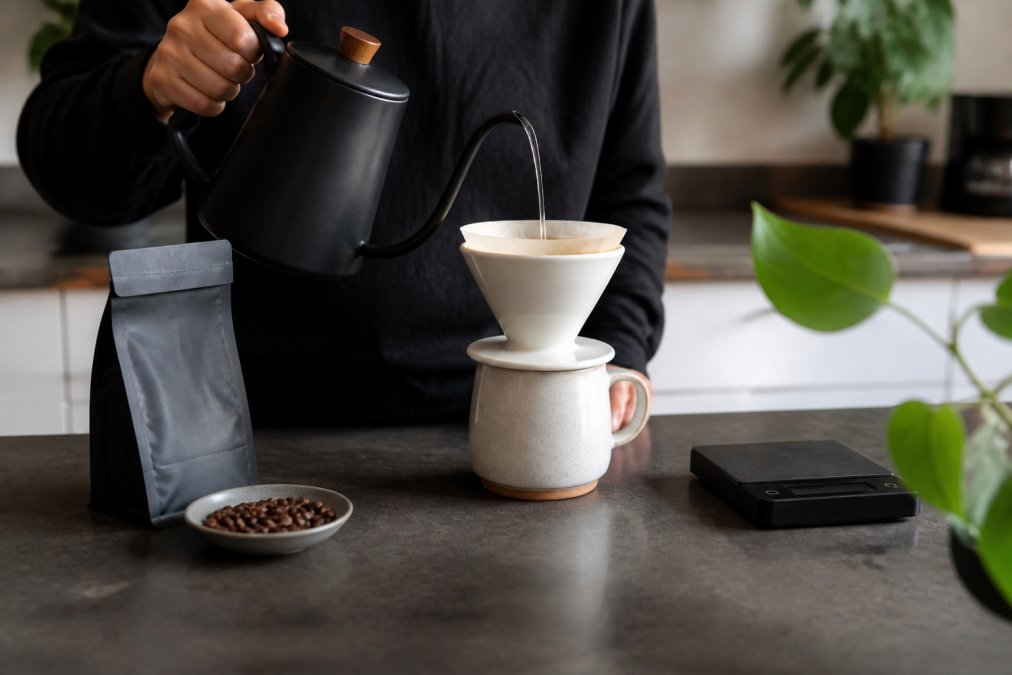
A few habits protect your investment:
- Buy whole bean and grind just before brewing
- Store beans in an airtight container away from light and heat
- Buy in quantities you'll finish within a few weeks
- Match the roast level to your method rather than chasing trends
Frequently Asked Questions
What does organic mean for coffee production standards?
Organic certification sets rules for how coffee is grown and handled. Synthetic pesticides and fertilizers are restricted, and farms must show a documented system for soil health and pest control. In Canada, the Canada Organic Regime governs what can be sold as organic, and imported coffee must meet an accepted standard. Certification does not judge flavor, origin, or price. It tells you how the crop was managed, not how the cup will taste.
How does single origin coffee differ from a standard coffee blend?
A single origin comes from one region, farm, or cooperative, so its flavor reflects one place, one harvest, and one set of growing conditions. A blend combines beans from several origins to hit a consistent taste year round. Single origin is the better choice when you want to taste the difference between a bright Ethiopian lot and an earthy Sumatran one. Blends win when you want the same cup every morning without thinking about it.
Does organic certification impact the flavor profile of coffee?
Not directly. Flavor comes from origin, cultivar, altitude, processing method, and how the beans are handled after harvest. Organic rules do not require a particular processing method, so a certified organic coffee can taste bright and floral or deep and earthy. What certification does affect is how the crop was grown. If you want a specific flavor, choose by origin and processing method first, then use certification as an added screen.
What are the environmental benefits of choosing organic coffee?
Organic rules restrict many synthetic inputs, which reduces chemical runoff into soil and water near coffee farms. Shade-grown and organic plots often support more bird and insect life than cleared, chemically managed land. The gains are real but local. Certification alone does not measure shipping emissions or packaging waste, so treat it as one factor alongside origin, freshness, and how the coffee reaches you.


