
Table of Contents
- Why Light Roast Coffee Tastes Sour
- Under-Extracted Coffee Symptoms: Is Sour Coffee Under-Extracted?
- Bright Acidity vs. Sourness: How to Tell the Difference
- The Best Grind Size for Light-Roast Coffee
- Coffee Brewing Temperature for Light Roasts
- How to Fix Sour Coffee: A One-Variable Troubleshooting Workflow
- Brew-Method Adjustments: Pour-Over, Espresso, and Immersion
- Where Gilded Grind Fits
- Frequently Asked Questions
Last Updated: October 18, 2026
Why Light Roast Coffee Tastes Sour
A light roast sour cup usually means the water did not pull enough sweetness out of the grounds. The result is a sharp, tangy cup that hits the front of your tongue and lingers there. At Gilded Grind, we hear this often from home brewers working through their first bag of light roast sour coffee. The beans are fine. The brew needs work.

Light roasts keep more of the bean's natural acids. That is the point of them. Those acids read as bright and fruity when extraction is right. When extraction falls short, the same acids read as sour.
Below, we walk through a one-variable troubleshooting workflow. You will learn to tell good acidity from a real defect, then fix it without guessing.
Under-Extracted Coffee Symptoms: Is Sour Coffee Under-Extracted?
Under-extracted coffee tastes sour, thin, and short on sweetness, with a finish that fades fast. If your cup is sharp up front and hollow in the middle, under-extraction is the likely cause.
Here is what to look for:
- A sour or tangy hit at the front of the tongue
- Little to no sweetness to balance it
- A thin body, like watered-down tea
- A fast, clean finish that disappears
- A dull or papery aftertaste
The opposite problem, over-extraction, tastes bitter and dry. Those two ends of the scale are easy to confuse. Sour means too little was pulled from the grounds. Bitter means too much.
A useful check: let the cup cool for five minutes. Sourness gets sharper as coffee cools. Bitterness gets harsher too, but sweetness fades in both cases. If the cup gets more acidic as it cools, you are under-extracting.
Bright Acidity vs. Sourness: How to Tell the Difference
Pleasant acidity and true sourness feel different in the mouth, even though both make you pucker. Bright acidity is a feature. Sourness is a fault.
Bright acidity shows up as:
- A clean, juicy snap, like a green apple
- Fruit or citrus notes that sit alongside sweetness
- A finish that leaves you wanting another sip
Sourness shows up as:
- A harsh, vinegar-like edge
- No sweetness to soften it
- A drying, unpleasant finish
Light roasts are built around bright acidity. Ethiopian beans in particular carry floral and citrus notes that read as lively, not sharp. If you want to taste that line clearly, brew a bag side by side with a medium roast and compare. Our Yirgacheffe Ethiopia Medium shows how the same region tastes with more development behind it.

The Best Grind Size for Light-Roast Coffee
The best grind size for light-roast coffee is finer than you would use for a darker roast, but the right setting depends on your brewer. Light roast beans are denser and less porous, so water has a harder time reaching the soluble compounds inside each particle.

The mechanism matters because grind affects two things at once: surface area and flow resistance. Go finer and you extract more, but you also slow the flow.
Start here by brew method
These are starting points, not prescriptions. Adjust one notch at a time from your current setting.
- Pour-over (cone): medium-fine, roughly the texture of table salt. A single cup should finish in about 2:30 to 3:30 total contact time.
- Immersion (French press): medium-coarse, like coarse sea salt. A 4-minute steep is a reasonable baseline.
- Espresso: fine enough that a 1:2 ratio shot (dose to yield) runs in roughly 25 to 35 seconds. Light roasts often need to sit at the fine end of that window.
- Automatic drip: medium, closer to medium-fine than you might expect. Basket brewers vary widely, so treat the first pot as a calibration run.
Read the brew, not just the taste
A scale and a timer turn grind changes into data instead of guesswork. Weigh your dose and water, start the timer at first contact, and note the total brew time alongside the taste.
- Brew runs fast and tastes sour: go one step finer
- Brew runs slow and tastes bitter or dry: go one step coarser
- Brew runs on time and tastes balanced: stop adjusting
A common mistake is grinding fine and then packing the bed too tight or pouring too aggressively. That chokes the flow and pushes you toward bitterness. Grind finer, but keep the bed loose and the pour gentle.
Coffee Brewing Temperature for Light Roasts
Use water between 92°C and 96°C for light roasts. Hotter water dissolves more of the compounds that read as sweetness and body, and light roast beans are dense enough to need that extra energy. Brew too cool and the acids come through first while the sugars stay locked in the grounds, which is exactly the sharp, thin cup you are trying to fix.
Why temperature changes the cup
Different flavor compounds dissolve at different rates. Fruit acids and bright aromatics are among the first to extract, while the sugars and caramel-like notes that balance them need more heat and more time. Push the temperature up and you widen the extraction window so the sweetness can catch up to the acidity. Push it too far and you start pulling bitter, drying compounds as well.
Most home kettles overshoot or undershoot their set point by several degrees. A cheap instant-read thermometer in the kettle removes the guesswork. If your cup tastes sour and you have been brewing below 92°C, raise the temperature before you touch anything else.
Match temperature to method
- Pour-over: 93°C to 96°C is a sensible range. Boiling water is too hot for most recipes; let the kettle rest for 30 seconds after it boils, or set a variable-temperature kettle to 94°C and trust it.
- Immersion: 92°C to 95°C. A longer steep gives you more room to work with, so you do not need to push the top of the range.
- Espresso: brew temperature is set by the machine, not the kettle. If your machine allows adjustment, a light roast often benefits from the warmer end of its range, but change one variable at a time.
- Automatic drip: most brewers hold water near 92°C to 96°C by design. If your model runs cool, a sour light roast is a common symptom.
Water chemistry is the other half
Temperature is only one part of what your water is doing. Mineral content and alkalinity also shape how acidity reads in the cup. Water that is very soft pulls less from the grounds and can leave light roasts tasting flat and sour, while water with high alkalinity can buffer acidity and mute the brightness you want. If your tap water is soft or heavily filtered, try a mineral-adjusted brewing water and brew the same recipe side by side. Many brewers find that a modest change in water minerals shifts perceived acidity more than a two-degree temperature change.
A thermometer, a scale, and a written log turn temperature from a guess into a repeatable input. Note the temperature alongside your grind setting and brew time so you can tell which change actually helped.
How to Fix Sour Coffee: A One-Variable Troubleshooting Workflow
Most guides tell you to change everything at once. That is how you end up with a cup you cannot repeat. Here is the workflow we recommend instead.
Step 1: Lock your recipe. Write down your dose, water weight, grind setting, temperature, and total brew time. Change nothing until you have a baseline.
Step 2: Taste and score. Rate sourness and sweetness from 1 to 5. Note the finish.
Step 3: Change one variable. Pick the single change most likely to help:
| Symptom | First fix | Second fix | Expected result |
|---|---|---|---|
| Sharp and thin | Grind finer | Raise water temp | More body, more sweetness |
| Sour with fast flow | Grind finer | Slow the pour | Longer contact time |
| Sour with slow flow | Raise water temp | Coarsen slightly | Fuller extraction |
| Sour and weak | Increase dose | Grind finer | Stronger, sweeter cup |
Step 4: Brew again and compare. Keep the change if the cup improves. Revert it if it does not.
Step 5: Repeat. One variable per brew, one brew per change.
Brew-Method Adjustments: Pour-Over, Espresso, and Immersion
Each brew method handles light roasts differently. The fix for sour coffee changes with the gear on your counter.
Pour-over. Sour pour-over usually comes from a grind that is too coarse or a pour that finishes too fast.
Espresso. Light roast espresso is the hardest to dial in. The dense beans resist water, so shots run fast and taste sharp.
Immersion. French press and similar methods forgive a lot, but sour immersion brews usually need a finer grind or a longer steep.
Water chemistry matters here too. Very soft water pulls less from the grounds and can leave light roasts tasting flat and sour.
Measurement and repeatability tie all of this together.
Where Gilded Grind Fits
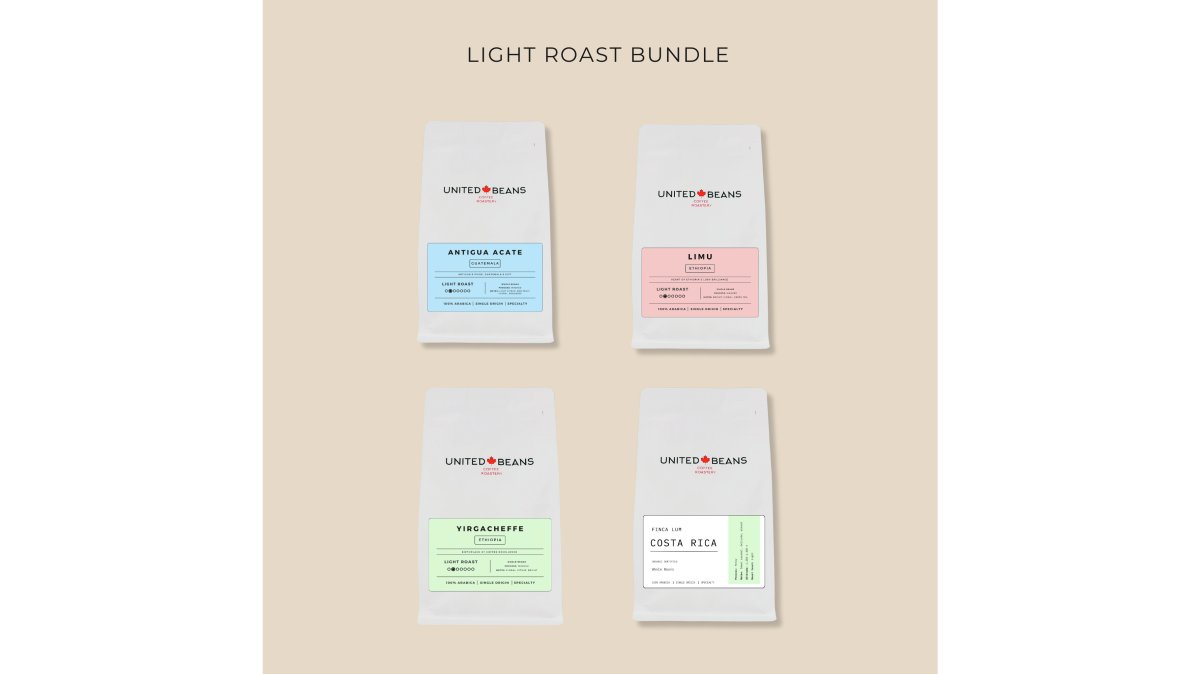
Fresh beans make every adjustment easier to read. Stale beans taste flat no matter how you brew them, which makes troubleshooting nearly impossible. Our Limu Ethiopia Light Roast brings bright floral and green tea notes that reward a well-tuned brew, and the Light Roast Coffee Bundle lets you compare four origins side by side with the same recipe.
Frequently Asked Questions
Why does light-roast coffee taste sour?
Sourness in light roast coffee usually comes from under-extraction. Light roasts are denser and less porous than darker roasts, so water pulls fewer sugars and soluble compounds from the grounds. When the grind is too coarse, the water is too cool, or the contact time is too short, the cup tastes sharp and tangy instead of sweet. A light roast like Limu Ethiopia from Gilded Grind, with its floral and green tea notes, can also show natural bright acidity that reads as sour if the brew is unbalanced. Adjusting grind, temperature, or ratio usually fixes it.
Is sour coffee always under-extracted?
Not always. Some sourness is desirable acidity, especially in washed Ethiopian coffees. The difference is context: pleasant acidity feels balanced with sweetness and body, while under-extracted coffee tastes thin, sharp, and hollow. To check, brew the same beans twice with a finer grind and compare. If the sourness softens and sweetness appears, the first cup was under-extracted. If the sharpness stays even with a finer grind, the acidity is likely a feature of the bean and roast profile, not a brewing fault.
What grind size should I use for light-roast coffee?
Start finer than you would for a medium or dark roast. Light roast beans are dense and resist water, so a finer grind increases surface area and helps extraction. For pour-over, aim for a medium-fine grind similar to table salt. For espresso, go slightly finer than usual and adjust from there. For immersion methods like French press, a medium grind works well. Change one step at a time on your grinder and taste after each adjustment so you can track what actually improved the cup.
Does water temperature affect sour coffee?
Yes. Water that is too cool cannot extract enough from dense light roast beans, which leaves sour and tangy flavors in the cup. Aim for water between 90°C and 96°C for light roasts. If you brew with a kettle that loses heat quickly, preheat it and keep the water near the higher end of that range. Hotter water speeds extraction and pulls more sweetness, but avoid boiling water directly on delicate floral beans, as it can flatten the aromatics.


