
Table of Contents
- Why the Right Coffee Beans Make Every Moment Worth Savoring
- Quick Comparison: Premium Roast Bundles at a Glance
- Coffee Bean Flavor Profiles: Matching Roast to Mood
- Coffee Beans for Automatic Coffee Makers: What Actually Works
- Coffee-to-Water Ratio for Automatic Coffee Makers
- How to Store Coffee Beans to Protect Freshness
- Sourcing, Value, and What You Are Actually Paying For
- Conclusion: Choosing Beans That Earn Their Place in Your Ritual
- Frequently Asked Questions
Last Updated: October 8, 2026
Why the Right Coffee Beans Make Every Moment Worth Savoring
The best crafted for moments worth savoring for discover premium roasts starts with one decision: which coffee beans you bring home. At Gilded Grind, our whole collection is built around that idea.
That is why bean selection matters more than any gadget you own.
Below, we walk through roast profiles, brewing fit, storage, and value, so you can match a bag to the moment you actually want.
The term coffee beans covers a wide range, and not all of them deserve space in your cupboard. Premium coffee begins with carefully selected beans from the finest farms, handled with care from origin to your home. Coffee Association of Canada industry resources notes that Canadian households continue to treat coffee as a daily ritual rather than a quick fix.
Quick Comparison: Premium Roast Bundles at a Glance
Here is how our five whole-bean bundles line up. Every option is 100% Arabica, sold as whole bean, and packed in 300g bags.
| Bundle | Roast Level | Bags | Price | Best For |
|---|---|---|---|---|
| Light Roast Coffee Bundle | Light | 4 | $75.00 | Bright, floral morning cups |
| Medium Roast Bundle | Medium | 6 | $99.00 | Balanced everyday brewing |
| Medium-Dark Roast Coffee Bundle | Medium-Dark | 6 | $99.00 | Versatile, richer body |
| Dark Roast Coffee Bundle | Dark | 4 | $75.00 | Bold, comforting evening pours |
| Global Coffee Collection | Mixed origins | 6 | $99.00 | Exploring flavor differences |
The 4-bag bundles suit a single drinker or someone testing a roast level. The 6-bag bundles make more sense if you brew daily or want variety without reordering often.
Coffee Bean Flavor Profiles: Matching Roast to Mood
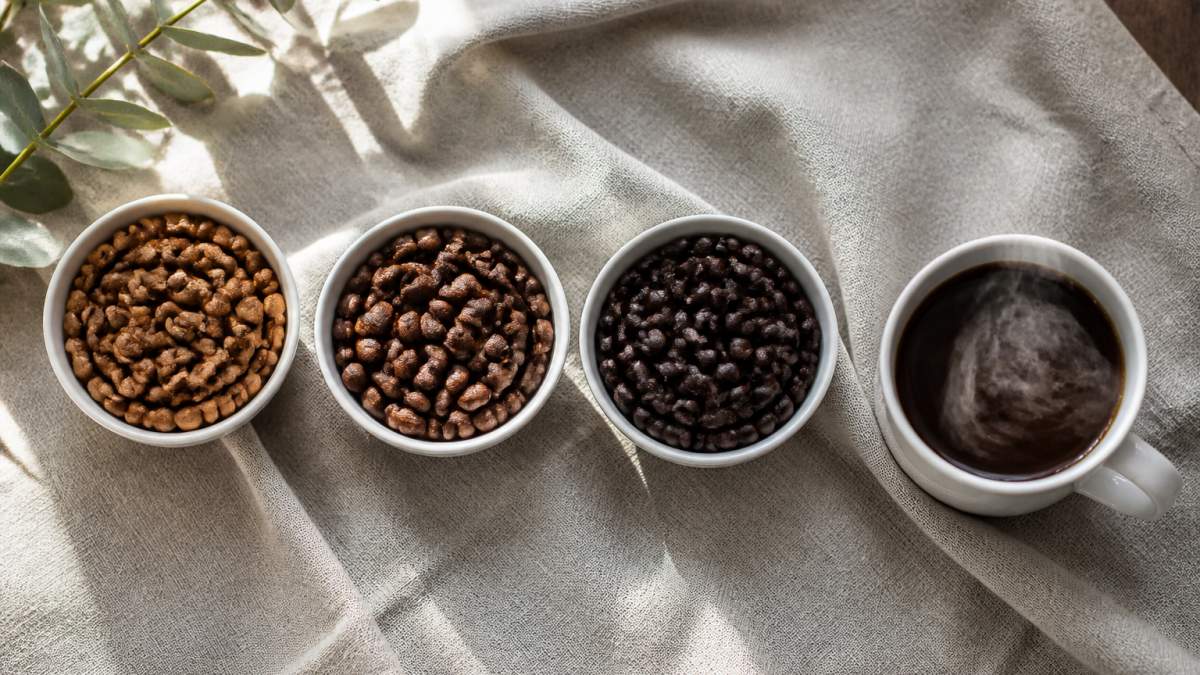
Coffee bean flavor profiles describe how a roast level shapes what you taste in the cup. Light roasts keep more of the bean's origin character, while darker roasts trade some of that brightness for depth and body.
How Roast Level Changes What You Taste
Three things shift as beans move from light to dark:
- Acidity, the bright, citrusy, sometimes tea-like quality drops as the roast deepens. Light roasts read as lively; dark roasts read as mellow.
- Body, the weight and coating texture in your mouth increases with darker roasts. A light roast can feel almost watery next to a dark roast of the same bean.
- Sugar development, lighter roasts keep more of the bean's own sweetness (fruit, honey, floral); darker roasts develop deeper caramelized and cocoa notes, and past a certain point, a smoky edge.
A useful way to think about it: light roasts let the origin speak, medium roasts balance origin and comfort, and dark roasts let the cup's texture and warmth lead.
Light Roasts: Bright, Floral, and Lively
Our Light Roast Coffee Bundle carries Ethiopia Yirgacheffe, Costa Rica Finca Lum, Guatemala Antigua, and Ethiopia Limu. Expect floral and citrus notes, a lighter body, and a clean finish.
Best brewed as pour-over or in a drip machine you can run slightly cooler. If your automatic machine runs hot, a light roast can taste thin or sour, that is the machine, not the bean.
Medium and Medium-Dark Roasts: Balanced and Versatile
The Medium Roast Bundle delivers what most people picture when they think of good coffee: balance, mild sweetness, and a rounded finish. The Medium-Dark Roast Coffee Bundle pushes slightly further, adding body without losing the origin's character.
Medium and medium-dark roasts are the most forgiving across brewing methods. They hold up in automatic machines, drip, pour-over, and French press without demanding much adjustment.
Dark Roasts: Bold, Full-Bodied, and Comforting
The Dark Roast Coffee Bundle includes Sumatra, El Salvador, Colombia Huila, and Ethiopian Harrar. These beans bring boldness, low acidity, and a smooth, full-bodied finish. Think brown sugar and dark chocolate rather than fruit.
Dark roasts shine in French press and espresso-style brewing, where the heavier body has room to show. In an automatic machine, use a slightly stronger ratio so the cup does not taste flat.
Matching Roast to Moment: A Quick Reference
| Moment | Roast that fits | Why |
|---|---|---|
| Quiet early morning, want the cup to be the focus | Light | Bright, floral, clean finish |
| Weekday breakfast, brewing on autopilot | Medium | Balanced, forgiving across machines |
| Afternoon break, want a little more weight | Medium-Dark | Body without losing origin character |
| Evening, dessert, or a cold day | Dark | Bold, low acidity, cocoa and brown sugar |
| Curious, want to taste the range | Global Coffee Collection | Six origins, one roast approach, easy to compare |
Coffee Beans for Automatic Coffee Makers: What Actually Works
Coffee beans for automatic coffee makers work best when the roast is medium to dark and the grind is consistent. Automatic machines push water through a basket at a fixed rate, so a very light roast can taste thin or sour if the machine runs hot.
Here is what we recommend for machine brewing:
- Medium and medium-dark roasts hold up well across most automatic machines
- Dark roasts suit machines with lower brew temperatures and shorter cycles
- Whole bean over pre-ground keeps more aroma, since you grind right before brewing
The Global Coffee Collection is a practical starting point here. Six origins, one roast approach, and you learn quickly which profile your machine handles best.

Coffee-to-Water Ratio for Automatic Coffee Makers
The coffee-to-water ratio for automatic coffee makers is typically 1 gram of coffee to 15-18 grams of water. That works out to roughly 1 to 2 tablespoons of ground coffee per 180 ml cup.
A few adjustments worth making:
- Start at 1:16 and taste before changing anything else
- Go stronger (1:15) for dark roasts, which can taste flat when diluted
- Go lighter (1:17) for light roasts if the cup feels heavy
Small changes here often matter more than switching beans entirely.
How to Store Coffee Beans to Protect Freshness
Knowing how to store coffee beans is the difference between a bag that lasts and one that fades within two weeks. Four things break freshness: air, moisture, heat, and light.
Dark Roast Coffee Bundle | 4 bags →
Our approach:
- Keep beans in an airtight container, not the open bag
- Store at room temperature, away from the stove and kettle
- Skip the fridge; condensation ruins beans
The 300g bag size is deliberate. It is enough to enjoy without racing a stale clock.
Sourcing, Value, and What You Are Actually Paying For
Price gaps between grocery coffee and premium roasts come down to three things: bean quality, roast date, and how carefully the beans are handled before they reach you. Grocery bags often sit for months. Freshly brewed coffee reaches you closer to its peak.
What to Look For on the Bag
Canadian labelling rules require coffee products to carry specific information, and a few of those details are genuinely useful when you are comparing bags on a shelf:
- Ingredient and origin statements, a bag that names a country or region is giving you something to verify; "house blend" tells you almost nothing.
- Net quantity, 300g, 340g, and 1 lb (454g) are the common sizes. Comparing price per 100g is the only fair way to compare across sizes.
- Best-before or roast date, best-before is a freshness window, not a roast date. If a roast date is printed, that is the more useful number.
Canadian Food Inspection Agency guidance on coffee products
How to Compare Value Without Guessing
A simple method: divide the bag price by the number of 300g equivalents, then divide again by the number of cups you actually get from a bag. At a 1:16 ratio, a 300g bag yields roughly 30-35 single 250 ml cups, depending on how strong you brew. That gives you a per-cup figure you can compare across brands and bag sizes.
What you are paying for in a premium bag:
- 100% Arabica beans rather than blends bulked out with lower-grade stock
- Named origins you can trace, not anonymous "house blend"
- Freshly roasted coffee shipped closer to its best window
Our Bundles: What Each One Is Actually For
| Bundle | Bags | Price | Price per 300g bag | Best For |
|---|---|---|---|---|
| Light Roast Coffee Bundle | 4 | $75.00 | $18.75 | Bright, floral morning cups |
| Medium Roast Bundle | 6 | $99.00 | $16.50 | Balanced everyday brewing |
| Medium-Dark Roast Coffee Bundle | 6 | $99.00 | $16.50 | Versatile, richer body |
| Dark Roast Coffee Bundle | 4 | $75.00 | $18.75 | Bold, comforting evening pours |
| Global Coffee Collection | 6 | $99.00 | $16.50 | Exploring flavor differences |
The 6-bag bundles bring the per-bag cost down by about 12% versus the 4-bag bundles, which is the main reason they make sense for daily brewers. If you drink one cup a day, a 6-bag bundle is roughly six months of coffee; a 4-bag bundle is about four.

Our bundles are packed as whole bean for a reason. Ground coffee starts losing its aromatic oils almost immediately, so the format is part of what you are paying for.
When Premium Is Worth It, and When It Is Not
Premium beans earn their price when you drink coffee slowly enough to notice the difference: a single pour-over on a weekend, a French press on a cold evening, a cup you actually sit down with.
A practical middle path: keep a medium or medium-dark bundle for daily brewing, and a light or dark bundle for the moments you want to pay attention.
If convenience matters more than exploration, the 6-bag bundles reduce how often you reorder. If you want to taste the range first, start with a 4-bag bundle.
Conclusion: Choosing Beans That Earn Their Place in Your Ritual
The hard part is not finding premium coffee. A bright light roast and a deep dark roast can both be excellent, and only one will feel right on a given morning.

At Gilded Grind, we offer 100% Arabica beans across a full range of roast profiles, packed as whole bean in 300g bags, and offer convenient bundles so you can explore without committing to a single origin.
Canadian Food Inspection Agency guidance on coffee products
Frequently Asked Questions
What should I look for when choosing coffee beans for an automatic machine?
Look for whole beans with a roast date, 100% Arabica labeling, and a roast level that suits your machine's grind settings. Medium and medium-dark roasts tend to work well in super-automatic machines because they balance flavor with consistent extraction. Gilded Grind's bundles, such as the Medium Roast Bundle with six 300g bags, offer that balance.
How do I choose coffee beans based on flavor?
Start with the roast level. Light roasts carry brighter, fruit-forward notes; medium roasts balance sweetness and body; dark roasts lean bold and smoky. Gilded Grind's Light Roast Bundle includes Ethiopia Yirgacheffe and Guatemala Antigua for floral, lively cups, while the Dark Roast Bundle brings Sumatra and Colombian depth for a richer sip.
How should I store coffee beans to keep them fresh?
Keep whole beans in an airtight, opaque container away from light, heat, and moisture. A cool cupboard beats the fridge for daily use. Buy in quantities you will finish within a few weeks, and check the roast date on arrival. The 300g bags in Gilded Grind bundles are sized to help you do exactly that.
How much coffee should I use in an automatic machine?
A common starting point is roughly 1 to 2 tablespoons of ground coffee per 180 ml (6 oz) of water, then adjust to taste. For a full 1.2 L carafe, that translates to around 60 to 70 g of coffee. Automatic machines vary, so check your manual and tweak the ratio until the cup tastes balanced, not bitter or weak.
What is the difference between single-origin coffee and a blend?
Single-origin coffee comes from one region and highlights that area's specific flavor notes, like the bright citrus of Ethiopia Yirgacheffe. A blend combines origins to create a consistent, balanced profile. Gilded Grind's Global Coffee Collection offers six distinct origins, so you can explore both approaches in one order.
Choosing beans that fit your routine takes a little trial, and most people guess wrong on the first bag. Gilded Grind takes the guesswork out with a curated range of 100% Arabica whole bean coffee, roast profiles from light through dark, and convenient bundles that let you taste across origins before settling on a favorite. Start with the bundle that matches your brewing style, and let the cup do the rest. Shop the full collection and find the roast that earns its place in your morning.


