
Last Updated: October 30, 2026
Quick Summary
To make french press cold brew, combine coarse ground coffee with cold water at a 1:5 ratio by weight, stir gently, and leave the plunger raised. Steep for 12 to 18 hours at room temperature or 18 to 24 hours in the fridge, then press slowly and strain through a paper filter.
- Grind beans coarse, roughly the texture of raw sugar or sea salt, so the press doesn't clog.
- A 1 L press takes 100 g of coffee to 500 ml of cold water for about 400 ml of concentrate.
- Never fill the carafe past the top of the metal band, since grounds swell and push the lid off.
- Decant the concentrate immediately after steeping; storing it on the grounds turns it bitter within a day.
- Dilute concentrate 1 part to 1-2 parts water or milk, and drink it within about a week.
Table of Contents
- What You Need Before You Start
- Step 1: Choose the Right Coffee and Grind Coarsely
- Step 2: Nail Your French Press Cold Brew Ratio
- Step 3: Combine Grounds and Cold Water in the Press
- How Long to Steep Cold Brew in a French Press
- Step 5: How to Strain Cold Brew Coffee for a Clean Cup
- Cold Brew Coffee Serving Ideas and Storage
- Shop Gilded Grind Beans for Your Next Batch
- Frequently Asked Questions
What You Need Before You Start
French press cold brew is a simple way to make smooth, low-acid coffee concentrate at home with equipment you likely already own.
Here's the core idea. Cold water pulls different flavors from coffee than hot water does. You get less bitterness and more natural sweetness, and the result keeps for days in the fridge.
Cold brew coffee is a method of steeping coarse ground coffee in cold water for an extended period, producing a concentrated liquid that is diluted before drinking. That's the whole definition.
You need very little to begin:
- A French press, anywhere from 350 ml to 1 L
- Coarse ground coffee
- Cold, filtered water
- A spoon for stirring
- A jar or bottle for storing the concentrate
- A fridge with space
A common mistake is reaching for a fine grind because it looks like more coffee. Don't. Coarse is the whole game here, and we'll explain why in the next step.
Step 1: Choose the Right Coffee and Grind Coarsely
Start with whole beans and grind them coarse, roughly the texture of raw sugar or sea salt. If you don't own a grinder, see Is A Burr Grinder Worth The Upgrade before you buy pre-ground.
Why coarse? Fine grounds slip past the mesh filter and leave grit in your cup. They also over-extract during a long steep, which brings out harsh, woody notes.
Our pick for a first batch is the Huila Colombia Medium-Dark whole bean. If you want a bigger bag to brew through the season, the 1 kg whole bean selection lets you choose your origin and preferred roast level.

Want a shortcut? The Huila Colombia Dark Roast Ground arrives ground at a medium level, and you can add a note at checkout asking for a coarser grind for cold brew.
Step 2: Nail Your French Press Cold Brew Ratio
The French press cold brew ratio we use is 1 part coffee to 5 parts water by weight. That makes a strong concentrate you dilute later. In practical terms, 100 g of coarse grounds to 500 ml of cold water is a good working batch, and it leaves headroom in a 1 L press for the grounds to swell.
Scale it from there. The key is to size the batch to your press, not to force a fixed recipe into every carafe:
| French Press Size | Coffee | Cold Water | Approx. Concentrate Yield | Diluted Servings (1:1) |
|---|---|---|---|---|
| 350 ml | 40 g | 200 ml | About 160 ml | 2 small glasses |
| 600 ml | 70 g | 350 ml | About 280 ml | 3 glasses |
| 1 L | 100 g | 500 ml | About 400 ml | 4 glasses |
| 1 L (full batch) | 150 g | 750 ml | About 600 ml | 6 glasses |
Two rules keep the table honest. First, never fill the carafe past the top of the metal band, grounds absorb water and expand, and an overfilled press pushes the lid off. Second, the yield column is lower than the water column because the grounds retain roughly their own weight in liquid; that retained coffee is why you decant rather than press and store in the same vessel.
Concentrate vs. ready-to-drink: pick your ratio first
Before you grind, decide what the batch is for. The ratio changes with the answer:
- 1:5 concentrate, the default. Dilute 1 part concentrate to 1-2 parts water or milk. Best for milk drinks, iced lattes, and anything poured over a lot of ice.
- 1:8 ready-to-drink, mellow enough to sip straight from the press over ice. Good if you drink cold brew black and don't want to measure at serving time.
- 1:4 extra-strong concentrate, for tonic or sparkling-water drinks where dilution happens in the glass. Use sparingly; it is easy to over-extract at this strength.
Scaling without a scale
No scale? Use about 2 tablespoons of coarse grounds per 100 ml of water as a starting point. It is less precise because tablespoon volume varies with grind and bean density, but it gets you close. A scale is the better long-term buy because it makes every batch repeatable, and repeatability is the whole point of writing the ratio down.
If you want a punchier concentrate for milk drinks, stay at 1:5. If the first batch tastes thin even after dilution, tighten to 1:4 before you change anything else, grind and steep time are the next levers, not more coffee.
Step 3: Combine Grounds and Cold Water in the Press
Add the coarse grounds to the carafe first, then pour cold water over them slowly. Use filtered water if your tap runs hard or chlorinated, because those flavors concentrate over a long steep.
Huila Colombia | Ground Dark →
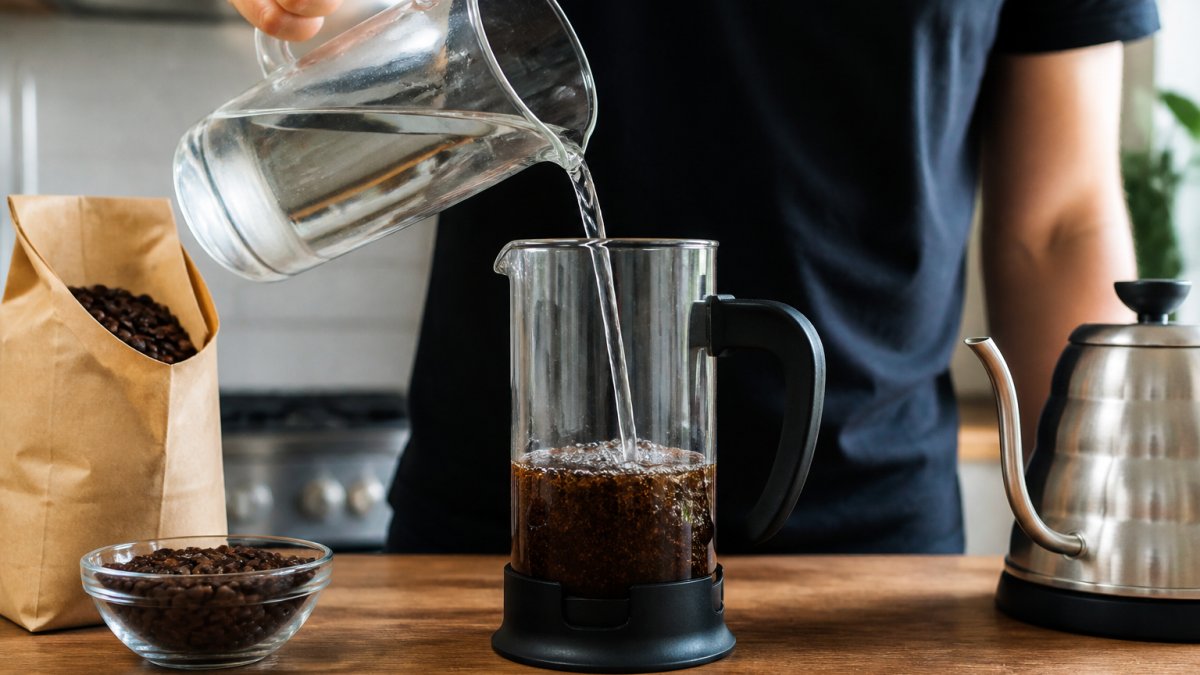
Stir gently with a spoon until every ground is wet. You're not whipping it, just breaking up dry pockets.
Here's the part most guides skip: leave the plunger raised for the entire steep. Pressing early compresses the grounds and traps them, which slows extraction and makes the final press harder.
Watch out: if you fill the carafe past the top of the metal band, the grounds will swell and push the lid off. Leave a couple of centimeters of headroom.
How Long to Steep Cold Brew in a French Press
Steep for 12 to 18 hours at room temperature, or 18 to 24 hours in the fridge. That's the answer most people are looking for, and it holds whether you're brewing 250 ml or a full liter.
Room temperature steeping is faster and extracts more brightness. The fridge is slower and gives a rounder, softer cup with less risk of over-extraction if you lose track of time. Both work. Pick one and stay consistent so you can compare batches.
- 12 hours: light, bright, best for delicate light roasts
- 16 hours: our default, balanced and sweet
- 18 hours: fuller body, good for dark roasts and milk drinks
- 24 hours and beyond: heavier, and bitterness starts to creep in
Step 5: How to Strain Cold Brew Coffee for a Clean Cup
Press the plunger down slowly and steadily. Fast pressing forces fine particles through the mesh and clouds the concentrate. Once the plunger is down, pour the concentrate through a paper filter or a fine mesh sieve into a clean jar.
That second pass is the real answer to how to strain cold brew coffee well. The French press filter catches the bulk of the grounds, and the paper filter catches the rest.
Watch out: never store the concentrate in the press with the grounds still in it. It keeps extracting and turns bitter within a day. Decant it the moment the steep ends.
Cold Brew Coffee Serving Ideas and Storage
Cold brew concentrate is a perishable brewed product, not a shelf-stable syrup. Treat it like any fresh coffee: keep it cold, keep it sealed, and keep track of when you made it.
Storage that actually protects the flavor
- Decant immediately. Never store the concentrate in the press with the grounds still in it. The grounds keep extracting and the batch turns bitter within a day.
- Use a sealed glass jar or bottle filled close to the top to limit headspace and oxidation. A mason jar works well; a bottle with a tight cap is better if you'll pour over several days.
- Refrigerate the whole time. Keep it at the back of the fridge where the temperature is steadiest, not in the door. Don't leave it on the counter between pours.
- Label the jar with the brew date. A strip of masking tape and a marker is enough. You will not remember which batch is which after the second one.
- Drink within about a week. Flavor fades before safety becomes the issue, so plan batches you'll finish. If a batch smells off, looks cloudy in a way it wasn't before, or has visible film on the surface, discard it rather than taste-testing.
A ready-to-drink 1:8 batch and a 1:5 concentrate store the same way, but the concentrate lasts longer in practice because you pour less per serving. If you brew a large batch, split it into two smaller jars so you're not opening the same container every day.
Dilution math for serving
A good starting point is 1 part concentrate to 1-2 parts cold water or milk, poured over ice. Ice melts and dilutes further, so if you like a strong glass, start at 1:1 and add more water at the table rather than guessing.
- 1:1, bold, good over a large cube or for milk drinks
- 1:1.5, the balanced everyday glass
- 1:2, lighter, closer to iced coffee strength
For a ready-to-drink 1:8 batch, skip the dilution and pour straight over ice.
Serving ideas that hold up
- Over ice with a splash of whole milk for a classic iced coffee
- Half concentrate, half tonic water with a citrus peel for a bright summer drink
- Concentrate, oat milk, and a spoon of maple syrup, shaken hard
- Straight concentrate over a large cube, sipped slowly like a liqueur
- A splash stirred into a glass of sparkling water for something lighter
One last note on freshness: buy beans in amounts you'll finish. Grinding right before you brew helps preserve aroma.
Shop Gilded Grind Beans for Your Next Batch
Ready to brew? Our full coffee lineup covers single origins and roast levels, so you can find the profile that suits your cold brew concentrate. The Huila Colombia Dark Roast Ground is ground at a medium level, and you can note a coarse grind request at checkout if you'd rather skip the grinder.
Frequently Asked Questions
Can a French press make cold brew coffee?
Yes. A French press works well for cold brew because its carafe holds the grounds and water together during a long steep, and the plunger plus mesh filter separates most of the grounds at the end. Use a coarse grind so the filter catches the particles, steep for 12 to 18 hours, then press slowly. For a cleaner cup, pour the concentrate through a paper filter afterward to remove fine sediment.
What is the ideal water to coffee ratio for cold brew?
Use a coarse grind and a ratio you can repeat batch to batch. Dilute the concentrate with water or milk to taste.
How long should coffee steep in a French press for cold brew?
Steep for 12 to 18 hours at room temperature or in the refrigerator. Twelve hours gives a lighter, brighter concentrate; 18 hours brings out more body and chocolate notes. Past 24 hours the brew turns woody and bitter. Refrigerator steeping slows extraction slightly, so lean toward the longer end of that range if you chill the whole batch.
Should you use coarse-ground coffee for French press cold brew?
Yes, a coarse grind similar to sea salt keeps the mesh filter clear and limits sediment. Medium grinds slip through the plunger and leave grit in the cup. If you buy pre-ground coffee, order it at a coarse setting or add a note at checkout. Whole beans ground just before brewing hold the most aroma, which matters over a long steep.
Cold brew rewards patience more than skill. Get the grind coarse, record your ratio, and let the clock do the rest. If you want beans that hold up to a long steep without turning harsh, Gilded Grind sources single-origin, specialty-grade coffee with clear flavor notes and offers whole bean options for fresh grinding, plus convenient bundles and a range of roast profiles to match how you drink it. Get started with Gilded Grind and build a cold brew routine worth waking up for.


