
Table of Contents
- Is a Coffee Subscription Worth the Cost? The Real Trade-Offs
- Coffee Subscription Cost Comparison: Subscription vs. Grocery Store
- Freshness and Roast-to-Order: What You Actually Pay For
- Best Coffee Subscription for Variety: Exploring Single Origins
- Customizing Your Coffee Subscription Frequency to Avoid Waste
- How to Calculate Your Price per Cup: A Simple Method
- Common Subscription Mistakes and How to Avoid Them
- Conclusion: Making the Call on a Coffee Subscription
- Frequently Asked Questions
Last Updated: September 7, 2026
Is a Coffee Subscription Worth the Cost? The Real Trade-Offs
Most coffee drinkers assume a coffee subscription is worth the cost only if they drink exceptional coffee daily. The honest answer is more nuanced: a coffee subscription delivers real value when freshness, convenience, and variety matter to you, but it only makes sense if you actually finish the coffee before it goes stale. At Gilded Grind, we ship whole bean coffee across Canada, so we have a front-row seat to how subscription coffee performs in real kitchens.
The trade-off isn't really about price per bag. It's about what you're comparing against. A grocery store bag of coffee might cost less upfront, but you're paying for beans that were roasted months ago, often sitting on a shelf for weeks before you ever open them. A coffee subscription changes that equation by putting roast dates and origin transparency at the center of the experience.
Below, we'll break down the actual cost difference, what freshness really buys you, and how to calculate whether the convenience justifies the premium for your specific routine.
Coffee Subscription Cost Comparison: Subscription vs. Grocery Store
The most common objection to a coffee subscription is sticker shock. When you see a premium bundle priced higher than a supermarket bag, the reflex is to assume you're overpaying. But the comparison isn't apples to apples.
Grocery store coffee typically costs less per gram because it's commodity grade, roasted in massive batches, and distributed through a supply chain that can take months. Specialty coffee, by contrast, is shipped directly to your door. According to the Specialty Coffee Association's guide to freshness, coffee begins losing its volatile aromatic compounds within days of roasting, which means the time between roast and brew dramatically affects flavor.
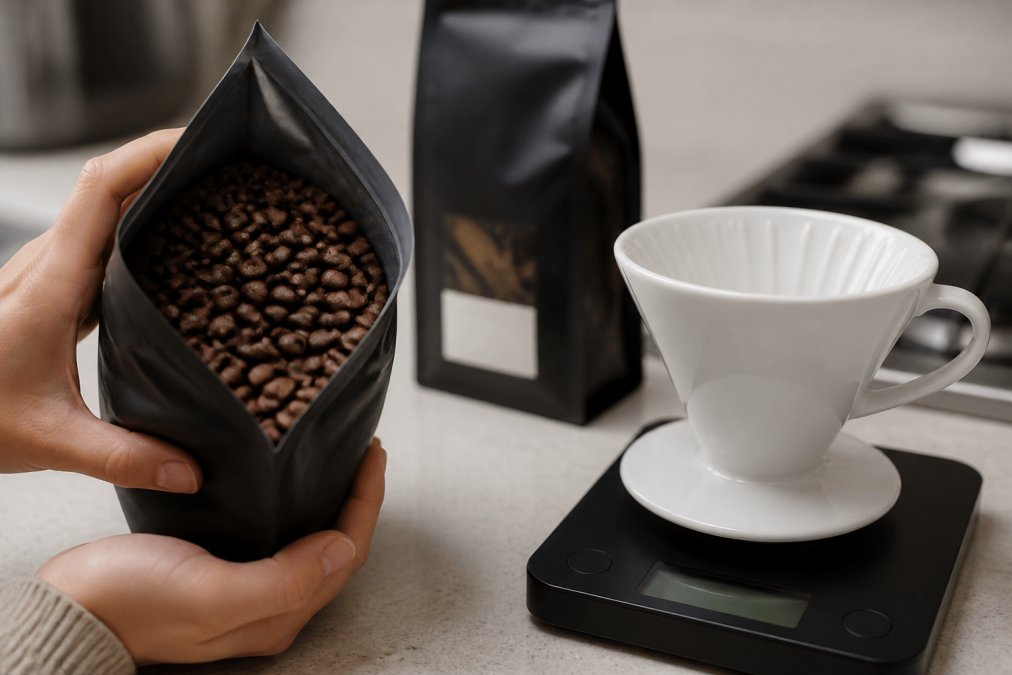
Here's a realistic comparison of what you're paying for:
| Option | Typical Price | Roast Freshness | Flavor Potential |
|---|---|---|---|
| Grocery store bag | Lower upfront | Roasted months ago | Diminished |
| Coffee subscription | Higher upfront | Roasted to order | Full expression |
| Bulk discount club | Mid-range | Unknown roast date | Variable |
A coffee subscription cost comparison only makes sense when you factor in what you're actually drinking. If you can't taste the difference between a three-month-old roast and a three-day-old roast, the premium is wasted on you. If you can, the gap in quality justifies the price.
Freshness and Roast-to-Order: What You Actually Pay For
When beans are shipped within days of roasting, they arrive at their peak flavor window. That's why specialty coffee providers emphasize roasting dates rather than best-before dates.
The practical difference is noticeable. Freshly roasted beans produce a thicker crema, a more aromatic cup, and a complexity that flat, stale beans simply cannot deliver. For a coffee enthusiast who brews at home, this is the difference between drinking coffee and experiencing it.
What most guides miss is that freshness also affects how much coffee you need. Stale beans require more grounds to achieve the same strength, which means you burn through a bag faster. Fresh beans extract more efficiently, so a 300g bag can last noticeably longer than an equivalent stale bag.
Best Coffee Subscription for Variety: Exploring Single Origins
If you're searching for the best coffee subscription for variety, the deciding factor is how many origins you can rotate through without committing to a full bag of each. Single-origin coffees each carry distinct flavor profiles shaped by their growing region, altitude, and processing method.
A curated subscription solves this neatly. Instead of buying four separate bags and hoping you like them, you receive a selection designed to showcase different regions. At Gilded Grind, our Global Coffee Collection | 6 Bags includes six origins, each with its own character. You might taste the bright, citrusy notes of a Yirgacheffe Ethiopia alongside the deep, earthy richness of a Sumatra G1.

This approach also helps you refine your palate. Tasting coffees side by side reveals how origin influences flavor far more effectively than reading tasting notes. Over time, you learn whether you gravitate toward light, floral coffees or dark, chocolatey ones, which makes future purchases more precise.
Customizing Your Coffee Subscription Frequency to Avoid Waste
Subscription fatigue and coffee waste are real problems. Many people sign up for weekly deliveries, realize they can't drink that much coffee, and end up with stale bags piling up in the pantry. The solution is customizing your coffee subscription frequency to match your actual consumption.
A common approach is to track how much coffee you drink over two weeks, then set your delivery schedule accordingly. A single daily drinker typically consumes about 300g of whole bean coffee every two to three weeks. A household with two daily drinkers might need a delivery every week or every ten days.
The key is flexibility. You want a subscription that lets you pause, skip, or adjust your delivery schedule when you're traveling or when your coffee consumption dips. Committing to a rigid weekly schedule you can't maintain defeats the purpose of the subscription model.
How to Calculate Your Price per Cup: A Simple Method
The most honest way to evaluate whether a coffee subscription is worth the cost is to calculate your price per cup. This cuts through the confusion of price per bag and tells you exactly what each brew costs you. But the calculation changes depending on how you brew, so let's look at the math for the most common home methods.
Here's the base method:
- Determine your bag weight in grams (most specialty bags are 300g or 340g).
- Measure your typical dose per brew (most home brewers use 15g to 20g per cup).
- Divide the bag weight by your dose to get the number of cups per bag.
- Divide the bag price by the number of cups.
A 300g bag at $16.50 with an 18g dose yields roughly 16 cups, or about $1.03 per cup. A grocery store bag at $10 with the same dose might yield the same 16 cups at about $0.63 per cup. The difference is roughly $0.40 per cup, which is less than most people spend on a single pod or a cafe visit.
Consumer guidance on brewing ratios and coffee measurement confirms that standard home brewing uses roughly 10 grams of coffee per 180 ml of water, which helps anchor your calculations.
Why Your Brew Method Changes the Math
The dose per cup isn't universal. Your brewing equipment dictates how much coffee you use, which directly impacts your price-per-cup figure. Here's how the numbers shake out for different methods:
| Brew Method | Typical Dose | Water Volume | Cups per 300g Bag | Cost per Cup (at $16.50/bag) |
|---|---|---|---|---|
| Espresso | 18g | 36ml (double shot) | ~16 | ~$1.03 |
| Pour-over (V60, Chemex) | 22g | 350ml | ~13 | ~$1.27 |
| French Press | 30g | 500ml | 10 | ~$1.65 |
| Drip Machine | 20g | 300ml | 15 | ~$1.10 |
| Moka Pot | 15g | 60ml | 20 | ~$0.83 |
Espresso drinkers use a relatively small dose per shot, but they often pull multiple shots daily. French press users consume more coffee per brew, which means a bag disappears faster. If you're a pour-over enthusiast using a 1:16 ratio, your cost per cup is higher than the standard calculation suggests.
The Cafe Comparison: Where Subscriptions Actually Win
The real financial case for a coffee subscription isn't against grocery store beans, it's against your local cafe habit. A typical cafe latte in Canada costs between $4.50 and $6.50 (statcan.gc.ca). Even a basic drip coffee runs $2.50 to $3.50. Compare that to your $1.03 to $1.65 per cup at home with subscription beans.
If you buy one cafe drink per workday at $5.00 each, that's $25.00 per week, or roughly $100.00 per month. A coffee subscription delivering two 300g bags per month at $16.50 each costs $33.00. That's a monthly saving of about $67.00, enough to justify the subscription even if you're paying double the grocery store price per bag.
The Hidden Cost: What You Waste
The calculation above assumes you finish every bag. If you let coffee go stale and throw out half a bag each month, your effective cost per cup doubles. This is where subscription frequency matters more than price. A bag of whole bean coffee holds its peak flavor for roughly two to four weeks after roasting. If you're brewing 18g per day, a 300g bag lasts about 16 days. Ordering a new bag every two weeks keeps you in the flavor window. Ordering monthly means the last week of each bag is a compromise.
This calculation also reveals why subscription bundles with multiple origins make financial sense for variety seekers. Instead of buying four separate 300g bags at full price, a curated bundle often delivers a lower effective price per gram, and you can rotate through origins without risking staleness in any single bag.
Common Subscription Mistakes and How to Avoid Them
Several recurring mistakes explain why some people abandon coffee subscriptions. Knowing them in advance saves you money and frustration.
Ignoring the roast date. Always check when the beans were roasted, not just the best-before date. A subscription that ships beans roasted weeks ago defeats the purpose.
Choosing pre-ground for convenience. Pre-ground coffee loses flavor rapidly. If convenience is your priority, invest in a basic burr grinder and buy whole bean coffee. The extra thirty seconds of effort transforms the cup.
Skipping the pause option. Before subscribing, confirm you can skip a delivery or pause your plan. Life happens, and you don't want to be stuck with coffee you won't drink.
Assuming darker is stronger. Dark roasts taste bolder but often contain less caffeine than lighter roasts. Choose based on flavor preference, not caffeine assumptions.
| Mistake | Fix | Impact |
|---|---|---|
| Ignoring roast date | Check roast date before buying | Fresher, better-tasting coffee |
| Buying pre-ground | Grind whole beans at home | Significantly better flavor |
| Rigid delivery schedule | Choose a flexible subscription | Less waste, lower effective cost |
| Assuming dark = strong | Match roast to flavor preference | More enjoyable daily cup |
Conclusion: Making the Call on a Coffee Subscription
A coffee subscription is worth the cost when you value freshness, enjoy exploring different origins, and can manage your delivery frequency to avoid waste. It's not worth it if you're happy with whatever coffee is cheapest, can't taste the difference between fresh and stale, or won't finish a bag before it loses its character.
The deciding factor is honesty about your own habits. If you drink coffee daily and care about how it tastes, the premium buys a genuinely better experience for roughly the cost of a single cafe drink per week. If you're a casual drinker who can't tell a three-week-old roast from a fresh one, save the money.
For those ready to try, Gilded Grind offers curated bundles like the Medium Roast Bundle | 6 Bags and the Dark Roast Coffee Bundle | 4 bags, each shipped across Canada. Start with a bundle that matches your preferred roast intensity, and adjust your delivery frequency based on how quickly you actually drink it.


Frequently Asked Questions
Are coffee subscriptions cheaper than buying beans at the grocery store?
Not always on a straight price-per-bag basis. Grocery store coffee often costs less upfront, but you are paying for beans that may have sat on a shelf for months. A coffee subscription delivers roast-to-order beans, which means better flavor from the same weight of coffee. When comparing, check the roasting date on the bag, not just the price tag. The value shifts when you factor in the taste difference and the convenience of regular delivery.
How do I calculate the cost-per-cup of a coffee subscription?
Divide the price per bag by the number of cups you can brew from it. A standard 300g bag yields roughly 20 to 24 cups depending on your brew method and strength preference. If a bag costs $16.50, that works out to about $0.69 to $0.83 per cup. Compare that to a cafe latte at $4.50 or more, and the subscription cost becomes easier to justify.
What is the best coffee subscription for variety?
Look for subscriptions that offer a curated selection of single-origin beans rather than a single repeat roast. A collection of six different origins, like the Global Coffee Collection, lets you taste Ethiopia, Sumatra, and Colombia side by side without committing to a full bag of each. This approach suits coffee enthusiasts who want to explore flavor profiles and find new favorites without the risk of a stale bag sitting in the cupboard.
Can I pause or skip a delivery if I am traveling?
Reputable coffee subscriptions understand that life interrupts routines. Before signing up, check the cancellation policy and whether the service lets you skip a month or adjust the shipping frequency. The best services make it simple to customize your delivery schedule from your account dashboard. If a subscription forces you to commit without flexibility, that friction alone can make it feel like poor value.
A coffee subscription only pays off if the beans stay fresh long enough to enjoy. That means choosing whole bean coffee, grinding at home, and picking a delivery schedule that matches your consumption. Gilded Grind makes this easy with freshly roasted, single-origin beans, flexible bundle options, and roast profiles from light to dark. Shop all collections and find the coffee that fits your ritual.


