
Table of Contents
- What Is a Coffee Cupping Score?
- The 100-Point Scale Explained
- Specialty Coffee Grading Standards
- Coffee Sensory Evaluation Attributes
- How to Perform a Coffee Cupping
- The Role of Q Graders in Scoring
- Does Cupping Score Matter to You?
- Conclusion
Last Updated: August 18, 2026
What Is a Coffee Cupping Score?
A coffee cupping score is a standardized numerical rating that measures the quality and flavor profile of coffee beans using a formalized sensory evaluation protocol. Trained professionals taste coffee under controlled conditions and assign points across multiple sensory dimensions, producing a single overall score that reflects the bean's quality.
What makes cupping different from home brewing is its rigor. The process eliminates variables by using the same water temperature, brewing method, timing, and tasting protocol. This consistency allows different coffees to be compared fairly, which is why cupping scores carry weight in the specialty coffee industry. A bean scoring 85 versus 75 represents a measurable difference in cleanliness, complexity, and balance that trained palates can detect.
At Gilded Grind, we use these scores to ensure every bean in our collection meets exacting standards for customers who view their morning ritual as an experience worth savoring.
The 100-Point Scale Explained
The specialty coffee industry uses a 100-point scale that has become the global standard for evaluating coffee, recognized by the Specialty Coffee Association and used by Q Graders, certified coffee quality professionals, across the world.
90-100 points: Outstanding Exceptional coffees with complex flavor profiles, excellent balance, and minimal defects. Rare and commands premium pricing.
85-89 points: Excellent Specialty-grade coffee with distinct characteristics, good balance, and minimal flaws. High-quality single-origin offerings that most enthusiasts actively seek.
80-84 points: Very Good Solid specialty coffee with desirable qualities and acceptable balance. Minor defects may be present but don't significantly detract from the experience.
75-79 points: Good Coffee that meets baseline specialty standards but lacks the complexity or refinement of higher-scoring beans. Pleasant but less distinctive.
Below 75 points: Not Specialty Grade Coffee that falls below specialty classification due to defects, imbalance, or lack of distinctive character.
Each point on the scale represents a difference in sensory quality that trained professionals can consistently identify. The scale accounts for cleanliness, sweetness, acidity, mouthfeel, flavor intensity, balance, and aftertaste. A coffee scoring 87 has measurably better balance and fewer defects than one scoring 82.
Scores below 80 don't mean the coffee is undrinkable, they mean it doesn't meet the technical definition of specialty coffee. But if you're paying premium prices, you're typically looking for beans in the 85+ range.
Specialty Coffee Grading Standards
The Specialty Coffee Association (SCA) has established a framework that defines specialty coffee and the protocol for scoring it. Specialty coffee, by definition, scores 80 or higher on the 100-point cupping scale and demonstrates traceability, you can track it from the specific farm or cooperative where it was grown through the supply chain to your cup.
Grading standards also consider green coffee evaluation, which happens before roasting. Trained professionals assess unroasted beans for defects, size consistency, and color uniformity. This pre-roast evaluation influences the final cupped score because processing quality directly affects flavor potential.
What separates specialty coffee from commodity coffee is consistency and intentionality. Specialty coffee producers make deliberate choices about variety selection, harvest timing, processing methods, and quality control. These decisions compound through the supply chain, ultimately affecting what you taste in your cup. For consumers, this means specialty coffee typically costs more because you're paying for measurable quality differences backed by standardized sensory evaluation and traceable sourcing.
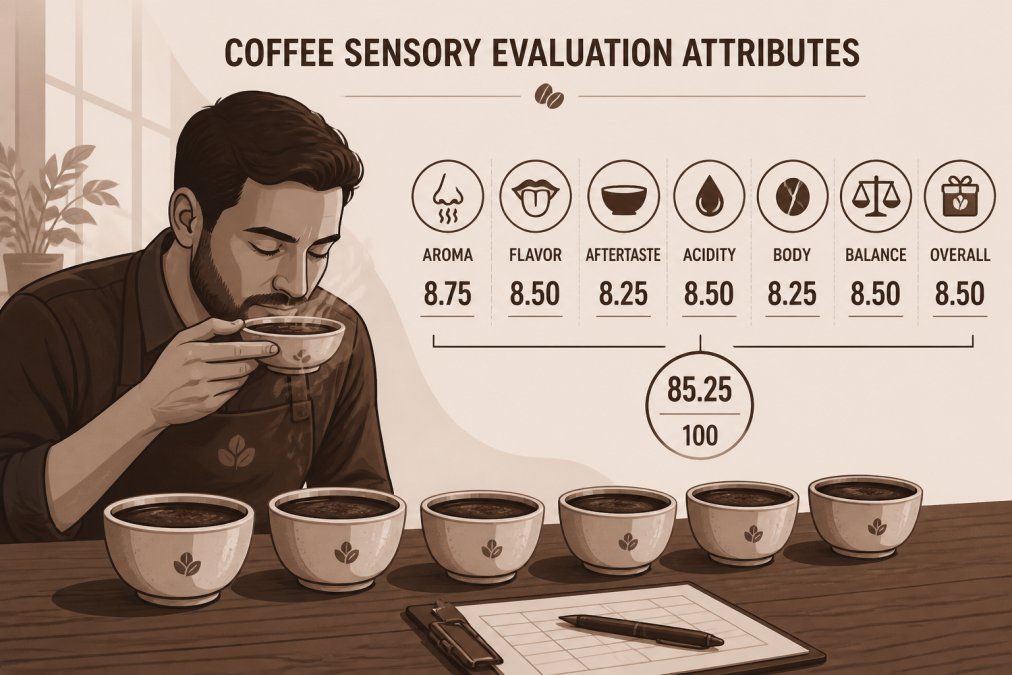
Coffee Sensory Evaluation Attributes
Coffee cupping evaluates coffee across multiple sensory dimensions, each contributing to the overall score. Understanding these attributes helps you recognize quality when you taste it.
Fragrance and Aroma
Fragrance refers to the smell of dry, ground coffee before water is added. Aroma is the smell of the brewed coffee after hot water has been poured. Both are scored because they reveal volatile compounds that contribute to flavor.
High-quality coffee has clean, distinctive fragrance and aroma. You might detect floral, fruity, or spice characteristics depending on the bean's origin and processing. Coffee with musky, fermented, or off-putting aromas scores lower because these indicate processing defects or staleness.
Flavor, Acidity, and Mouthfeel
Flavor is the primary category on the cupping form and carries the most weight in the final score. It encompasses all taste characteristics: sweetness, bitterness, fruitiness, earthiness, or chocolate notes. A coffee with complex, balanced flavor scores higher than one that tastes flat.
Acidity in coffee is not about pH, it's the bright, lively quality that high-quality coffee possesses. Acidity is desirable because it signals origin characteristics and processing quality. Light and medium roasts typically score higher than dark roasts because the roasting process can mute acidity if taken too far.
Mouthfeel describes the physical sensation of the coffee in your mouth: its body, texture, and weight. A coffee with good mouthfeel feels substantial and smooth; one with poor mouthfeel feels thin or astringent.
Balance, Sweetness, and Uniformity
Balance measures how well all the coffee's characteristics work together. A balanced coffee has acidity, sweetness, and flavor that complement each other rather than compete.
Sweetness in specialty coffee is the natural sweetness that emerges from proper processing and roasting, without added sugar. High-quality coffee has clean sweetness without bitterness or harshness.
Uniformity refers to consistency across multiple cups. During formal cupping, several cups of the same coffee are evaluated, and uniformity measures whether they all taste the same.
How to Perform a Coffee Cupping
Coffee cupping follows a standardized protocol developed by the Specialty Coffee Association to ensure consistency and fairness across evaluations.
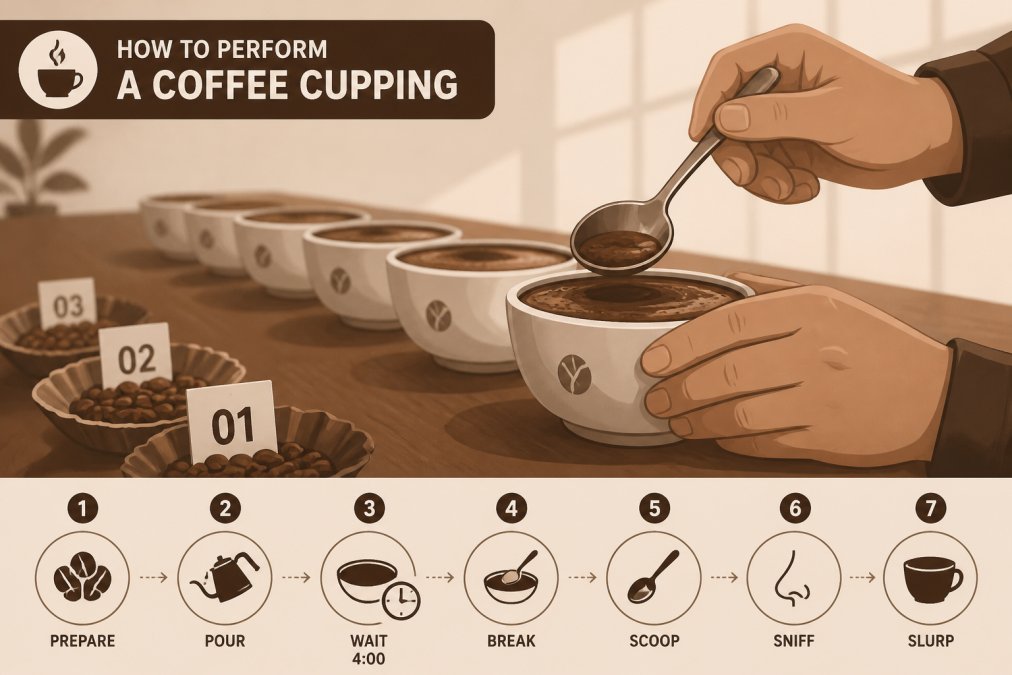
Step 1: Prepare Your Equipment and Coffee You'll need cupping bowls, a cupping spoon, a grinder, a scale, hot water around 93-96°C, and ground coffee at a ratio of 8.25 grams per 150 milliliters of water. Grind the coffee medium-fine just before cupping to preserve volatile aromatics.
Step 2: Smell the Dry Grounds Pour ground coffee into the cupping bowl and smell it directly. Score the fragrance on the cupping form and note any distinctive aromas: floral, fruity, earthy, chocolate, or off-notes.
Step 3: Add Hot Water and Evaluate Aroma Pour hot water over the grounds and immediately smell the aroma rising from the cup. Let the coffee steep for about 4 minutes.
Step 4: Break the Crust and Taste After 4 minutes, use your cupping spoon to break the crust of grounds on top and push them to the bottom. Smell the aroma again, then slurp the coffee vigorously using a cupping spoon, this aerates it across your palate and allows you to taste the full range of flavors.
Step 5: Evaluate Multiple Attributes As the coffee cools, taste it repeatedly at different temperatures. Score flavor, acidity, mouthfeel, balance, sweetness, uniformity, and other attributes on your cupping form. The coffee's characteristics often change as it cools, revealing different flavor notes.
Step 6: Calculate Your Score Add up all individual attribute scores to arrive at your total coffee cupping score. Most formal cuppings also include a subjective "overall" score that reflects your overall experience.
Following this protocol helps you develop your palate and understand why professional scores matter. You'll begin to recognize the difference between a 75-point coffee and an 85-point coffee through direct sensory experience.
The Role of Q Graders in Scoring
Q Graders are certified coffee quality professionals who have undergone rigorous training and examination to standardize coffee evaluation. The Q Grader program, administered by the Coffee Quality Institute, represents the highest level of formal coffee cupping expertise.
To become a Q Grader, professionals must pass multiple exams that test their ability to consistently identify flavors, defects, and quality attributes. They calibrate their palates against reference standards so their scores are reliable and comparable to other Q Graders' assessments. A Q Grader's score carries weight because it's backed by formal certification and demonstrated competency.
Q Graders work in various roles: evaluating coffee for roasters and exporters, conducting quality control cuppings, training other professionals, and participating in official competitions. Their scores directly influence which coffees command premium prices. When you see a coffee labeled as "Q Grader rated 87," that score came from someone with formal credentials and standardized training.
Does Cupping Score Matter to You?
Cupping scores matter enormously if you're a roaster, coffee professional, or someone who values precision and consistency in your coffee selection. They matter less, though not zero, if you're simply looking for coffee you enjoy drinking.
A coffee's cupping score is a measure of sensory quality and technical execution, but it's not a measure of personal preference. A coffee scoring 88 is objectively higher quality by standardized criteria than one scoring 75. But if you prefer the flavor profile of the 75-point coffee, that score doesn't change your experience.
That said, cupping scores serve as a reliable signal of quality potential. A high-scoring coffee gives you a better chance of a positive experience because it has fewer defects, better balance, and more distinctive flavor characteristics. The score doesn't guarantee you'll love it, but it does suggest the coffee was well-processed, properly roasted, and worth the premium price.
For Gilded Grind customers, understanding cupping scores helps you make informed choices about which beans align with your brewing style and taste preferences. Many casual coffee drinkers never think about cupping scores and still enjoy excellent coffee. Others use scores as a primary filter to narrow their choices. Both approaches are valid.
Coffee cupping scores represent a formalized way to measure and communicate coffee quality across the specialty industry. Understanding what these scores measure gives you better insight into what you're tasting and why some coffees command higher prices. At Gilded Grind, we prioritize beans that score well on the specialty scale because we believe quality matters for moments worth savoring. Explore our curated collection of high-scoring single-origin beans, each selected for its distinctive character and exceptional balance. SHOP ALL COLLECTION
| Attribute | What It Measures | Why It Matters |
|---|---|---|
| Fragrance | Smell of dry, ground coffee | Indicates freshness and processing quality |
| Aroma | Smell of brewed coffee | Reveals volatile flavor compounds |
| Flavor | Taste characteristics and complexity | Primary factor in overall quality score |
| Acidity | Brightness and liveliness on palate | Signals origin characteristics and roast level |
| Mouthfeel | Body, texture, and weight | Influenced by processing and brewing method |
| Balance | How well characteristics complement each other | Indicates overall coffee quality and execution |
| Sweetness | Natural sweetness without bitterness | Hallmark of specialty-grade coffee |
| Uniformity | Consistency across multiple cups | Reflects processing and roasting consistency |
Understanding coffee cupping scores requires knowing how specialty coffee professionals evaluate quality using standardized protocols. According to Specialty Coffee Association cupping standards, the 100-point scale has become the global benchmark for coffee evaluation, allowing fair comparison across origins and processing methods.
The science behind sensory evaluation is more rigorous than many people realize. Research from coffee flavor chemistry studies demonstrates that trained palates can consistently identify the same flavor compounds and defects across multiple tastings, which is why Q Grader certification requires extensive calibration and testing.
For home brewers wanting to understand coffee quality beyond the score, home cupping guides from coffee education organizations provide practical protocols you can follow to develop your own palate and recognize quality differences firsthand.
Frequently Asked Questions
What is a good coffee cupping score?
Scores above 80 indicate specialty-grade coffee with excellent quality. Scores between 70 and 79 represent good commercial-grade coffee, while anything below 70 is considered below specialty standards. Most premium roasters focus on beans scoring 80 or higher. The Specialty Coffee Association sets these benchmarks based on standardized sensory evaluation by trained Q Graders.
How does the Specialty Coffee Association scoring system work?
The SCA uses a 100-point scale that evaluates ten attributes: fragrance, aroma, flavor, aftertaste, acidity, mouthfeel, balance, uniformity, clean cup, and overall impression. Each category is scored on a scale, with the total determining the coffee's grade. Q Graders, certified professionals trained in sensory evaluation, conduct blind tastings using a standardized protocol to ensure consistency across different batches and origins.
Can I tell the difference between a 75-score and an 85-score coffee?
Most home brewers can detect differences between coffees in these ranges, though you may not identify the exact score. Higher-scoring coffees typically show clearer flavor notes, better balance, fewer defects, and more complexity. Cupping scores help you select beans with proven quality, but your personal taste preference matters too. Brewing method, water temperature, and grind size also affect how well you experience the coffee's characteristics.
How long does a coffee cupping session last?
A full cupping session typically lasts 15 to 30 minutes. This includes grinding the beans, adding hot water, breaking the crust, evaluating fragrance and aroma, then tasting through multiple rounds as the coffee cools. The cooling process is important because flavor characteristics change at different temperatures, revealing how the coffee develops and whether it maintains quality throughout the tasting window.
This article was written using GrandRanker


