
Last Updated: November 6, 2026
Quick Summary
To build a coffee tasting flight at home, choose three to five coffees with contrasting origins, flavor profiles, and roast levels, then brew each cup identically using 8 g of coffee per 150 ml of water. Pour 30 to 45 ml per coffee into small matching cups and serve lightest to darkest.
- A full flight takes about 45 to 60 minutes at a relaxed pace, including setup and cleanup.
- Grind medium, heat water to 93°C, pour 150 ml over 8 g of coffee, and steep for 4 minutes.
- Score each coffee from 1 to 5 on aroma, acidity, body, sweetness, and aftertaste for a total out of 25.
- Serve lightest to darkest and brightest to deepest, slurping each sip to release aroma.
- Between coffees, sip water and eat a plain cracker to reset your palate.
Table of Contents
- What a Coffee Tasting Flight Is and Why It Works at Home
- Coffee Flight Ideas: Choosing Coffees With Contrasting Flavor Profiles
- How Many Coffees Belong in a Flight, and How Big Should Each Cup Be
- The Equipment and Setup for How to Host a Coffee Tasting at Home
- Serving Order, Sips, and How Long Should a Coffee Tasting Flight Take
- Using a Coffee Tasting Notes Chart to Score What You Taste
- Caffeine, Dietary Needs, and Troubleshooting a Confusing Flight
- Building Your First Flight From the Global Coffee Collection
- Frequently Asked Questions
What a Coffee Tasting Flight Is and Why It Works at Home
A coffee tasting flight is a small set of coffees, usually three to five, served side by side in small cups so you can compare them directly.
Why does it work so well at home? Because contrast teaches your palate faster than any tasting note ever will. Taste a bright, fruity coffee next to a deep, earthy one and the differences jump out.
The 5-flight plan below takes about an hour from kettle to last sip. It needs no special training, just a few small cups and a willingness to slow down.
But first, here's what most guides get wrong: they treat a tasting flight as a café-only ritual. The Specialty Coffee Association's cupping standards were built for professional graders, yet the same compare-and-score logic scales down to your kitchen table beautifully.
Coffee Flight Ideas: Choosing Coffees With Contrasting Flavor Profiles
Great flights are built on contrast, not collection. Pick coffees that disagree with each other, and the differences do the teaching for you.
Here is how we would choose:
- Different origins: one African, one Latin American, one Indonesian.
- Different flavor families: fruity and floral versus nutty and chocolatey versus earthy and deep.
- Different roast levels: a light roast beside a medium and a dark.
- One wildcard: something you would not normally buy.
Coffee research from World Coffee Research notes that origin and variety shape flavor as much as processing does. That is your license to mix freely. If you want to understand how roast level shifts the cup before you shop, our guide to light vs dark roast explains the flavor differences clearly.
Three Flight Frameworks to Try
The Origin Tour. Three single-origin coffees from three continents. Best for learning how geography tastes. For a deeper read on two very different profiles, our Sumatra vs Ethiopian coffee comparison breaks down body, acidity, and flavor notes.
The Roast Ladder. The same origin at light, medium, and dark. Best for isolating how roast changes sweetness and body.
The Beginner's Pair. Just two coffees, side by side. Best for first-timers, small budgets, or a quiet Sunday. A two-coffee pack like our Huila Colombia duo fits this perfectly.

How Many Coffees Belong in a Flight, and How Big Should Each Cup Be
Three to five coffees is the sweet spot for a home flight. Two feels thin, and beyond five your palate tires and the notes blur together.
Serving size matters just as much. Pour 30 to 45 ml per coffee into small cups, roughly the size of an espresso cup. That is enough for three or four sips, which is all you need to judge a coffee. A full mug will leave you jittery and unable to taste the next pour.
Plan on 150 to 225 ml of brewed coffee total for the whole flight. That is about one large mug spread across the tasting, so the caffeine load stays comfortable.
The Equipment and Setup for How to Host a Coffee Tasting at Home
You do not need a lab. You need consistency, and a short list of tools gets you there. The goal is that every cup in the flight is brewed the same way, so the only variable is the coffee itself.
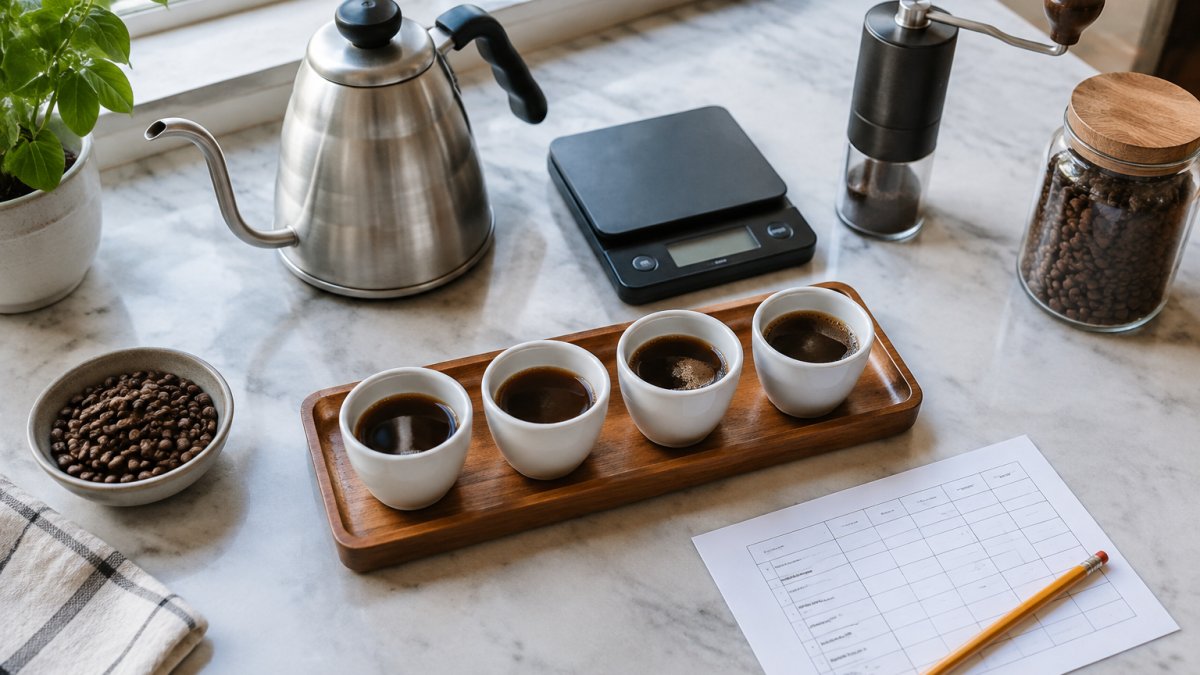
The core kit:
- Small cups: four to six matching cups, so each pour is judged fairly. Matching matters more than fancy, a thin porcelain cup and a thick stoneware mug will make the same coffee feel different in the mouth.
- A kitchen scale: grams beat scoops every time. A basic digital scale that reads to 1 g is enough.
- A grinder: burr if you have one, but any grinder beats pre-ground for a tasting, because you can grind to order.
- A kettle: a gooseneck pour-over kettle gives control, but any kettle that lets you pour slowly works.
- A timer: your phone works.
- A tasting tray or flight paddle: keeps cups organized and labeled.
- Water and a spit cup: optional, but useful between coffees.
If you are building on a budget, you can still run a fair flight.
If your tap water is hard or heavily treated, brew with filtered water for the whole session so the water is a constant, not a variable.
Keep your beans fresh between sessions. Our guide on how to keep coffee beans fresh longer covers the containers and storage habits that protect flavor.
A Repeatable Home Brewing Protocol
Here is the exact protocol we recommend, so every cup in the flight is brewed the same way. It is a simple steep-and-strain method that works with a mug, a spoon, and a fine strainer, so you do not need a specialty brewer to follow it.
- Weigh 8 g of coffee per cup. If you have no scale, start with about 1 level tablespoon and adjust until the cup tastes balanced.
- Grind medium, about the texture of table salt. If you are using pre-ground coffee, use a medium grind and accept that the cups will be slightly less distinct.
- Heat water to 93°C. If you have no thermometer, boil the water and let it sit for about a minute before pouring.
- Pour 150 ml of water over the grounds.
- Let it steep for 4 minutes.
- Break the crust, skim, and pour into the cup.
Same dose, same grind, same water, same time. That is the whole secret. When only the coffee changes, the differences you taste are real.
Global Coffee Collection | 6 Bags →
Watch out: if one cup tastes thin and another bitter, the cause is almost always an uneven dose or grind, not the beans. Weigh and grind each cup separately rather than eyeballing a batch.
Serving Order, Sips, and How Long Should a Coffee Tasting Flight Take
A full coffee tasting flight takes about 45 to 60 minutes at a relaxed pace, including setup and cleanup.
Serve lightest to darkest, and brightest to deepest, so you start with the delicate coffees and finish with the heavy ones. Slurp each sip: pulling air across the tongue spreads the coffee and pushes aroma up into your nose, where most of flavor actually lives.
Between coffees, sip water and pause for a minute. A plain cracker helps reset your palate. Then write down what you noticed before moving on.
Using a Coffee Tasting Notes Chart to Score What You Taste
A coffee tasting notes chart turns vague impressions into something you can compare and remember. Score each coffee on a simple scale, and patterns appear fast.
| Attribute | What to Ask | Score (1-5) |
|---|---|---|
| Aroma | Does it smell fruity, nutty, floral, or like bread? | |
| Acidity | Bright and lively like citrus, or flat and dull? | |
| Body | Thin like tea, or thick like syrup? | |
| Sweetness | Honey, caramel, fruit, or none? | |
| Aftertaste | How long does it linger after you swallow? |
How to score without overthinking it. Give each coffee a single number per row, then add the five numbers for a total out of 25. Do not agonize over whether a coffee is a 3 or a 4, the point is the pattern across coffees, not the absolute score. A coffee that scores high on acidity and low on body is telling you something useful even if your numbers are rough.
Print a fresh sheet per flight. Add the origin, the date, and the brewing method at the top.
Handling palate fatigue. By the fourth or fifth coffee, your palate dulls and everything starts to taste the same. Sip water, eat a plain cracker, and score the last coffees on aroma first, before you taste them.
Accommodating milk, decaf, and caffeine sensitivity. Black coffee suits most diets, but a flight does not have to be black. Our Health Canada guidance on caffeine is worth a read if you want a clear picture of daily limits.
Troubleshooting a confusing flight. If the scores make no sense, check three things before blaming the beans: whether the dose and grind were the same for every cup, whether the water was the same for every cup, and whether the coffees were served in the right order (lightest to darkest). A stale bag will also flatten a coffee, if one cup tastes papery or dull, it may simply be older than the rest.
Caffeine, Dietary Needs, and Troubleshooting a Confusing Flight
A confusing flight usually has one culprit: uneven brewing. If one cup tastes thin and another bitter, check your dose and grind before blaming the beans. Small differences in weight or grind size change the cup more than most people expect.
Caffeine deserves a plan. Keep pours small, drink water, and stop when you feel the buzz. If you are sensitive, taste earlier in the day and skip the last coffee.
Dietary needs are easy to handle. Black coffee suits most diets. Our Health Canada guidance on caffeine is worth a read if you want a clear picture of daily limits.
Building Your First Flight From the Global Coffee Collection
The fastest way to host your first flight is to start with a set built for contrast. Our Global Coffee Collection whole bean bundle includes six origins with their own flavor profiles, which is more than enough for a first flight with room to spare.

Here is a ready-made plan:
- Flight one: three of the six origins, brewed with the protocol above.
- Flight two: the remaining three, a week later.
- Flight three: your two favorites, compared side by side.
One bundle, three evenings of tasting, and a palate that keeps learning. That is the ritual we build our beans for.
Frequently Asked Questions
How many coffees should be in a tasting flight?
Three to four coffees is the sweet spot for a home coffee tasting flight. Three lets you compare a clear contrast, such as a light Ethiopian against a medium Guatemalan and a darker Sumatran. Four adds a second layer without overwhelming your palate. Beyond five, taste fatigue sets in and the differences blur. If you want to try more, split them across two shorter flights with a water and cracker break in between.
How much coffee do you need for a tasting flight?
Plan on 8 to 10 grams of ground coffee per cup, which brews roughly 120 to 150 ml. For a four-coffee flight that is about 40 grams of beans total, or a little over 1.5 scoops.
How do you describe coffee tasting notes without sounding pretentious?
Start with four plain categories: acidity (bright or flat), body (thin or syrupy), sweetness (brown sugar, honey, fruit), and aftertaste (short or lingering). Write down the first food or fruit the aroma reminds you of, even if it seems odd. Compare it to something you already eat. A coffee tasting notes chart with these four columns keeps the language grounded and makes it easy to compare cups side by side.
Is a home coffee tasting flight worth the effort if I am not a coffee expert?
Yes. A flight is the fastest way to learn which roast level and origin you actually prefer, which saves money on bags you would otherwise buy blind. Set up four small cups, brew them the same way, and taste them side by side. Most people can tell a light Ethiopian from a medium-dark Sumatran within the first sip, and that knowledge makes every future order more confident.
Your kitchen counter is already a tasting room. All it needs is a few small cups, a scale, and coffee worth comparing. Gilded Grind offers whole bean bundles with a range of roast profiles, from light and bright to deep and rich, so you can build a flight around whatever you love. Get started with Gilded Grind and turn your next morning brew into a tasting worth savoring.


