
Last Updated: October 31, 2026
Quick Summary
Prevent coffee bean oil buildup by storing beans airtight in small batches, wiping the hopper and grind chamber dry after each session, and deep cleaning on a schedule set by your roast level and grind volume. Skip water, steam, and rice grinds, and clean sooner at the first sign of tacky, stale-smelling residue.
- Darker beans carry more surface oil than light ones, so they need more frequent wiping.
- Clean the grinder dry-first with a soft, lint-free cloth and never use soapy water on burrs.
- A light-roast drinker grinding once daily can deep clean weekly; dark-roast espresso habits need more.
- Empty and wipe the hopper before every new bag, and never store beans there long-term.
- Buy only what you will grind within two to three weeks to limit oil migration.
Table of Contents
- Why Coffee Bean Oil Buildup Happens in the First Place
- How to Clean an Oily Coffee Grinder Without Damaging It
- How to Clean a Coffee Bean Hopper Properly
- Coffee Grinder Cleaning Frequency: How Often Is Enough?
- Coffee Bean Storage Tips That Slow Oil Buildup
- Choosing Beans That Leave Less Oil Behind
- Build a Grinder Maintenance Routine That Sticks
- Stock Your Shelf With Beans That Stay Clean
- Frequently Asked Questions
Why Coffee Bean Oil Buildup Happens in the First Place
Coffee bean oil buildup starts with a simple fact: beans contain natural oils, and those oils migrate to the surface as the beans sit. The darker the bean, the more oil it releases. That oil then coats your burr grinder, hopper, and grind chamber, where it traps coffee dust and turns sticky.
A grinder that hums along for months can start clogging, retaining grounds, and muting flavor.
Here is what most guides get wrong: oil itself is not the enemy. Stale oil is. Fresh surface oil smells rich. Old oil on a grind chamber turns rancid and taints every cup.
Three things drive buildup:
- Roast level. Darker beans carry more surface oil than light ones.
- Bean age. Oils keep migrating outward as beans rest.
- Grinder habits. Leaving beans in the hopper exposes them to air and heat.
Below, we'll show you exactly how to prevent coffee bean oil buildup before it starts, plus the cleaning routine that keeps your equipment running clean.
How to Clean an Oily Coffee Grinder Without Damaging It
The safest way to clean an oily coffee grinder is dry-first: unplug it, empty the beans, and wipe surfaces with a soft, lint-free cloth before reaching for any brush or cleaning tool. Skip water entirely. Moisture and burrs do not mix.
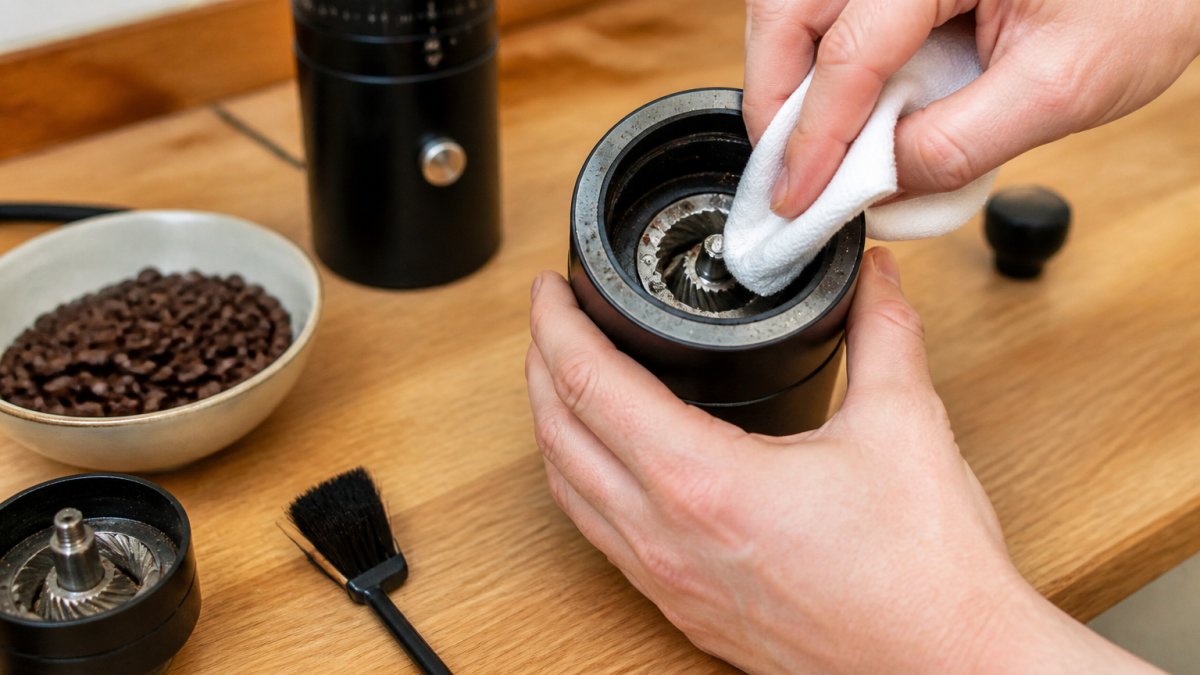
A common mistake is soaking removable parts or running them under the tap. Check your manufacturer's guidance first, since many burr sets should never touch water. Check the manual first, since it tells you which parts are removable and what the maker considers normal cleaning. If the manual is missing, look up the model number on the maker's site before you improvise.
What to Avoid on Grinder Parts
Some widely shared cleaning tips are unsuitable for certain grinders. Treat these with caution:
- Steam. Steam drives moisture into the grind chamber and burr housing, where it encourages clumping and can corrode steel components.
- Raw oats or rice as a cleaning grind. These are harder than coffee and can dull or chip burrs; some makers explicitly void coverage if non-coffee items are ground.
- Damp cloths on burrs. A barely damp cloth is fine on hopper walls, but burrs and the grind chamber should stay dry.
- Soapy water on any burr-touching part. Residue lingers in the cutting edges and taints the next few cups.
- Compressed air at close range. It can push grounds deeper into the chute and past seals.
Step-by-Step: Cleaning the Grind Chamber and Burrs
Follow this sequence every time you clean an oily coffee grinder:
- Unplug the grinder and empty the hopper completely.
- Remove the top burr if your model allows it, following the manual's release direction.
- Brush loose grounds out of the grind chamber with a dry brush, working from the top down.
- Wipe the chamber with a dry, lint-free cloth to lift oil film.
- Clean the burrs with a soft brush, working away from the cutting edges so you do not dull them.
- Clear the chute with a dry brush or the tool the maker supplies.
- Reassemble and run a small test batch of beans, then discard it.
Watch out: never use soapy water on burrs. Residue lingers and ruins the next few cups. If a part is caked with old oil, a dry brush and repeated light wiping will lift it over a couple of sessions better than any wet shortcut.
How to Clean a Coffee Bean Hopper Properly
Hopper cleaning is the step most people skip. It is also where oil and dust collect fastest, because beans sit there for days.
Empty the hopper regularly, then wipe the inside with a damp cloth and dry it immediately. Trapped moisture encourages clumping and stale residue.
- Remove the hopper from the grinder first.
- Wipe the lid and the chute, not just the walls.
- Let parts air-dry fully before refilling.
- Never store beans in the hopper long-term.
That last point is the habit that changes everything. The hopper is a feeding station, not a pantry.
Coffee Grinder Cleaning Frequency: How Often Is Enough?
Coffee grinder cleaning frequency depends on two things: how often you grind and how dark your beans are. A light-roast drinker grinding once daily can get away with a weekly deep clean. A dark-roast espresso habit needs more.
Use this schedule as your starting point:
| Usage | Roast Level | Wipe-Down | Deep Clean |
|---|---|---|---|
| 1-2 grinds daily | Light to medium | Every 2-3 days | Weekly |
| 1-2 grinds daily | Dark | Daily | Weekly |
| 3+ grinds daily | Any | Daily | Every 3-4 days |
| Espresso daily | Dark | After each session | Weekly |
Stick to the shorter interval when you switch roasts. Fresh oils mix with old residue and go stale faster.
How to Tell Normal Oil From Rancid Residue
The schedule is a floor, not a ceiling. The real trigger for a deeper clean is what the residue looks and smells like.
- Normal surface oil: a thin, even sheen on the chamber walls and burrs, with a rich coffee smell. Wipe it and move on.
- Stale residue: a tacky, dark film that holds grounds in clumps, with a dull or cardboard-like smell. This is the point to deep clean, regardless of the calendar.
- Rancid residue: a sharp, oily, almost paint-like smell, often paired with muted or bitter cups. Deep clean immediately and discard the next test batch.
A common pattern is that flavor goes flat before the residue looks obviously dirty. If your cups taste duller than the beans should, clean before the schedule says to.
Adjusting the Schedule to What You See
Treat the table as a baseline and shorten the interval when any of these appear:
- Visible oil on the hopper walls or the chute.
- Grounds clinging to the chamber instead of falling free.
- A slower grind or a change in the sound of the motor.
- A new bag of darker beans going into a chamber that last held lighter ones.
Coffee Bean Storage Tips That Slow Oil Buildup
Storage is prevention. Beans kept away from heat, light, and air release surface oil more slowly, which means less oil ends up in your grinder.
Store beans in an airtight container in a cool, dark place, in small batches you will finish within a couple of weeks. Skip the refrigerator: moisture swings and odors work against bean freshness.
For a deeper look at containers and freezing methods, see our guide on how to keep coffee beans fresh longer. Humidity matters too, and our breakdown of humidity's impact on coffee bean freshness explains how moisture speeds up stale oil.
The storage rules that matter most:
- Buy in quantities you will grind within two to three weeks.
- Keep beans out of direct sunlight and away from the stove.
- Seal the container fully after every scoop.
- Never top off old beans with fresh ones.
Choosing Beans That Leave Less Oil Behind
Bean choice is your quietest defense. Lighter roasts carry less surface oil than dark roasts, so they leave less residue in the grind chamber and hopper.
That said, oilier beans are not bad beans. Sumatra G1 is a dark roast with a syrupy, earthy profile, so dark beans generally call for a tighter cleaning schedule. If you love dark profiles, plan for more wiping, not fewer beans.
For a full walkthrough of how roast level shapes body and oil, read how to choose the perfect coffee roast.
A quick way to judge a bag before you buy:
- Light roasts: dry, matte surface, minimal oil.
- Medium roasts: slight sheen, low residue.
- Dark roasts: visible surface oil, higher residue.
Build a Grinder Maintenance Routine That Sticks
A routine beats willpower. Tie cleaning to something you already do, like your Sunday coffee prep, and it stops feeling like a chore.
Here is a simple weekly rhythm:
- Daily: quick brush of the grind chamber after your last grind.
- Weekly: full wipe-down of hopper, chamber, and burrs.
- Monthly: check burr condition and clear the chute.
- Each new bag: empty and wipe the hopper before refilling.
Equipment cleaning beyond the grinder helps too. If you run an automatic machine, our guide on how to descale an automatic coffee machine rounds out the maintenance habits that protect flavor.
Stock Your Shelf With Beans That Stay Clean
The best defense against coffee bean oil buildup is a steady supply of fresh beans you actually finish. Stale beans sit, oil migrates, and your grinder pays for it.
Browse our full collection of available coffee types to find roasts that match your grinder and your taste. Prefer a darker, oilier profile? Start with our Sumatra G1 and clean a little more often. Love a cleaner chamber? Medium-dark Colombian lots, like Huila and Betulia, are a practical choice for a cleaner grind chamber.
Frequently Asked Questions
Why does my coffee have an oily residue?
Oils sit naturally inside every coffee bean, and darker roasts carry more of them to the surface. When those beans pass through a grinder, some oil transfers to the burrs, chamber walls and hopper. Over time that film traps coffee dust and goes stale, which is why an oily residue shows up in the cup and on your equipment. Wiping the grinder regularly and storing beans in an airtight container away from heat keeps the problem from compounding.
How often should you clean a coffee grinder?
For most home setups, a quick wipe of the hopper and chute each week, plus a fuller clean of the grind chamber every two to four weeks, keeps oil from hardening. If you grind dark roasts daily or pull several shots a day, shorten that interval. A simple rule: clean more often when you notice beans clinging to the hopper or grounds clumping in the chute. Consistency matters more than a perfect schedule.
Can coffee bean oil affect grinder performance?
Yes. Oil buildup on burrs and chamber walls causes grounds to stick, which raises grinder retention and makes your next dose inconsistent. You may notice clumping, slower grinding or a stale taste in the cup. Cleaning with a soft, lint-free cloth and a dry brush restores the burrs to a clean surface. Regular maintenance, paired with beans stored in an airtight container, keeps performance steady over the life of the grinder.
How do you clean oil from a coffee grinder hopper?
Empty the hopper first, then wipe the inside with a soft, damp cloth and dry it immediately so moisture never reaches the burrs. Avoid soaking the hopper or putting it in water unless the manufacturer says it is removable and washable. A lint-free cloth works better than paper towel, which sheds fibers. Let the hopper air dry fully before refilling with beans, and repeat weekly if you grind dark roasts often.
Preventing coffee bean oil buildup comes down to fresh beans, smart storage, and a cleaning habit you can keep. Gilded Grind curates premium, nature-inspired beans across a wide range of roast profiles, with convenient bundles and freshly brewed flavor in every bag. Shop the collection and build a coffee ritual worth savoring.


