
Quick Summary
Choose home brewing ingredients by starting with the brewing method you use most, then picking fresh whole beans suited to your taste. Freshness matters more than price, so check for a roast date and grind just before you brew.
- Match your beans and grind to the method you use most, such as pour-over, French press, espresso or drip.
- Look for a roast date on the bag, not just a best before date.
- Start with a medium roast, since it is forgiving and gives you a good baseline.
- Grind just before brewing and use a burr grinder for a more even grind.
- Use filtered tap water with balanced minerals, avoiding very hard or distilled water.
Table of Contents
- Start With the Brewing Method You Actually Use
- Choosing the Best Coffee Beans for Home Brewing
- Matching Coffee Grind Size to Your Brewing Method
- Why Water Quality Matters for Brewing Coffee
- Getting the Coffee-to-Water Ratio for Home Brewing Right
- Common Ingredient Mistakes to Avoid
- Building Your First Home Brewing Setup at Gilded Grind
- Frequently Asked Questions
Start With the Brewing Method You Actually Use
Choosing ingredients for home brewing starts with one question: how do you actually brew? Your method decides which beans, grind and water will work best for you. Our guide to brewing professional coffee at home covers the right gear and ratios.
Most home brewers stick to one or two methods. A French press, a pour-over cone and an automatic drip machine each reward different choices. Pick the method you use most, and build your ingredient list around it.
- Pour-over: Wants a clean, medium-fine grind and beans with bright acidity.
- French press: Works well with a coarse grind and fuller, chocolatey beans.
- Espresso: Needs a fine grind and a darker roast for body and sweetness.
- Drip machine: Forgives a range of grinds and suits everyday blends.
Watch out: buying beans for a method you rarely use is the fastest way to waste money. Start with the method on your counter today, not the one you plan to try next year.
Choosing the Best Coffee Beans for Home Brewing
The best coffee beans for home brewing are fresh, whole and suited to your taste. Freshness matters more than price. Look for a roast date on the bag, not just a "best before" date.
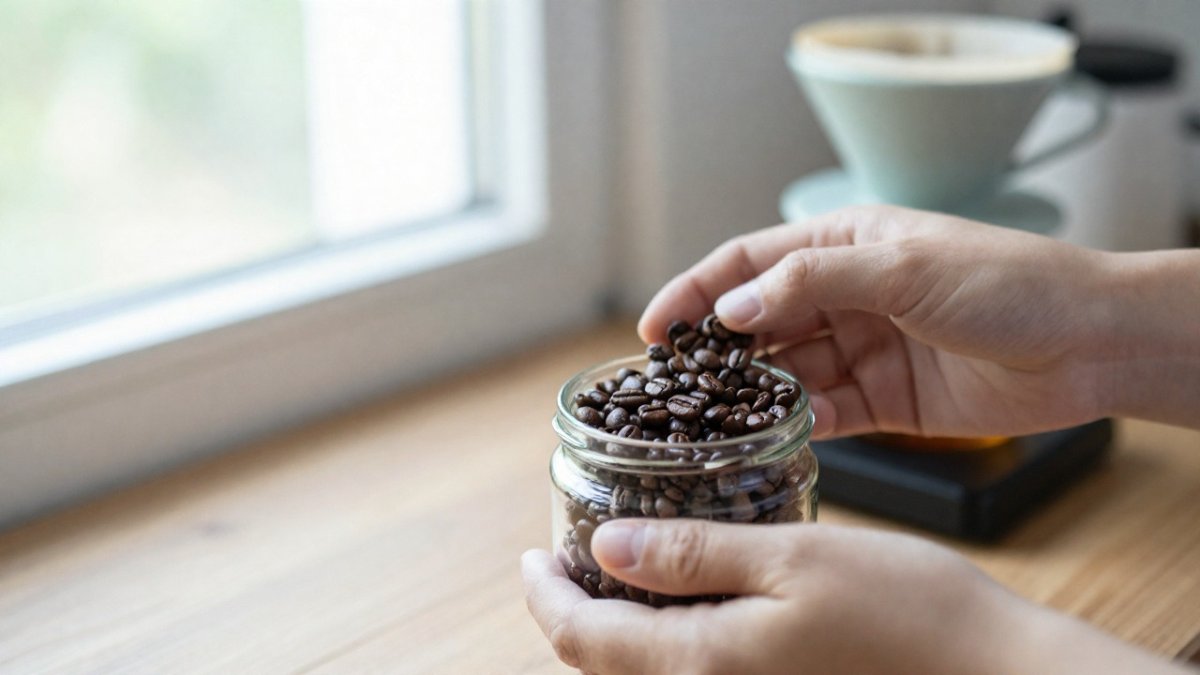
Gilded Grind carries single-origin beans from regions like Yirgacheffe, Ethiopia and Sumatra. Each origin brings its own flavour. Yirgacheffe tends to taste bright and floral. Sumatra is deeper and earthier.
Light, Medium and Dark Roasts for Beginners
Roast level changes how the bean tastes. Light roasts keep more of the origin's character, with brighter fruit and acidity. See how light and dark roasts differ in flavor for a closer comparison. Medium roasts balance sweetness and body. Dark roasts taste rich and bitter, with notes of chocolate and smoke.
If you are new to home brewing, start with a medium roast. It is forgiving, and it gives you a good baseline to compare against. Once you know what you like, move lighter or darker to explore.
Matching Coffee Grind Size to Your Brewing Method
Grind size controls how quickly water pulls flavour from the coffee. Too coarse and the brew tastes weak and sour. Too fine and it tastes harsh and bitter.
As a rule of thumb, match the grind to your method:
- Coarse: French press and cold brew
- Medium: Drip machines and most pour-over setups
- Fine: Espresso
Grind just before you brew. Pre-ground coffee loses aroma quickly, and a simple burr grinder gives a more even grind than blade grinders. Our beginner pour-over guide explains the technique step by step.
Why Water Quality Matters for Brewing Coffee
Water makes up most of your cup, so its quality matters. Very hard water can leave a chalky taste and can build up scale in your machine (Guidelines for Canadian drinking water quality: Operational parameters). Very soft water can taste flat.
Filtered tap water or bottled water with balanced minerals usually works well. Avoid distilled water, which lacks the minerals that help extract flavour. If your coffee tastes off even with good beans, test your water before you buy a new grinder.
Getting the Coffee-to-Water Ratio for Home Brewing Right
A common starting point is about 1 gram of coffee for every 15 to 17 grams of water. This is the coffee-to-water ratio, and it shapes strength and flavour.
Use a digital scale for accuracy. Scoops vary a lot in weight, so a scale gives you repeatable results. Our calibration guide shows how to make sure your scale reads true. Change the ratio slightly at a time, and note what you taste. Stronger brews need more coffee. Weaker brews need less.
Common Ingredient Mistakes to Avoid
Most disappointing home brews trace back to a small number of ingredient and storage errors. The useful skill is not memorizing the list but learning to read the symptom in the cup and trace it back to the cause.
- Stale beans: Coffee loses aroma within weeks of the roast date, and pre-ground coffee loses it within days. If the cup tastes flat, papery or like cardboard, the beans are the likely cause. Buy smaller bags and check the roast date.
- Poor storage: Heat, light and oxygen all speed up staling. Clear jars on a sunny counter are the worst case. Store beans in an airtight, opaque container in a cool cupboard, and buy whole beans rather than pre-ground.
- Grinding too early: Ground coffee exposes far more surface area to air, so flavor fades fast. Grind just before you brew, and use a burr grinder for a more even particle size than a blade grinder produces.
- Water temperature: Water that is too hot scalds the coffee and pulls out harsh, bitter compounds. Water that is too cold under-extracts and leaves the cup sour and weak. Most practitioners find that water just off the boil, around 90 to 96 °C, works across common methods.
- Changing too many variables at once: If you change the grind, the ratio and the water on the same day, you cannot tell which change helped. Change one variable per brew and note what you taste.
- Ignoring water quality: Very hard water leaves a chalky taste and builds scale in your machine. Very soft or distilled water tastes flat because it lacks the minerals that help extract flavor. Filtered tap water with balanced minerals is the practical default.
A simple troubleshooting habit: taste the cup, name the dominant fault (sour, bitter, weak, flat), and change the one variable most likely to cause it. Sour usually means under-extraction, so grind finer or raise the water temperature. Bitter usually means over-extraction, so grind coarser or lower the temperature. Flat usually means stale beans or poor water. Fix one thing, brew again, and compare.
The most common causes of a disappointing home brew, and how to fix each one, are summarised below.
| Problem | Cause | Fix |
|---|---|---|
| Flat, papery or cardboard taste | Stale beans | Buy smaller bags and check the roast date |
| Flavour fades quickly | Poor storage in heat, light or oxygen | Use an airtight, opaque container in a cool cupboard |
| Flavour fades fast after grinding | Grinding too early | Grind just before brewing with a burr grinder |
| Harsh, bitter cup | Water too hot | Use water just off the boil, around 90 to 96 °C |
| Sour, weak cup | Water too cold | Brew at around 90 to 96 °C |
| Chalky taste and scale in machine | Very hard water | Use filtered tap water with balanced minerals |
| Flat-tasting cup | Very soft or distilled water | Use filtered tap water with balanced minerals |
Building Your First Home Brewing Setup at Gilded Grind
A good first setup needs only a few tools: a burr grinder, a digital scale, a brewing method you enjoy and fresh beans. You do not need expensive equipment to make a great cup.
At Gilded Grind, we offer a curated range of beans from light to dark roasts, plus convenient coffee bundles. Explore the full range to find the roasts you enjoy.
Frequently Asked Questions
What ingredients do you need to brew coffee at home?
At minimum you need whole or ground coffee, filtered water and a brewing vessel or machine. Choose beans you will use within a few weeks of roasting, because freshness affects flavour more than almost any other factor. Filtered water with balanced mineral content gives cleaner results than tap water with strong chlorine or heavy minerals. A simple scale helps you measure coffee and water consistently, which matters more than buying expensive equipment. Gilded Grind offers single-origin and roast-profile options, and current pricing and bundle details are available on the Gilded Grind website.
How do I choose coffee beans for home brewing?
Start with the flavour you enjoy: bright, fruity coffees usually come from light roasts, while chocolatey or nutty notes tend to come from medium and dark roasts. Single-origin beans show the character of one growing region, which makes them a good way to learn what you like. Check roast dates rather than just best-by dates, and buy in quantities you can finish within a few weeks. If you are new to brewing, a medium roast is a forgiving place to begin.
How does grind size affect home-brewed coffee?
Grind size controls how quickly water extracts flavour from the coffee. Fine grinds suit espresso and very short brew times, medium grinds suit drip machines and pour-over methods, and coarse grinds suit French press and cold brew. A grind that is too fine for your method can taste bitter, while one that is too coarse can taste weak and sour. If your coffee tastes off, adjust the grind before changing anything else. Buying whole beans and grinding just before brewing preserves more aroma.
How much coffee should I use per cup?
A common starting point for home brewing is a ratio of about 1 part coffee to 15 to 17 parts water by weight. For a standard cup of roughly 250 millilitres, that means around 15 to 17 grams of coffee. Weigh your coffee and water with a kitchen scale for consistent results. Adjust the ratio up or down by small amounts to suit your taste, and change only one variable at a time so you can tell what made the difference.


